
Mental preparation for penalties means regulating arousal, focusing on a single clear plan and repeating simple routines under pressure. Professionals combine controlled breathing, brief visualization, task-focused self-talk and rehearsed decisions about power versus placement. These tools are trainable in regular practice and supported by specialised coaching and sports psychology.
Essential mental skills that determine penalty performance
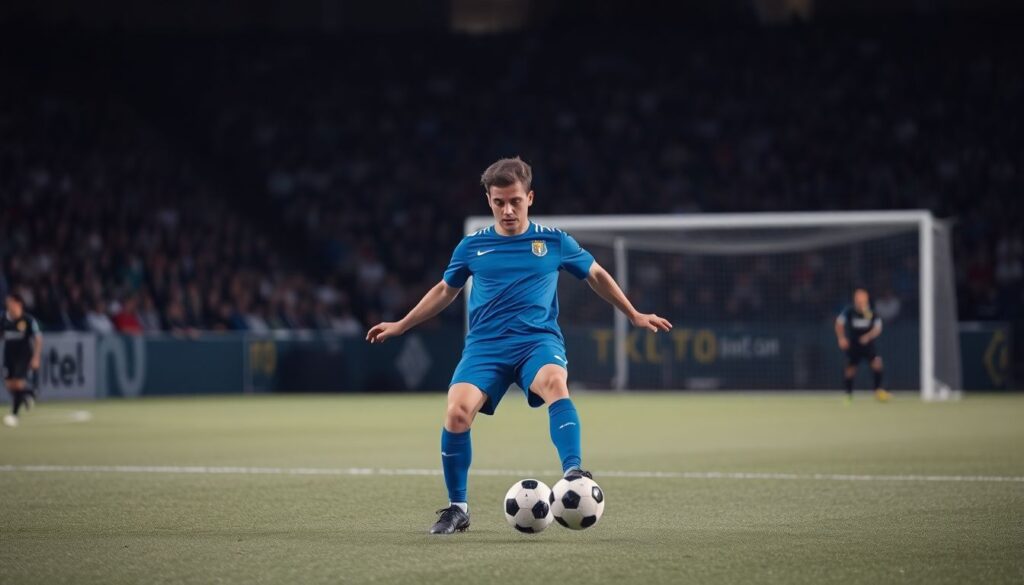
- Ability to reduce excessive activation quickly through breathing patterns and body awareness.
- Stable, repeatable pre-kick routine that anchors attention to controllable actions.
- Clear visual and kinesthetic imagery of the desired kick and follow-through.
- Task-focused, concise self-talk instead of outcome or crowd-focused thoughts.
- Pre-decided choice between placement and power for typical penalty scenarios.
- Capacity to tolerate pressure and noise, trained with realistic stress simulations.
- Supportive team and staff environment, including access to a psicólogo deportivo especializado en fútbol profesional when needed.
Breathing patterns and arousal regulation before the kick
Controlled breathing is the fastest legal tool to reduce over-activation before a penalty and belongs in any entrenamiento mental para penaltis fútbol. It suits most players, especially those who feel heart rate racing, shaky legs or tunnel vision.
However, do not force heavy or exaggerated breathing if you feel dizzy, have respiratory or cardiovascular issues, or are already too calm and sluggish. In those cases, use shorter, sharper breaths and more energising routines instead of deep relaxation.
- Simple centering breath (5-10 seconds): Inhale through the nose for about 3-4 seconds, feeling the air expand the lower ribs, then exhale through the mouth for about 4-6 seconds while gently relaxing shoulders and jaw. Use once while placing the ball.
- Mini-cycle routine (15-20 seconds): Before starting the run-up, perform 3-4 cycles of: inhale (3 seconds), hold (1 second), long exhale (5-6 seconds). Silently think: "In: focus; Out: release."
- For calm or low-energy players: Use a slightly quicker pattern (2-3 seconds in, 2-3 seconds out) with an upright, active posture, combining it with a sharp cue word like "Go" or "Now" to avoid becoming too relaxed.
- For reactive, anxious players: Emphasise longer exhales and slower movements. After each exhale, gently scan for tension in shoulders, hands and face, loosening them while keeping legs ready.
- Goalkeepers: Use one deep centering breath when the referee whistles, then switch focus to the ball and the kicker’s run-up, not the score or possible criticism.
Step-by-step visualization routines used by professionals
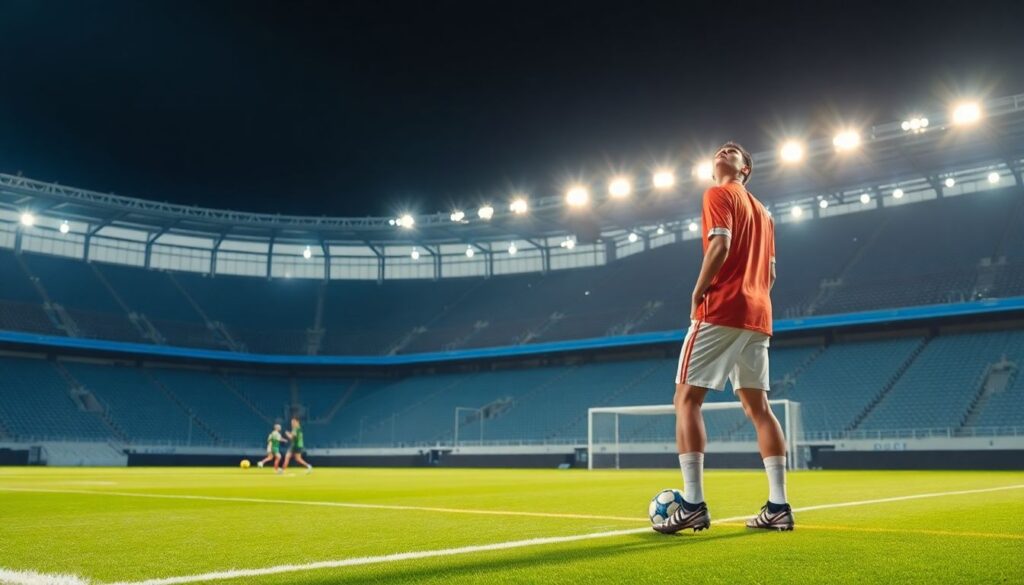
Visualization, or mental imagery, is a core element of técnicas de visualización para lanzar penaltis. You need a quiet space for initial practice, 1-3 minutes without interruptions and a few recorded cues or key words that your brain starts to associate with the routine.
Later, you must transfer this imagery into on-pitch conditions: wearing boots, looking at the real penalty spot and goals in your local environment in Spain (training ground or stadium). For some players, guidance from a curso psicología deportiva para porteros y lanzadores de penaltis accelerates this transfer.
- Tools that help:
- Short audio tracks recorded by your coach or psychologist guiding the imagery.
- Clips of your best penalties or saves, paused before the key moment, to prime the brain.
- A consistent starting trigger, like adjusting shin pads or placing the ball in a specific way.
- Key elements to imagine:
- Visual: position of goalkeeper, net, corners, path of the ball.
- Physical: rhythm of steps, foot contact, body lean, follow-through.
- Emotional: feeling composed, committed to the chosen side and technique.
- Frequency: Brief visualizations a few times per week in training, plus a very short version (1-2 images) immediately before important penalties.
Practical cognitive reframing and concise self-talk formulas
Before applying the following step sequence, consider the main risks and limits of self-talk and reframing:
- They are not a replacement for professional assessment if you experience panic, persistent low mood or trauma-related reactions.
- Overly positive or unrealistic phrases can backfire and increase internal pressure.
- Excessive internal dialogue may distract you from body sensations and the ball.
- Some players react better to neutral, technical cues than to emotional language.
- If distress increases when practising these steps, pause and consult a psicólogo deportivo especializado en fútbol profesional or your team doctor.
- Label the situation, not the drama. Replace thoughts like "This is the most important moment of my life" with "This is one penalty in one match." Naming it simply reduces emotional intensity and brings attention back to the task.
- Shift from outcome to process focus. When you notice "I can’t miss" or "If I fail, we are out," consciously switch to controllable elements:
- "Spot, run-up, contact"
- "Head still, ankle firm, follow-through"
- "See the corner, trust the foot"
Repeat one of these short formulas silently while placing the ball.
- Choose one personal cue word. Select a single word that fits your temperament:
- Calm players: "Sharp," "Explode," or "Attack" to spark intensity.
- Reactive players: "Breathe," "Smooth," or "Easy" to slow down.
Use it right before starting the run-up as a mental "play" button.
- Reframe fear of failure as information. Instead of "I’m nervous, I’m not prepared," try "Nerves mean this matters and my body is ready to act." For goalkeepers, replace "If I don’t save, I’m the villain" with "My job is to make it as hard as possible to score."
- Prepare a post-penalty reset line. Whether you score or miss, have one sentence to protect confidence:
- "I committed to my decision; I’ll review it later."
- "Next action, next job."
Repeat it while jogging back, so the previous penalty does not contaminate your next involvement.
- Integrate self-talk with external coaching. During coaching deportivo control de nervios antes de penaltis, ask staff to mirror your cue words instead of adding new ones. This prevents cognitive overload and keeps the script consistent.
Simulating pressure: drills that build stress resilience
Use the following checklist to verify whether your training sessions really prepare you for competitive penalty pressure:
- Drills regularly include a "one chance only" format, instead of unlimited repetitions from the spot.
- Teammates or staff create noise, movement or mild distraction behind the goal, while you keep the full routine.
- Penalties decide practical consequences in training (e.g., extra running or small rewards) to add meaning, without humiliating players.
- Both takers and goalkeepers rehearse the complete sequence: walk from halfway line, place the ball, breathing, visualization, run-up.
- Goalkeepers practise their own routines and mental cues, not just guessing sides mechanically.
- Video is occasionally used to review body language under stress, focusing on posture, breathing and timing rather than judging the person.
- Players experience missing or conceding in training without excessive criticism, learning to recover attention for the next action.
- Sessions sometimes simulate cup tie or playoff scenarios typical in Spain, including a penalty shootout series at the end of intense training.
- Coaches monitor individual responses: some players need more exposure to pressure, others need limits to avoid overload.
Simplifying decision-making: when to choose placement versus power
Common decision errors increase anxiety and reduce execution quality. Avoid these typical patterns:
- Changing the chosen side at the last second because of the goalkeeper’s movement, instead of trusting the pre-selected option.
- Trying to hit both top power and perfect corner placement simultaneously, instead of prioritising one main strategy.
- Ignoring your dominant strengths (e.g., accuracy over power) and copying star players whose technique does not fit your body or skill set.
- Failing to consider pitch and weather conditions in Spain, such as wet spots or bumpy penalty areas, when deciding height and power.
- Making the decision based on fear ("I’ll just smash it and hope") rather than on rehearsed patterns and goalkeeper analysis.
- Not having a "default" penalty plan for normal situations and a backup plan for when the goalkeeper clearly anticipates your favourite side.
- Overcomplicating the run-up with unnecessary feints that you have not mastered in training.
- Goalkeepers deciding their dive strategy at random each time, instead of following pre-match analysis combined with a clear in-the-moment rule (for example, commit early only against specific takers).
- Ignoring fatigue: late in the match, almost missing the ball because you select a technique that requires more strength than you currently have.
Collective routines: coach and team interventions that calm players
Beyond individual tools, coordinated routines support confidence and calm for both takers and goalkeepers. Alternative or complementary approaches are useful in different contexts:
- Structured team huddle before a shootout: Short, clear message from the coach focusing on roles and trust, not threats. Suitable for most squads, especially younger or more anxious groups.
- Predefined communication protocol: Only one staff member and one teammate speak to the taker while they wait. Reduces noise and conflicting advice, particularly valuable in high-stakes matches.
- Individualised support plans: For key takers or goalkeepers who are especially reactive, agree in advance what they want to hear (or not hear) from staff in those moments. Often developed in collaboration with a psicólogo deportivo especializado en fútbol profesional.
- Educational programmes and workshops: Clubs can integrate a curso psicología deportiva para porteros y lanzadores de penaltis into the season plan, combining classroom sessions, on-pitch drills and debriefs about emotional management in Spanish football culture.
Brief answers to common doubts about pre-penalty mental prep
How long should a complete pre-penalty routine last?
Usually it fits in 15-30 seconds, depending on referee instructions. Include ball placement, one or two breaths, a quick visualization snapshot and your cue word. If it is much longer, you risk rushing the final part or losing focus.
Can these techniques work in amateur or youth football in Spain?
Yes, the same principles apply in grassroots contexts. Adjust language, intensity of simulations and expectations to the age group. Keep drills fun and educational, avoiding punishment-based approaches that create fear of penalties.
Do I need a sports psychologist to train mental routines?
You can start with simple breathing, visualization and self-talk exercises guided by coaches or quality materials. However, for persistent anxiety or confidence problems, working with a psicólogo deportivo especializado en fútbol profesional is strongly recommended.
How often should I practise mental routines for penalties?
Short but regular practice is more effective than rare, long sessions. Integrate 2-5 minutes of mental work into normal training days, and sometimes finish sessions with a brief penalty block to apply the routines under mild fatigue.
What if my nerves get worse when I focus on breathing?
This can happen if you over-monitor bodily sensations. Simplify the pattern, keep your eyes on the ball and use more external cues such as focusing on a specific point in the net. If discomfort persists, consult qualified staff.
Should I copy the style of famous penalty takers?
Use them as inspiration, not as strict models. Extract principles, such as committing to a decision or keeping the head still, but adapt run-up length, power and placement to your own physical and technical profile.
How can goalkeepers apply mental preparation for penalties?
Goalkeepers also benefit from breathing control, visualization of likely shots and simple self-talk like "Read, decide, explode." They should rehearse a calm pre-shot stance, clear first step and a quick recovery mindset if the ball goes in.