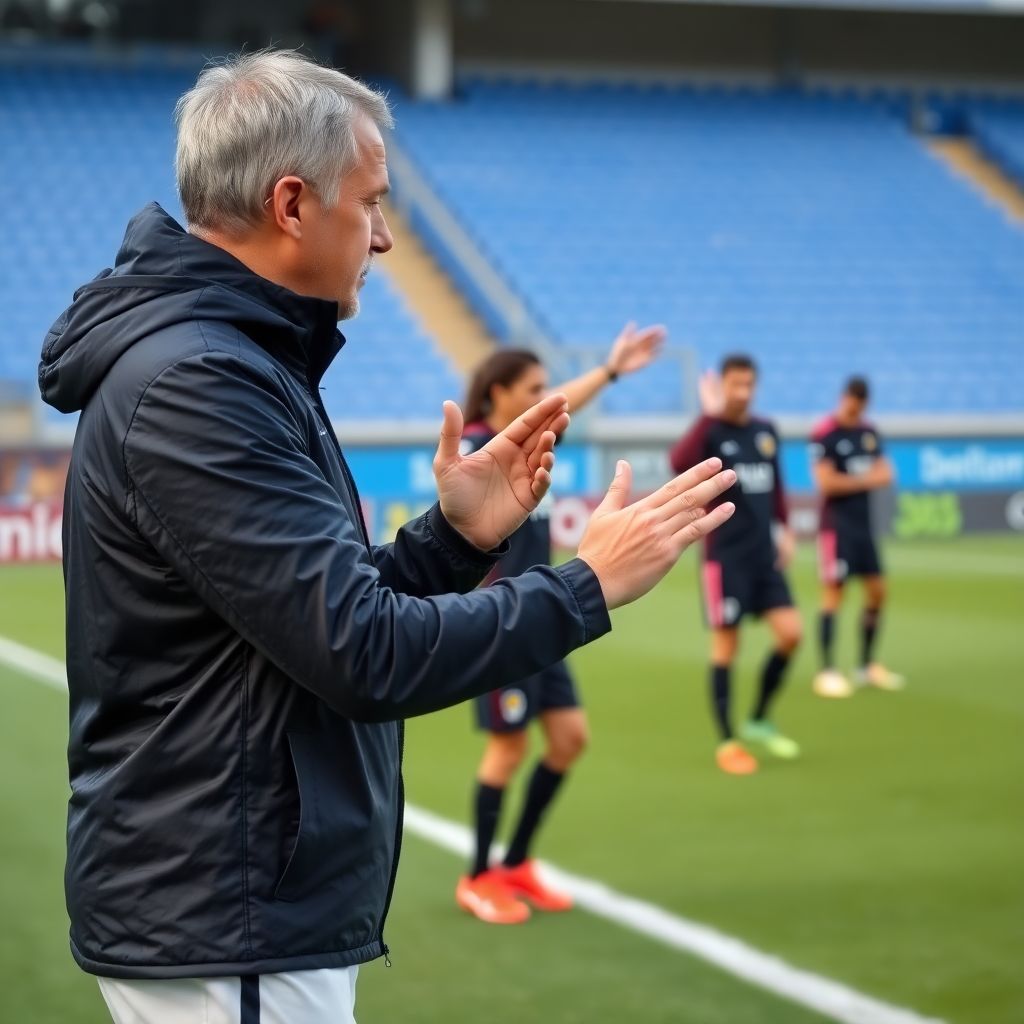
In-field communication is the ongoing flow of clear, brief information between players that turns individual decisions into coordinated team actions. A mentor accelerates this skill by modeling standards, diagnosing gaps, designing communication drills, and giving precise feedback, so players speak less but say exactly what the team needs in each phase of play.
Core claims and common misconceptions
- Good communication on the pitch is mostly about clarity and timing, not about shouting more or being «motivational».
- Short, pre-agreed words, gestures and eye contact often work better than long speeches during play.
- Silence is not neutral: when key players stay quiet, the team loses organization and emotional stability.
- A mentor or treinador mental para atletas de futebol is essential to turn communication into a repeatable, trainable skill.
- Most players can become effective communicators without changing their personality; they need structure, practice and feedback.
- Tracking concrete behaviours (calls, pointing, scanning) is more reliable than judging «leadership vibes».
Why in-field communication determines collective performance
In-field communication is the way players exchange information during a match: ball pressure, cover, marking, space, tempo and emotional cues. It uses voice, gestures, body orientation and even silence. The goal is simple: reduce uncertainty for teammates and accelerate collective decisions under pressure.
In practical terms, strong communication allows a team to stay compact, shift as one block, protect dangerous zones and attack with coordinated runs. Weak communication creates gaps between lines, late reactions to transitions and confusion about roles. Over ninety minutes, this difference compounds into more chances created and fewer critical errors.
The boundaries of the concept are important. Communication is not just shouting names or celebrating; it is any intentional signal that changes how a teammate positions, behaves or feels. A structured treinamento de habilidades de comunicação para times de futebol teaches players which messages matter in each phase (defensive block, build-up, transition) and how to deliver them with minimal noise.
Quick practical tips for today’s session
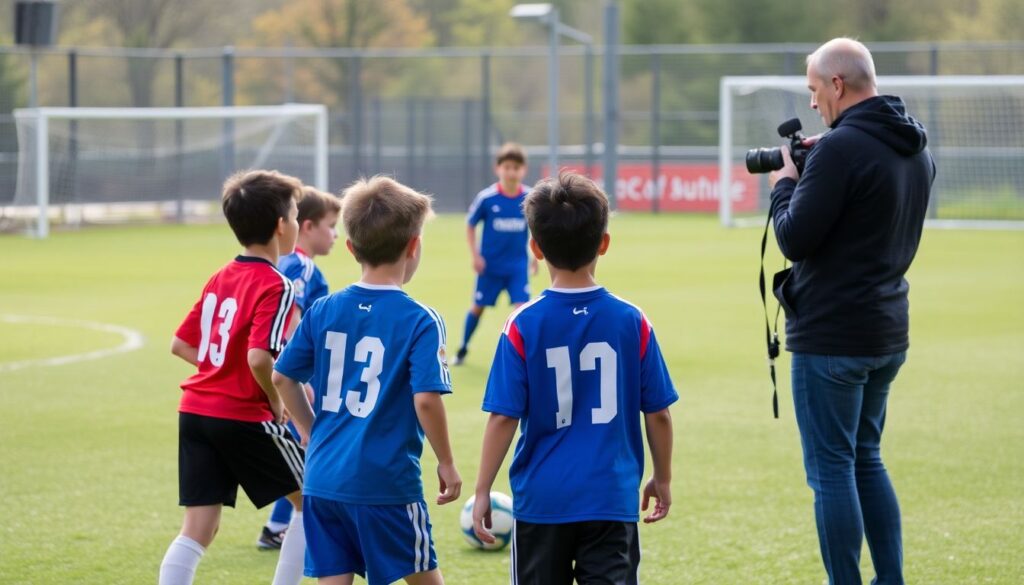
- Pick three core words for defence (for example: «press», «cover», «line») and use only these for one small-sided game.
- Assign one «voice» per line (defence, midfield, attack) and ask them to call triggers every 10-15 seconds.
- Film a 5-minute game and count each clear, useful call per player; discuss one thing to keep and one to improve.
- End training with two questions per player: «When did you speak that helped the team?» and «When should you have spoken but didn’t?».
Myths about vocal cues, gestures and silence – and the truth
- Myth: «Good communication means talking non-stop.»
Truth: Constant talking adds noise. Effective players speak at specific triggers (pressing, line adjustment, free man) with short, agreed words or gestures. - Myth: «Leaders are born extroverts, quiet players can’t lead.»
Truth: Leadership in communication is behaviour-based. Even quiet players can lead by giving early information, pointing and using eye contact consistently. - Myth: «Everyone should say whatever they feel.»
Truth: Freedom without structure creates chaos. Teams need a limited vocabulary, clear roles (who calls what) and shared rules for tone and timing. - Myth: «Gestures are enough, words are optional.»
Truth: Gestures are powerful but have range limits and can be missed under stress. High-level teams combine voice, gestures and body orientation to reinforce the same message. - Myth: «Silence avoids confusion.»
Truth: Silence usually means late reactions and isolated decisions. Intentional «silent periods» are useful only when they are planned (for example, during opponent build-up with clear zonal rules). - Myth: «Communication is about motivation, not tactics.»
Truth: Emotional messages matter, but tactical information should dominate during live play. Motivation works best in breaks and before/after games, not instead of on-field guidance.
Technical and interpersonal communication skills to cultivate
Developing in-field communication requires both technical-tactical content and interpersonal delivery. Below are typical scenarios where specific skills can be trained intentionally, whether inside a curso de comunicação para jogadores de futebol or in regular club practice.
1. Organizing the defensive line
Key skills: early warnings, constant checking of the back line and cover. The central defender or goalkeeper takes primary responsibility for calling «step», «drop», «shift left/right» and marking assignments. Gestures (arm up, hand push) reinforce the direction and intensity of the message.
2. Guiding pressing triggers
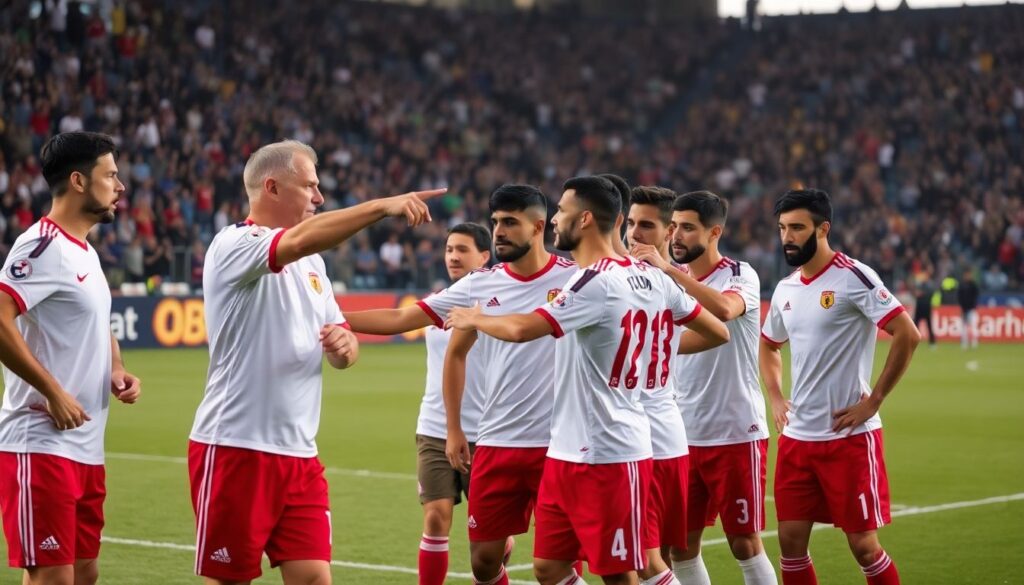
Key skills: recognizing triggers (bad touch, back pass, isolated opponent) and calling them early. The closest player or designated presser shouts the trigger word and points, while teammates echo or adjust. Consistency here transforms random pressing into a synchronized wave.
3. Coordinating build-up from the back
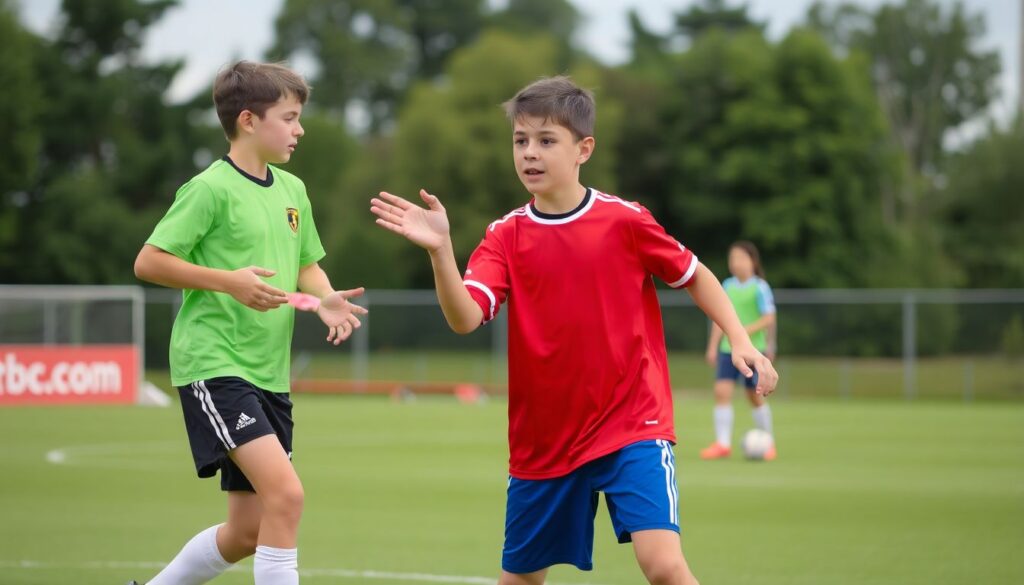
Key skills: calling for the ball, indicating support angles and calming the tempo. Midfielders communicate «turn», «back», «switch» and «hold» to help the ball carrier. Non-verbal cues include opening the body to show passing lanes and using hand signals to indicate one-touch or safe options.
4. Managing transitions (losing and winning the ball)
Key skills: instant reaction phrases. After losing the ball, someone calls «press» or «fall» within a second. After winning it, forwards and attacking midfielders shout «time», «man on» or «switch» to guide the first pass. This rapid code is central to mentoria esportiva para desenvolvimento de liderança em campo, because it demands initiative and responsibility.
5. Emotional regulation and support
Key skills: stabilizing teammates after mistakes and maintaining focus. Captains and informal leaders use short phrases like «next one», «we stay», combined with open body language. This domain blends communication and mentality, where a treinador mental para atletas de futebol or coach can align messages with the team’s psychological plan.
The mentor’s role: modeling, diagnosing and setting standards
The mentor – head coach, assistant, or specialist from a consultoria de coaching esportivo para jovens atletas – turns communication from a vague «talk more» idea into a structured habit. Their influence appears in three main phases: modeling, diagnosis and standard setting.
Benefits of an active communication mentor
- Defines a small, shared vocabulary and visual cues that match the team’s game model.
- Demonstrates how to speak: tone, volume, timing and body posture in training games.
- Observes sessions focusing only on communication behaviours and gives targeted feedback.
- Helps shy or younger players find their style of leadership without forcing them to copy others.
- Aligns messages from staff and player leaders, avoiding mixed instructions on match day.
Limitations and typical blind spots
- If the mentor always talks for the players, athletes never develop autonomy and freeze in noisy stadiums.
- Over-structured codes can become rigid; players then struggle to adapt to new game situations.
- Focusing only on vocal cues may ignore crucial communication via positioning and tempo control.
- Lack of objective tracking means improvements are based on feelings instead of visible behavioural change.
Concrete drills, cues and pre-set phrases for match situations
Drills convert theory into automatic reactions. Below are common mistakes and better alternatives you can integrate into daily training or a structured treinamento de habilidades de comunicação para times de futebol.
- Mistake: Free-talking rondos with no focus.
Better: In a 5v2 rondo, assign one defender as the «voice». They must shout the trigger word before pressing and name the cover player. Swap roles every minute. - Mistake: Long tactical talks before small-sided games.
Better: Give each team three pre-set phrases for defence and three for attack. They can use only these during the game. Review which helped most and why. - Mistake: Ignoring non-verbal signals in drills.
Better: Play a 4v4+3 neutral possession game where only the designated leader can speak; others must use pointing and body orientation. Discuss how much can be communicated without words. - Mistake: No role differentiation.
Better: In an 8v8, assign roles: «line organizer», «pressing trigger», «tempo controller». Each has specific messages they must own, reinforcing their leadership zone. - Pre-set phrase examples for matches.
Defence: «Line!», «Drop!», «Inside!», «Cover!».
Midfield: «Turn!», «One!», «Switch!», «Support!».
Attack: «Near post!», «Second!», «Hold!», «Set!». Agree them in advance and keep them stable across games.
Tracking development: metrics, feedback loops and adjustments
To make communication a real skill, mentors must track it like any other tactical or physical variable. Simple, visible metrics work best and can be integrated into regular video analysis or field observation.
Example mini-protocol for a 4-week block:
- Week 1 – Baseline observation. Film a small-sided game. Count per player: number of clear tactical calls, useful gestures and moments of visible hesitation to speak. Share results privately.
- Week 2 – Focused intervention. Choose one priority per player («call press earlier», «use name before instruction»). Design two drills per session that force this behaviour and review clips with the player.
- Week 3 – Role anchoring. Assign each player a communication role (organizer, connector, stabilizer). Track if their messages match the role in at least half of the observed actions.
- Week 4 – Reassessment and adjustment. Repeat the initial measurement. Compare counts and quality (early/late, clear/vague). Adjust roles, vocabulary or drill design according to progress.
This simple loop can be run inside a club, an academy or a formal curso de comunicação para jogadores de futebol, and can be led by the head coach, an assistant, or an external mentor specialized in mentoria esportiva para desenvolvimento de liderança em campo.
Clarifications and recurring concerns
Do all players need to talk the same amount on the pitch?
No. Different positions and personalities will speak differently. The key is that every player fulfils their communication tasks: some organize lines, others give short confirmations or emotional support. Balance matters more than equal volume.
How early can youth players start structured communication training?
Youth players can start with very simple cues from early ages: calling names, «man on», «time». Structure and roles become more complex around the age when they understand basic team tactics and can stay focused during small-sided games.
Is it better to use the same code words for all teams in a club?
Shared vocabulary across age groups simplifies progression and coaching. However, each team can adapt or add specific terms that fit their system. Consistency inside one team is more important than identical codes across the entire club.
Can communication training replace tactical sessions?
No. Communication amplifies tactics; it does not replace them. The most efficient approach is to embed communication goals into tactical drills, so players learn what to say while practicing how to move and position.
What if a player refuses to speak more, saying it feels unnatural?
Forcing a style rarely works. Start by giving that player minimal, specific tasks («say ‘man on’ once per possession on your side») and use video to show impact. Over time, most players accept a functional level of communication that still feels authentic.
Should the mentor be on the pitch giving cues during games?
During training, mentors can model and guide actively. In matches, they should reduce direct cueing and allow player leaders to own communication. Otherwise, athletes become dependent and struggle in chaotic or loud environments.
How does mental coaching connect with in-field communication?
Mental coaching helps players manage anxiety, focus and confidence, which directly affects their willingness to speak and lead. A treinador mental para atletas de futebol can align mental routines with specific in-game messages and roles.