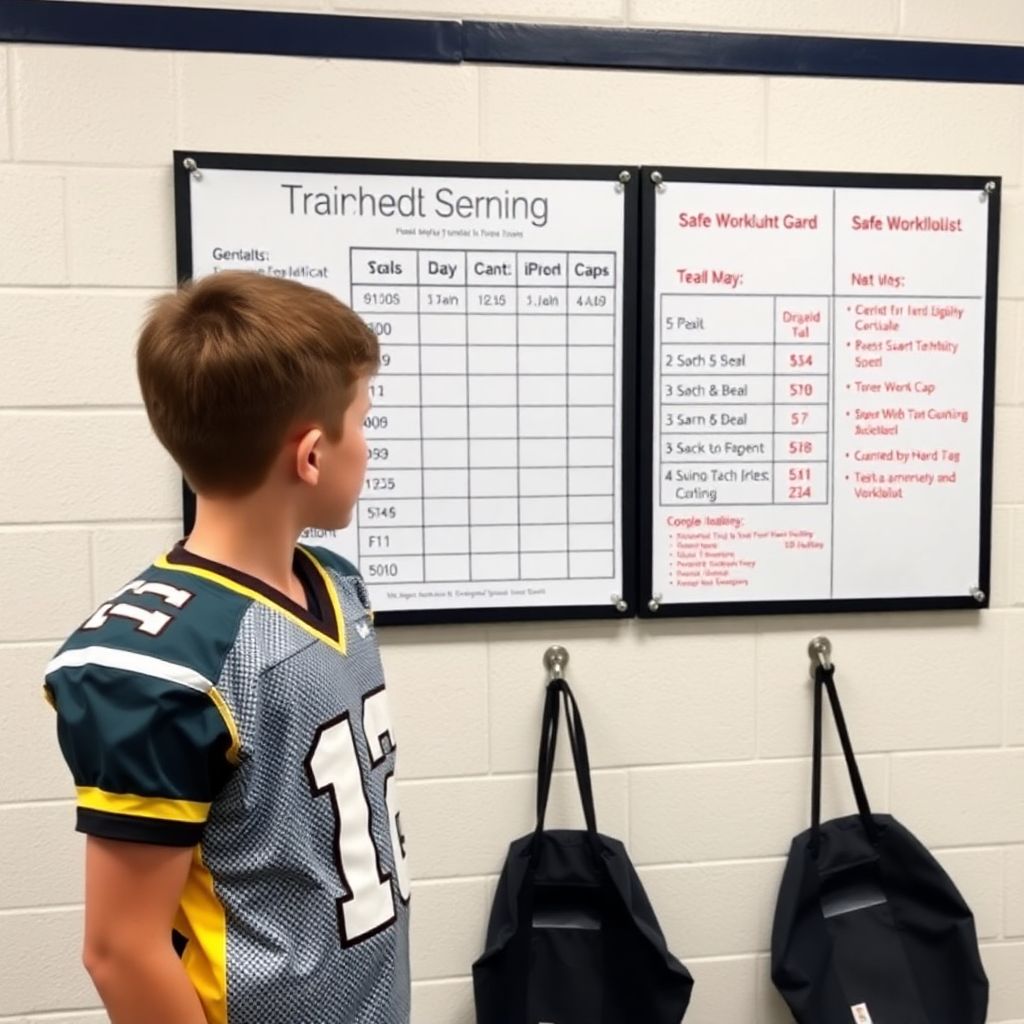
An individual development plan (PDI) for a young footballer defines 2-4 priority goals, links them to objective assessments, and organises weekly training, support and education around those goals. It must respect growth, school demands and club context, using simple metrics, regular reviews and conservative workload progressions to stay safe.
Core performance objectives for a young footballer
- Develop position‑specific technical consistency under realistic match pressure.
- Improve tactical understanding to support the team model of play.
- Build age‑appropriate strength, speed and endurance without overloading growth structures.
- Enhance emotional regulation, resilience and communication with staff and peers.
- Reduce injury risk via structured prevention routines and load management.
- Prepare for key transitions (new category, new club, dual career with studies).
Assessing the athlete: technical, tactical, physical and psychosocial profile
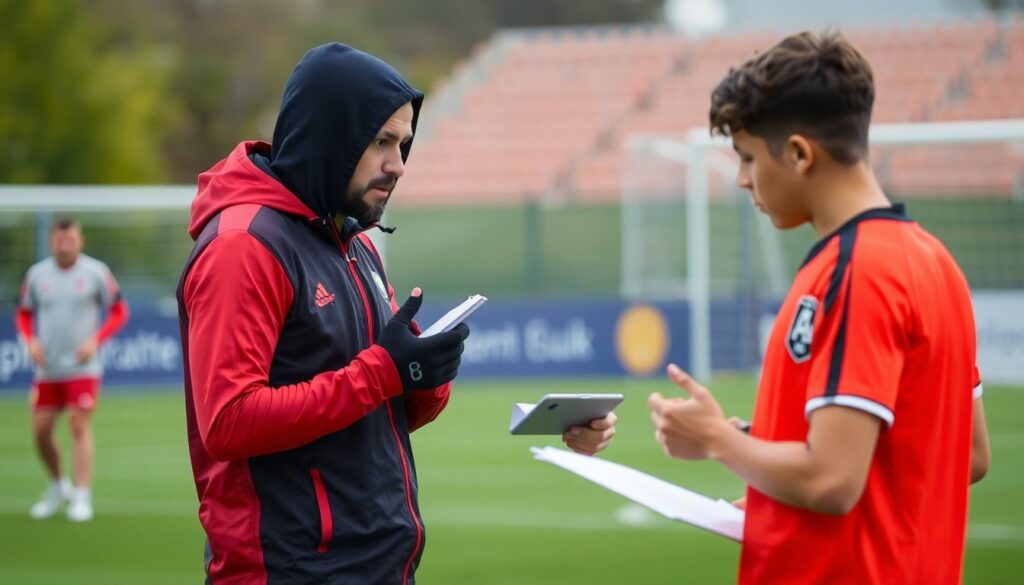
A structured assessment is the base of any plano de desenvolvimento individual futebol. It suits academy and amateur contexts where the player is seen at least twice per week and has stable health. It is not appropriate during acute illness, recent concussion, significant pain, or just after returning from injury without medical clearance.
Start with a 360° view:
- Technical: first touch, passing range, dribbling, finishing, 1v1 defending, weak foot, set‑pieces.
- Tactical: positioning in and out of possession, pressing triggers, support angles, decision speed, game reading.
- Physical: sprint ability, change of direction, basic strength, core stability, aerobic capacity, flexibility/mobility.
- Psychosocial: motivation, training habits, emotional control, communication, coachability, support at home and school.
Combine simple tools instead of complex lab testing, especially if you are not a specialist or do not have access to a consultoria desenvolvimento de jovens atletas de futebol:
- Match and training video clips, tagged by theme (e.g. first touch, pressing, transitions).
- Observation checklists during 2-3 matches and 3-4 training sessions.
- Field tests: short sprints, repeated shuttle runs, basic jump tests, plank holds, movement quality screens (e.g. bodyweight squat, lunge).
- Short conversation or questionnaire about school, sleep, stress, enjoyment and long‑term aspirations.
Summarise your findings in a simple table that can later be transformed into the PDI.
| Assessment finding | Priority goal | Planned action | Timeline | Responsible person |
|---|---|---|---|---|
| Inconsistent first touch under pressure | Improve first touch in tight spaces | 3 weekly technical blocks focused on receiving and orientation | 8 weeks | Position coach |
| Drops intensity after 60 minutes | Increase match endurance | Progressive aerobic and high‑intensity interval work in 2 sessions/week | 12 weeks | Physical coach |
| High stress around exams | Balance football and school load | Adjust loads during exam weeks, basic time‑management support | School term | Head coach + parents |
Translating assessment into SMART technical and tactical goals
To move from assessment to action you need some basic resources and a clear process. This is the foundation of any practical answer to como montar pdi para atletas de futebol.
Minimum requirements
- Clear playing model and position profiles in the club or team.
- 2-3 months of relatively stable training and competition calendar.
- At least one coach who can follow the player across sessions and matches.
- Simple tracking tools: spreadsheet, shared document or PDI template.
- Parental communication channel for younger players.
SMART goal structure
- Specific: focus on one action or situation (e.g. body orientation when receiving facing own goal).
- Measurable: define an observable criterion (e.g. successful first touch in 7 of 10 similar situations on video).
- Achievable: adjust ambition to current level and available session time.
- Relevant: linked to the player’s position and the team’s way of playing.
- Time‑bound: set a realistic timeframe (usually 6-12 weeks for young players).
Practical examples of SMART technical and tactical goals
- Technical, winger: Within 10 weeks, improve crossing accuracy so that at least half of crosses from the right half‑space land in a predefined target zone during opposed training.
- Tactical, holding midfielder: Within 8 weeks, consistently provide a passing lane in build‑up, being free and oriented in at least 70% of build‑up clips in video review.
- Technical + tactical, centre‑back: Over 12 weeks, reduce rushed clearances by improving first touch and scanning, with at least half of defensive actions resulting in controlled build‑up instead of long clearance.
Document 2-4 such goals, not more. Too many objectives make the PDI unrealistic and can lead to over‑training or frustration, especially without expert consultoria desenvolvimento de jovens atletas de futebol.
Structuring individualized training microcycles and periodisation
Before building weekly structures for treinamento personalizado futebol para jovens atletas, consider these risks and constraints:
- Growth spurts increase injury risk; loading jumps, high‑impact plyometrics and intense strength work must be progressed conservatively.
- School and social stress can reduce recovery; monitor sleep, mood and enjoyment regularly.
- Too many additional sessions may cause burnout or overuse injuries; prioritise quality over volume.
- Lack of qualified supervision for strength or speed work can make complex exercises unsafe.
- Parents and agents may push for fast results; protect the player with long‑term planning.
- Map the weekly constraints
List school timetable, travel times, team training days, match day, and any other sport or activity. Identify available 20-60 minute windows for extra individual work. - Assign PDI goals to specific sessions
Decide when each goal will be targeted within the microcycle:- Technical detail on low‑fatigue days or at the start of the session.
- Tactical work within game‑based drills of the team session.
- Physical work separated from intense change‑of‑direction when possible.
- Design safe technical sessions
For each technical goal, plan 2-3 focused blocks per week:- Block duration 10-20 minutes, ball‑rich, with clear success criteria.
- Examples: receiving and turning in tight grids, 1v1 from different angles, finishing after movement.
- Risk mitigation: stop if technique deteriorates due to fatigue; avoid heavy contact after long school days.
- Integrate tactical objectives into team play
Coordinate with the coach so that the player’s tactical PDI goals appear in:- Positional games (e.g. rondos, possession grids with target behaviours).
- Small‑sided games with constraints that encourage the desired decisions.
- Video review sessions with 4-8 short clips per week.
- Schedule complementary physical work
If you or your staff have at least basic knowledge similar to a curso preparação física para jovens jogadores de futebol, include:- 1-2 short strength sessions per week (20-30 minutes, mainly bodyweight or light resistance).
- 1 speed or acceleration focus, always after a good warm‑up and early in the session.
- Risk mitigation: follow the rule of two – avoid two consecutive days of high‑intensity load for the same tissue type (e.g. heavy jumps and long sprints).
- Plan rest and regeneration
Protect at least one full day without football per week. After matches, focus on low‑intensity technical touch work, mobility and sleep hygiene rather than hard conditioning.
Strength, conditioning and injury-prevention plan tailored to growth
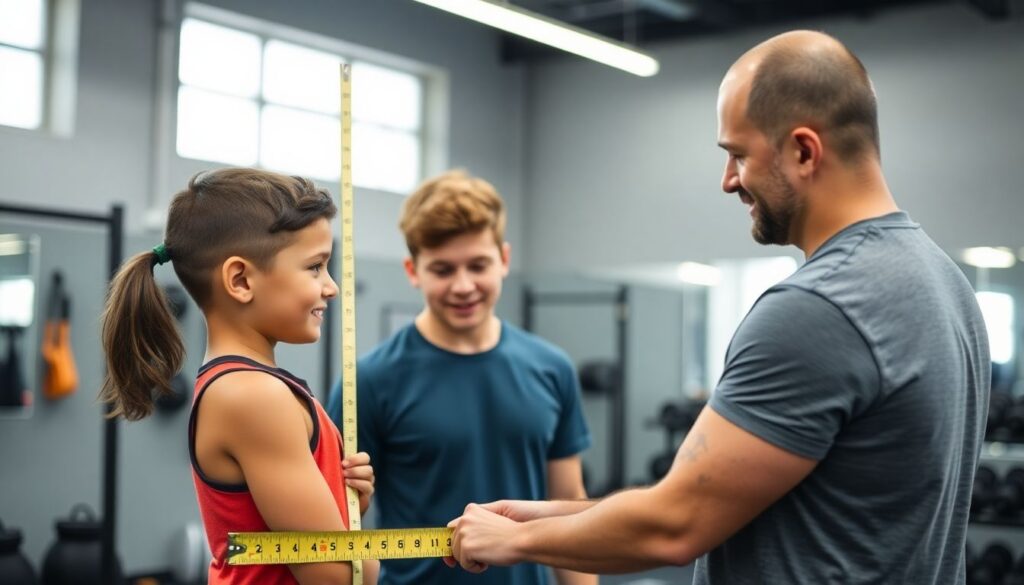
Use this checklist to validate that your physical plan is appropriate for a growing player:
- Growth status reviewed at least every 3-4 months (height, shoe size, subjective growth symptoms).
- No high‑impact plyometrics or maximal strength work introduced suddenly; progressions are gradual over several weeks.
- Each session starts with a structured warm‑up including running, dynamic mobility and activation (10-15 minutes).
- Strength exercises prioritise technique and control over load, using mostly bodyweight, minibands and light external resistance.
- Core and hip stability included 1-3 times per week in short blocks of 10-15 minutes.
- Weekly workload adjusted during growth spurts, exam periods, illness or sleep problems.
- Player understands basic pain rules: stop if pain alters movement, persists after session, or worsens over days.
- Injury‑prevention blocks integrated into team warm‑ups rather than as long, extra standalone sessions.
- Return‑to‑play from any significant injury guided by a qualified health professional, not only the coach.
Monitoring, metrics and feedback loops for iterative adjustments
Common errors in monitoring and feedback can make even a well‑designed plano de desenvolvimento individual futebol ineffective:
- Setting goals but not defining any simple metric to observe change (video clips, test values, coach ratings).
- Changing too many variables at once, making it impossible to know what worked or caused fatigue.
- Ignoring subjective feedback such as tiredness, soreness or motivation, especially in exam periods or family stress.
- Comparing the player constantly to team‑mates or professional idols instead of to their own baseline.
- Reviewing the PDI only at the end of the season instead of every 4-6 weeks.
- Using tests that are too complex or fatiguing, compromising training quality or match readiness.
- Failing to communicate adjustments clearly to parents and other staff, leading to duplicated or conflicting work.
- Keeping data in many different apps or sheets without a single, accessible overview.
Career pathway planning: transitions, education and risk management
A PDI should also consider the player’s medium‑term path, with realistic and safe alternatives.
- Club‑based pathway
The player progresses through the club’s age categories with continuity of methodology. Suitable when the club offers robust support (coaching, education, medical), and the player is emotionally settled. - School‑ or university‑centred pathway
Education is the main pillar, with football organised around school or university. Appropriate when academic potential is strong, or professional football probability is uncertain, which is common for most players. - Hybrid pathway with external specialists
The main team provides competition, while external staff offer treinamento personalizado futebol para jovens atletas, mental skills or physical preparation. Works best when communication is open and workloads are coordinated to avoid overload. - Pause, repositioning or exit from competitive football
In case of repeated injuries, loss of enjoyment, or major life changes, the PDI can focus on health, education and recreational sport. This option protects long‑term wellbeing and leaves the door open for future return.
Typical coach concerns and practical solutions
How many individual goals should I include in one PDI?
For most young players, 2-4 well‑defined goals are enough: one or two technical, one tactical, and optionally one physical or psychosocial. More than this usually dilutes focus and increases workload beyond what is manageable alongside school.
How often should I review and adjust the PDI?
Review progress every 4-6 weeks using video, simple tests and player feedback. Adjust goals or methods if there is clear progress, stagnation, new injuries, or changes in schedule such as exams or holidays.
Can I design a PDI without a strength and conditioning expert?
You can plan basic bodyweight strength and movement‑quality work, but complex lifting or high‑intensity conditioning should follow guidance similar to a curso preparação física para jovens jogadores de futebol. When in doubt, keep loads lighter and focus on technique.
What if parents or agents push for more training than I consider safe?
Explain the long‑term risks of overload and share the planned weekly load in writing. Offer alternatives such as shorter technical sessions, shared monitoring, and a trial period with strict rules for rest and feedback.
How do I adapt the PDI during a growth spurt?
Reduce high‑impact and high‑volume running, prioritise mobility, technique and low‑load strength, and increase recovery time. Monitor pain in knees, heels and back closely and refer to a health professional if symptoms persist.
Is a PDI useful for late‑maturing or less talented players?
Yes. For them, an individual plan is often even more valuable, focusing on physical robustness, game understanding, and confidence. The aim is steady development and enjoyment, not pressure to match early‑maturing peers.
When should I seek external consultoria desenvolvimento de jovens atletas de futebol?
Seek external help if you feel insecure about physical preparation, if injuries repeat, or if the player and family want a more detailed long‑term plan. Ensure any external work is coordinated with the club to avoid conflicting loads.