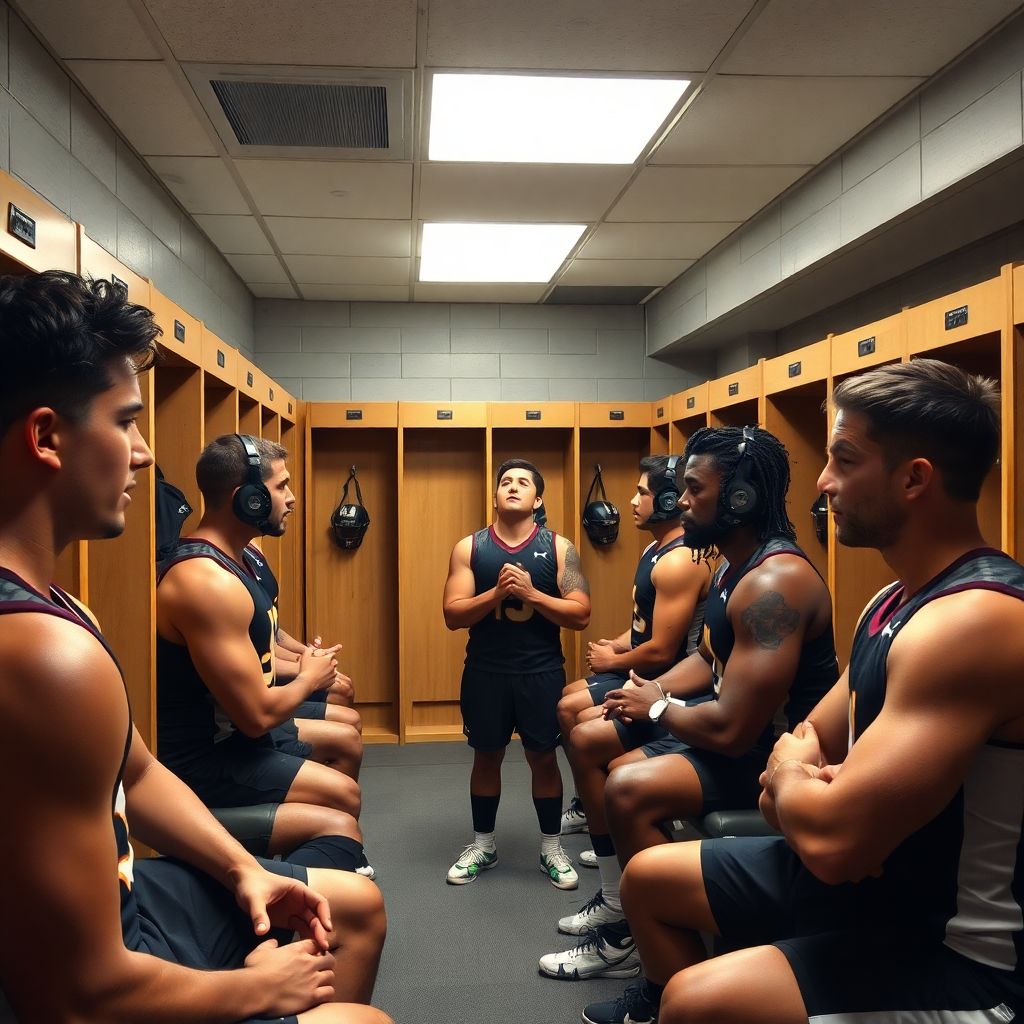
Mental preparation before a big match means arriving with a clear plan: a short ritual to stabilise emotions, simple breathing to control arousal, targeted visualization of key plays, and reframing pressure as challenge. Combine these with a concise attention map and shared team cues to keep focus during the entire game.
Core Mental Tasks to Complete Before Game Time
- Define a simple, repeatable pre-match ritual that you can execute in any stadium or locker room.
- Use breathing patterns to regulate tension and energy 30-5 minutes before kick-off.
- Run brief visualization scripts focused on your specific role and team tactics.
- Reframe worries into concrete, controllable performance goals for this match.
- Build a one-page attention map: what to focus on before, during and after key moments.
- Agree on short verbal or non-verbal signals with coaches and teammates to reset mindset in seconds.
Pre-match Rituals That Anchor Performance
Structured rituals make preparación mental antes de un partido de fútbol more stable and predictable. They are ideal for intermediate and high-level players who already know their role on the pitch.
Avoid rigid or superstitious rituals that cause anxiety if something changes (different locker room, delayed kick-off). If you notice that missing one step ruins your confidence, simplify your routine immediately.
Simple ritual blueprint (15-20 minutes total)
- Body activation (5 minutes) – light dynamic stretching, mobility and a short run-up routine that you can do in any warm-up area. Focus attention on contact with the ground, breathing rhythm and muscle temperature.
- Mental check-in (3-5 minutes) – sit or stand in a quiet corner of the locker room. Ask yourself three questions: What is my job today? What is one strength I bring? What is one clear objective for the first 10 minutes?
- Focus cue selection (2-3 minutes) – choose one physical cue (e.g., tapping your chest, adjusting your shin guards) and one word or phrase you repeat silently as a reset signal when pressure rises.
- Short visualization (5 minutes) – eyes closed, rehearse 3-5 key situations you are likely to face (first touch, defensive duel, run in behind). Keep it realistic: include mistakes and your recovery reaction.
Skip or shorten this ritual if you are injured, emotionally overloaded (e.g., after bad news) or severely sleep-deprived. In these cases, prioritise calming breathing and basic tactical clarity over full routines.
Breathing Patterns and Micro-routines to Rapidly Restore Focus
To apply técnicas de concentración y foco para deportistas safely, you only need a quiet corner, a bench or wall to lean on, and a watch or game clock to count seconds. No special devices or apps are required.
Core breathing tools
- Box breathing (4-4-4-4) – inhale for 4 seconds, hold 4, exhale 4, hold 4; repeat 4-6 times. Use this 30-15 minutes before the match to stabilise nerves.
- Extended exhale (2-6) – inhale through the nose for 2-3 seconds, exhale for 5-6. Use on the bench, during breaks in play or at half-time to drop tension quickly.
- Power breath (3 quick + 1 slow) – three fast, sharp inhales and exhales through the mouth, followed by one long, controlled exhale. Use this right before intense sprints or duels to raise activation safely.
Micro-routines you can use anywhere
- Locker-room reset (2 minutes): sit down, close your eyes, do 6 cycles of box breathing, then repeat your focus word 10 times.
- Sideline reset (30 seconds): stand tall, one hand on your chest, breathe with extended exhale for 3-4 cycles while scanning the pitch and repeating your task for the next action.
- Half-time reset (2-3 minutes): after team talk, step aside, do 8-10 extended exhales and mentally choose one objective for the first 5 minutes of the second half.
Visualization Protocols for Sharpening Tactical Readiness
These visualization steps are a compact entrenamiento psicológico para deportistas de alto rendimiento that you can perform safely sitting or lying down, 20-10 minutes before the match or on the bus on the way to the stadium.
- Set your role-specific objective – describe in one sentence what success looks like for you today (e.g., «win most 1v1s on my side»). This becomes the filter for everything you visualize.
- Recreate stadium and context – close your eyes and imagine the pitch, crowd, weather and noise. Add details: type of grass, lighting, typical sounds. This trains your brain to stay calm in real match conditions.
- Run through three core scenarios – choose the situations you will probably repeat most:
- With the ball (first touch, passing, finishing).
- Without the ball (pressing, tracking runners, covering space).
- Transitions (losing the ball and pressing, winning it and counter-attacking).
Visualize at real speed and from your own eyes, not like watching TV.
- Include mistakes and recovery – in each scenario, imagine one error (bad pass, missed tackle) and then see yourself reacting fast: body language up, quick decision, next action with quality. This reduces fear of failure on the pitch.
- Anchor with a physical cue – at the end of each scenario, squeeze your fist, tap your thigh or adjust your armband while repeating one word (e.g., «next», «strong»). Use the same cue in the match to recall the visualization state.
- Finish with a full-game snapshot – see yourself walking off the pitch having applied your objective consistently (not playing perfect, but being present and committed in every phase).
Fast-track mode: 3-minute visualization for game day
- State your role objective in one sentence.
- Visualize one key action with the ball and one without, each for about one minute.
- Imagine one mistake and your fast recovery reaction.
- Tap your chosen cue (chest, wrist, thigh) and repeat your focus word three times.
Cognitive Reframing: Turning Pressure into Performance Fuel
Use this checklist in the locker room when you are thinking about cómo manejar la presión antes de un partido importante. If most items are «yes», your reframing is on track.
- I can clearly separate what I control today (effort, attitude, decisions) from what I do not (referee, pitch, opponent).
- I describe this match as a challenge or opportunity, not as a verdict on my career or value.
- I have turned vague fears («what if I play badly») into specific actions («if I lose the ball, I press immediately»).
- I use body language (upright posture, eye contact, strong walk) to support a confident inner dialogue.
- My self-talk is short and actionable («win your duels», «show for the ball») instead of judgemental («don't fail»).
- I accept that nerves are normal and focus on breathing, game plan and first actions instead of trying to eliminate anxiety completely.
- I can explain my role and first three priorities to a teammate in less than 30 seconds.
- I have at least one reset strategy ready if things start badly (breathing, cue word, brief talk with the coach).
Designing a Concise Game-day Attention Map
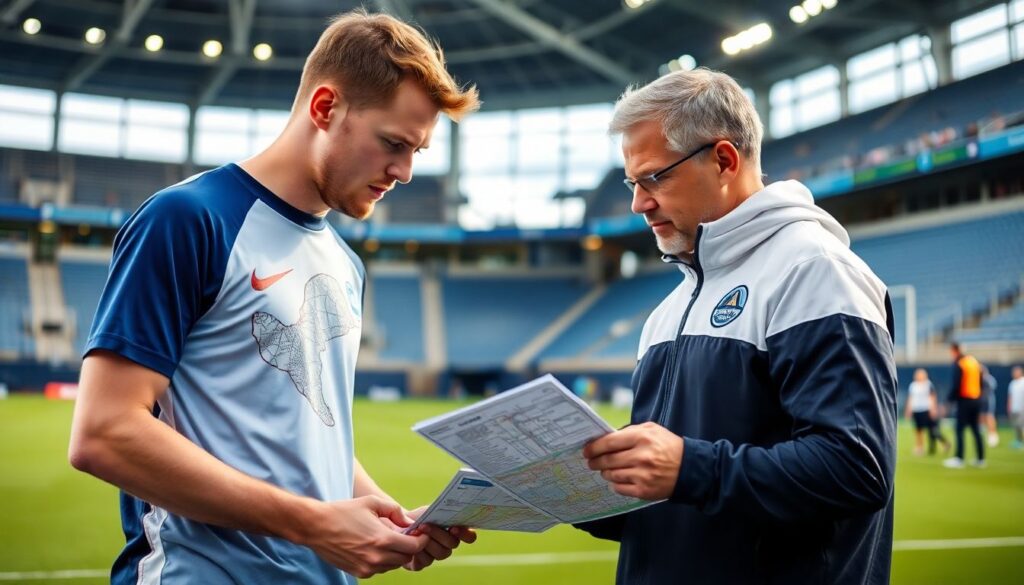
An attention map is a one-page guide for where your mind should be before, during and after key moments. It is especially useful if you work with a coach deportivo para mejorar rendimiento mental and want a simple tool you can use alone on match day.
Frequent mistakes to avoid
- Writing a long, complex plan that you cannot remember under pressure.
- Filling the map with outcomes (goals, result, statistics) instead of controllable behaviours (runs, positioning, communication).
- Ignoring dead-ball situations (corners, free-kicks, throw-ins), where focus often drops.
- Not planning what to focus on immediately after mistakes or after scoring.
- Using negative language («don't lose the ball») instead of positive, clear actions («scan, control, simple pass»).
- Creating one generic map for all positions instead of adapting to your specific role.
- Updating the map only in big matches and not in regular league games.
- Forgetting to include communication cues with teammates and staff.
Coaching Prompts and Team Signals to Synchronize Mindsets
Shared prompts and signals help the whole team execute preparación mental antes de un partido de fútbol in the same direction, without long speeches.
Effective options and when to use them
- Pre-match three-question huddle (in the tunnel or locker room): coach asks, «What is our first objective?», «What do we do without the ball?», «What do we do after losing it?». Keeps focus on simple behaviours.
- One-word phase cues during the game: «Press», «Calm», «Higher», «Compact». Use them to shift collective mindset in seconds, especially after momentum swings.
- Non-verbal reset signals: captain's hand gesture or specific clap pattern triggers the team to breathe, step up together and refocus after mistakes or referee decisions.
- Half-time micro-ritual: 60-90 seconds where players close eyes, take 5 deep breaths and each states one adjustment out loud. Ideal when there is limited time for long tactical talks.
Anticipated Mental Hurdles and Practical Fixes
What if I feel overwhelmed by the importance of the game?
Shift from big-picture thoughts («season, career, consequences») to a 10-minute window: focus only on your first actions and breathing. Use extended exhale breathing for 1-2 minutes and repeat one short, clear role objective.
How can I stop overthinking mistakes during the match?
Decide a fixed recovery protocol: one breath, one cue word, one simple action (press, offer for the ball, communicate). Practice this in training so it becomes automatic on game day.
What if I cannot visualize clearly?
Start with sensations instead of images: feel the grass, your boots, your breathing and your movement pattern. Add simple mental pictures later, such as receiving the ball and playing a short pass.
How long should my pre-match routine be?
For most players, 15-25 minutes is enough, including physical warm-up, breathing and visualization. If time is short, use the fast-track 3-minute visualization and a 2-minute breathing reset.
Can these techniques replace physical and tactical training?
No. Mental routines add consistency and resilience to your existing physical and tactical work, they do not replace it. Integrate them into your current preparation instead of treating them as a separate block.
Is it better to work alone or with a coach?
Simple routines can be applied alone, but a qualified mental or performance coach can personalize scripts, challenge unhelpful beliefs and adjust your plan across the season for better long-term results.