
In the final minutes, emotional control comes from three fast moves: notice your body signals, name what you feel in one or two words, and refocus on one simple task cue. Use brief breathing, clear decision rules, and a short reset routine you have practised before, never improvised.
Immediate mental checklist for closing moments
- 0-10s: Notice 1-2 body signs (heart, hands, breathing) without judging them.
- 10-20s: Label your emotion in two words: «nervous + excited», «angry + focused».
- 20-30s: Take three short, quiet breaths through the nose, longer out than in.
- 30-45s: Lock your attention on one task cue: «follow-through», «first step», «strong stance».
- 45-60s: Apply a pre-defined simple rule: safe pass, best shot, or keep it simple in defence.
- After the play: Ask «What worked? What one thing do I repeat next time?»
Recognizing physiological signs under pressure
This guide is for competitive athletes in Spain who already train regularly and play in structured leagues or tournaments. It is especially useful if you are exploring entrenamiento mental para deportistas de alto rendimiento or following a programa de gestión emocional para atletas profesionales and want a simple in-game tool.
Start in the final 2-3 minutes of a tight match. Instead of fighting your body, use it as information. Typical signs are: faster heartbeat, shallow breathing, tense shoulders, shaky hands, tunnel vision, overtalking, or going very quiet. None of these mean you will fail; they only mean your system has detected importance.
0-30s rule: silently label two signs, for example «heart fast, hands cold». This short observation stops automatic escalation and gives you a tiny gap to choose your response. If signs are extreme (dizziness, pain, confusion), forget mental tricks: signal staff, prioritise health, and do not force yourself to stay on court or field.
Do not apply these techniques if you have a medical condition affecting heart, breathing, or panic symptoms without consulting a health professional first. Emotional skills are a complement to, not a replacement for, medical and coaching advice.
Anchoring focus: micro-routines to reset attention
To reset your mind quickly, you need a micro-routine you can execute in under 10 seconds, anywhere: during a free throw, before a serve, at a stoppage, or while walking to a set play. Think of it as a mini «focus button» you practise until it feels automatic.
What you need:
- One physical cue: for example, adjust your shorts, tap your chest once, or squeeze the ball.
- One breath pattern: inhale through the nose, exhale slightly longer through the mouth (about 1-2 seconds longer out than in).
- One word or phrase: «now», «strong», «simple», or a cue like «high elbow» or «solid base».
- 20-30 practice reps per training session: add your routine to warm-up, free throws, penalties, or serves.
If you follow a curso online de psicología deportiva para manejar la presión or read libros de psicología deportiva para ganar partidos cerrados, plug this micro-routine into every drill where heart rate rises. Ask a coach de rendimiento mental para jugadores de baloncesto or your own coach to remind you: «Routine first, then action». Over time, your brain links the routine with calm, focused execution.
Rapid emotion labeling to prevent cognitive hijack
Emotion labeling is a fast way to stop your brain from being hijacked by fear, anger, or panic in the last minutes. You name what you feel and immediately reattach your attention to the task. Use this 30-60 second sequence during any short pause in play.
- Notice and pause (0-5s). As soon as you feel a surge (anger at a referee, fear of missing, rush of adrenaline), silently tell yourself «Pause». Do not argue, explain, or justify. Just stop adding thoughts for a few seconds.
- Name two emotions (5-15s). Quietly say in your head: «I feel…». Then pick two simple words, for example:
- «nervous + excited»
- «angry + determined»
- «afraid + focused»
Avoid stories like «I always choke». Use only emotion words. This creates distance between you and the feeling.
- Locate it in the body (15-25s). Ask yourself: «Where do I feel this most?» It could be chest, throat, stomach, hands, or face. Spend 5-10 seconds feeling the sensation without trying to change it. This grounds you in the present and reduces mental noise.
- Mini-breath reset (25-35s). Take three breaths: inhale through the nose, and exhale through the mouth slightly longer. Let shoulders drop on each exhale. Keep the breath silent so it does not look exaggerated to opponents or referees.
- Choose one action cue (35-45s). End with a clear, external focus: «find open teammate», «strong first step», «eyes on the rim», «watch the ball, not the player’s head». Say it once in your mind and move.
Fast-track mode: 10-second emotional reset
- Say silently: «Pause».
- Name two emotions in your head: «angry + focused».
- Feel where it sits in your body for two seconds.
- Take one slow breath out, dropping your shoulders.
- Lock on one cue: «simple pass» or «strong finish», then act.
Simplified decision rules for split-second choices
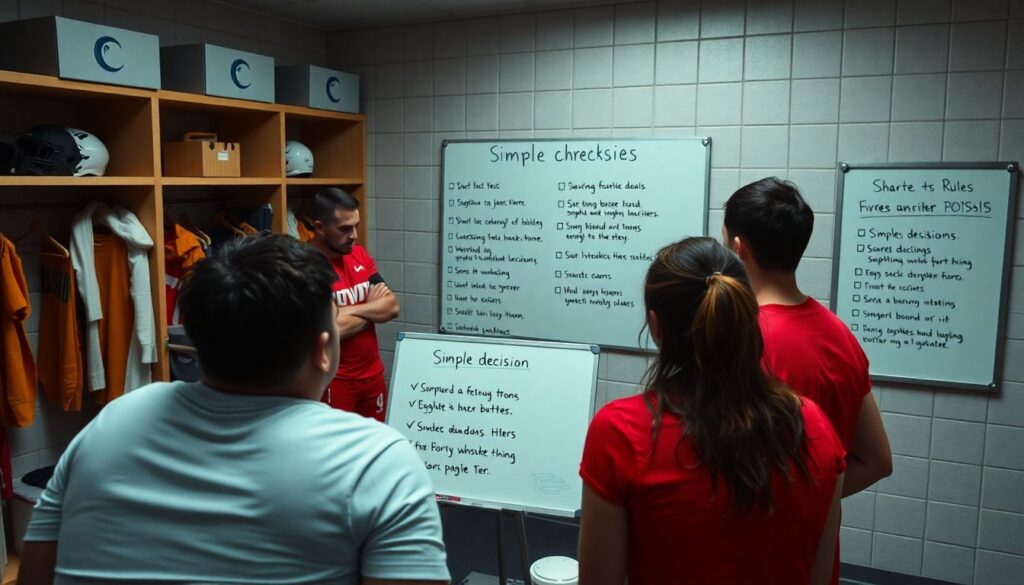
In tight games you rarely have time to analyse options. You need simple decision rules you have agreed with your coach and teammates. Use this checklist right before or after a play to see if your choice matches your role and the game context.
- Did I follow a pre-agreed rule (for example, «if in doubt, move the ball»)?
- Was my first read based on position and spacing, not on ego or fear?
- Did I avoid low-percentage «hero» options I have not trained repeatedly?
- Did I choose the option that keeps the team structure stable (spacing, balance, defensive transition)?
- In defence, did I pick the simplest coverage I can execute under pressure, instead of changing last second?
- Did I consider time and score (clock, timeout situation, foul count) before acting?
- Was my decision aligned with my strengths (for example, drive vs. long shot, contain vs. gamble)?
- Immediately after the play, can I explain my choice in one short sentence?
Working through this checklist with a coach de rendimiento mental para jugadores de baloncesto or within a programa de gestión emocional para atletas profesionales helps you convert abstract theory into automatic late-game habits.
Micro-breathing and motor priming to secure execution
Even with good decisions, execution breaks down if breathing and movement patterns are chaotic. Micro-breathing and motor priming give your body a small «alignment» before crucial actions: free throws, penalties, serves, last defensive possessions. Avoid these frequent mistakes so your routine remains safe, fast, and effective.
- Over-breathing: taking huge dramatic breaths that make you dizzy instead of calm.
- Changing your routine in important moments «to be extra ready», which confuses your body.
- Adding too many elements (claps, jumps, self-talk) so you rush the actual skill.
- Locking your muscles: over-tensing shoulders, jaw, or grip, which kills fluid movement.
- Ignoring exhale length and only «filling up» on inhales.
- Priming with movements unrelated to the task (for example, random stretches just before a precise skill).
- Copying another player’s routine from videos or libros de psicología deportiva para ganar partidos cerrados without adapting it to your body.
- Practising the routine only when fresh, never under fatigue or pressure in training.
A safe base routine: one normal inhale, one slightly longer exhale while relaxing the shoulders, then one small, task-specific movement (wrist snap, first step, stance) before execution.
Post-decision calibration: quick learning in the 90 seconds after
The 90 seconds after a crucial play are a high-value learning window. Use it to calibrate instead of judging yourself. A simple reflection stops spirals like «I always fail at the end» and replaces them with specific adjustments you can apply on the next possession.
Alternatives you can use depending on time and context:
- Three-word review (on the move): While jogging back, say three words: «good choice, low power» or «late read, stay ready». Use this when play continues immediately.
- Mini debrief with teammate: At a stoppage, exchange one sentence: «Next time, you stay corner, I drive» or «Switch earlier on that screen». Ideal when communication is strong and time allows.
- Bench reset script: If subbed out, sit, take one breath, and answer silently: «What worked? What failed? What one thing do I repeat or change?» Keep it under 20 seconds to stay engaged.
- Training review later: After the game or in an entrenamiento mental para deportistas de alto rendimiento, rewatch the last minutes and write 2-3 bullet points per key play. This deepens what you discovered in-game.
Within a curso online de psicología deportiva para manejar la presión, these quick calibrations become weekly habits, not emotional reactions.
Concise solutions to typical late-game dilemmas
How can I stop thinking about a previous mistake in the last minutes?
Use the 3-step reset: label the emotion («angry + frustrated»), take one longer exhale, then choose one action cue for the next play. If needed, use a physical gesture (tap chest, touch floor) as a «new possession» signal.
What if I feel too calm and passive instead of activated?
In that case, use an activation cue: faster footwork, stronger self-talk («attack»), and one sharp inhale to raise energy. Combine it with an aggressive but smart action within your role, like a strong cut or physical defence, to wake up your system safely.
How do I handle fear of missing the decisive shot?
Shift from outcome to process. Briefly say «I accept the risk», then focus on your mechanical cue (for example, «elbow under ball»). Remind yourself that your job is to take the trained shot, not to guarantee the result.
What can I do if a teammate loses emotional control?
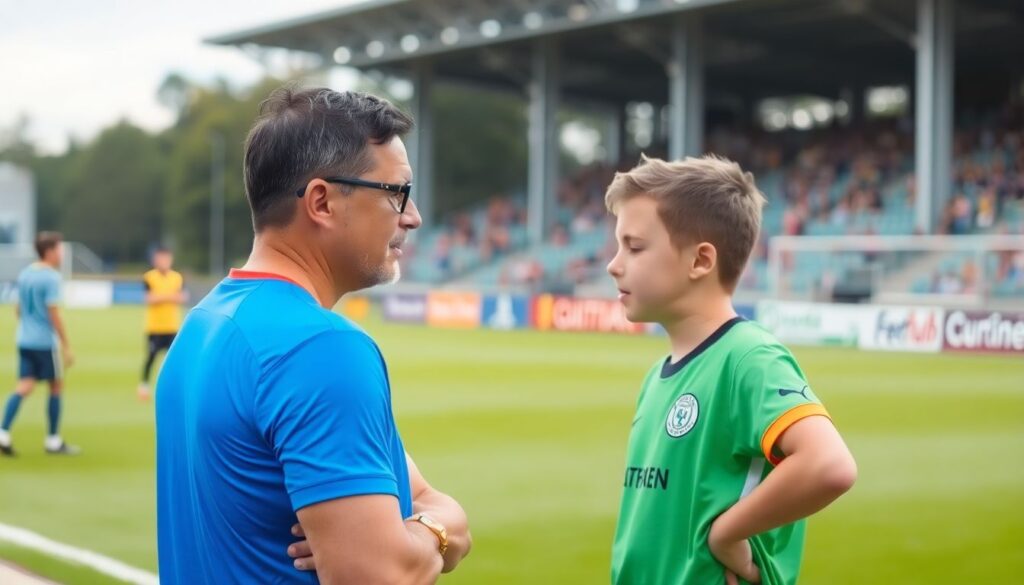
Keep it short and concrete. Stand close, use calm tone, and offer one cue: «Next play, simple pass» or «Stay with number 7». Avoid lectures. Sometimes just eye contact and a nod during a pausa are enough to bring them back.
How do I apply these tools when the coach is shouting a lot?
Filter for one useful instruction and ignore the emotional volume. Internally run your 5-10 second routine (breath, word, cue) while listening for the key message. Later, discuss communication style in practice, when emotions are lower.
Is it worth working with a mental coach for close games?
Yes, if you often play tight matches and feel that emotion or indecision decide the result. A structured programa de gestión emocional para atletas profesionales or a specialised coach de rendimiento mental para jugadores de baloncesto can speed up the integration of these strategies into your game model.
Can online courses replace in-person mental training?

A good curso online de psicología deportiva para manejar la presión can give you concepts, routines, and practice tasks, especially if you live outside big Spanish cities. For translation into performance, combine it with on-court work with your staff and regular in-game application.