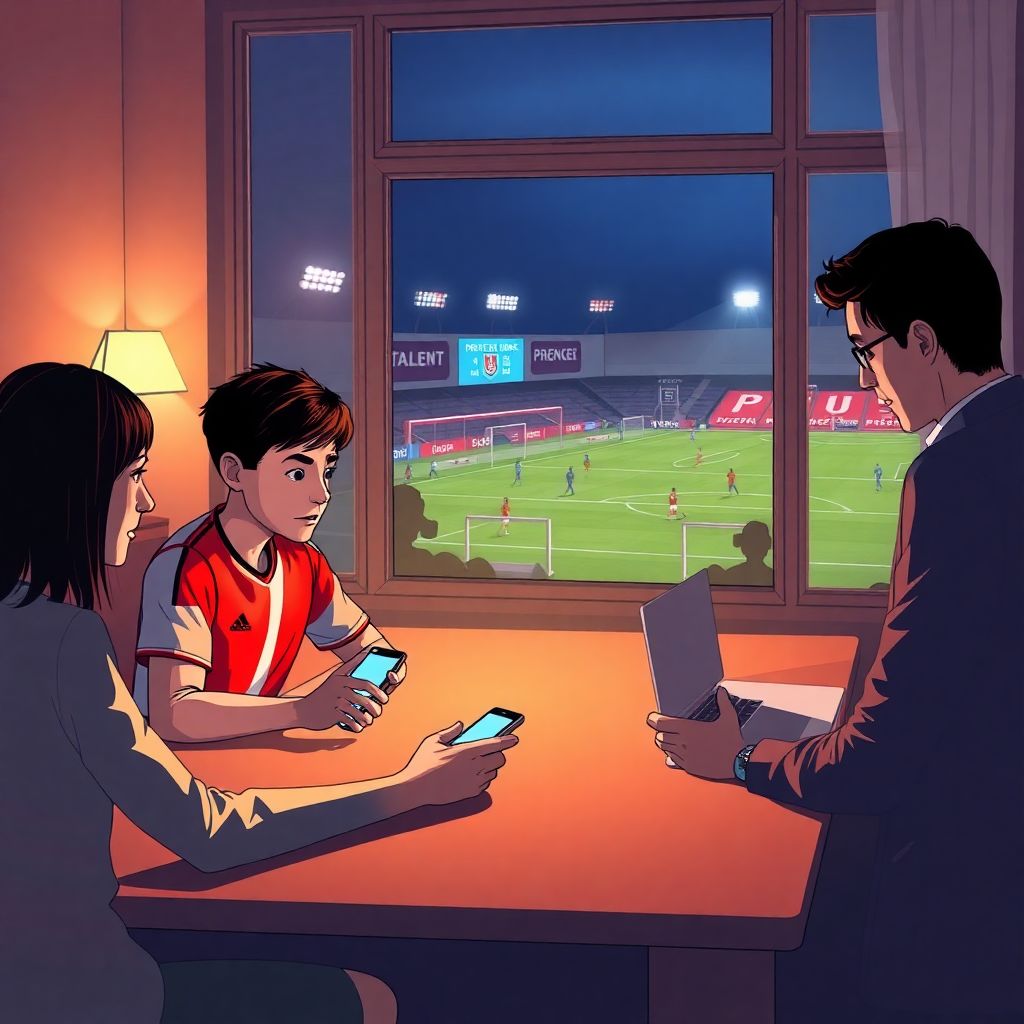
Mental and emotional development in young footballers: why family still matters more than Wi‑Fi
From street football to high‑performance academies: a quick historical snapshot
Fifty years ago, most future professionals grew up playing in the street, with minimal adult supervision and almost zero formal psychology. Emotional development happened “by accident”: tough games, older kids, and family values transmitted at home.
In the 1980s and 1990s, European clubs started to structure youth academies. Training volume went up, selection got tougher, and pressure arrived earlier. But psychological work was still sporadic, and the family role was seen mainly as “logistics and support”: driving to training, paying fees, celebrating goals.
The real shift came in the 2000s and 2010s, when sports psychology entered youth football with more consistency. Academies like La Masia (Barcelona), Ajax, and Clairefontaine began to integrate basic mental training and education. Even then, family was often treated as a “variable to control”, not as an active part of the development model.
By 2026, we’ve reached another stage: early specialization, global scouting at 10–12 years old, and constant exposure to social media. The young footballer is now not only an athlete, but also a potential “content creator” under continuous evaluation. In this environment, the family system is a primary regulator of mental and emotional load, not a peripheral detail.
And that’s exactly where the role of the family becomes a performance variable, not just a sentimental topic.
—
What the data tells us about family and mental health in youth football
Current statistics and risk patterns
Different studies from European federations and independent research groups between 2018 and 2024 converge on a few consistent findings (ranges are used because methodologies differ):
1. Prevalence of emotional problems
1. Between 25–35% of academy players aged 13–18 report significant symptoms of anxiety or stress related to performance.
2. Around 10–15% show depressive symptoms at some point during their youth career.
3. Players released from academies at 16–18 have 1.5–2x higher risk of emotional distress in the following 12 months compared to school athletes.
2. Family context as a protective factor
1. Players who describe their family as “supportive but not controlling” show:
– Lower perceived stress levels.
– Higher self‑confidence and resilience scores.
2. In contrast, those with over‑involved or conflictive families present:
– More frequent burnout indicators.
– Higher drop‑out rates from competitive football before age 18.
3. Effect of psychological support
1. Academies and escuelas de fútbol base con apoyo psicológico y familiar report:
– Lower incidence of anxiety crises in competition.
– Better adaptation of players after being benched, injured, or released.
2. Players with regular access to a psicólogo deportivo para jóvenes futbolistas and structured parental guidance show better long‑term continuity in the sport, even if they don’t turn professional.
These statistics don’t say “good families create stars”; they say “good family environments reduce emotional damage, enhance learning capacity, and make performance more sustainable”.
—
Mechanisms: how family impacts the young footballer’s mind
Attachment, identity and emotional regulation
In simple terms: the way parents relate to their child shapes the “operating system” with which that child will face football.
Longer explanation:
– Attachment patterns
Secure attachment (warmth + clear boundaries) is associated with:
– Better tolerance to mistakes.
– More autonomous decision‑making on the pitch.
– Lower fear of coaches’ evaluation.
Insecure or chaotic attachment correlates with:
– Excessive need for external approval.
– Overreaction to criticism or substitutions.
– Difficulty managing frustration after losses.
– Formation of athletic identity
If at home the youngster constantly hears “you are a footballer or you are nothing”, a rigid monolithic identity forms. This increases vulnerability when:
– Injuries appear.
– Selection decisions go against them.
– Academic performance drops.
Families that reinforce a broader identity (“you’re a person who plays football at a high level, but you’re more than that”) create psychological redundancy: if football fails, the world doesn’t collapse.
– Emotional regulation skills
Daily micro‑interactions at home (how conflicts are handled, how criticism is given, how emotions are expressed) are a natural “training lab” for:
– Managing anger after a bad match.
– Handling envy when a teammate gets promoted.
– Coping with public criticism on social media.
When these skills are not learned at home, coaches and psychologists must invest additional time on basic emotional literacy before they can work on high‑performance mental tools like imagery or pre‑match routines.
—
The new professional ecosystem around families (2026)
From isolated psychologists to integrated family‑club systems
The ecosystem around the young player has expanded. There are now:
– Club psychologists.
– External consultants.
– Online platforms offering cursos online de psicología deportiva infantil para fútbol.
– Specialized clinics for youth athletes.
– Formal asesoría para padres de futbolistas jóvenes that teach families how to manage expectations, communication, and career decisions.
The trend since 2020 has been clear: shift from “treating the player individually” to “intervening in the microsystem: player + family + school/club”. That is, mental development is seen as a systems engineering issue, not just an internal psychological issue.
This systems approach reduces contradictions such as:
– Coach asking for autonomy while parents give contradictory tactical instructions from the stands.
– Psychologist working on intrinsic motivation while parents constantly talk only about contracts, agents and money.
– Club pushing academic balance while family glorifies early dropout from school.
—
Economic aspects: when family support becomes an investment variable
Why clubs and agents care about family dynamics
Behind the emotional discourse there is a very pragmatic reality: mental stability has an economic impact.
Clubs and academies invest heavily in each promising youngster (coaching, facilities, travel, medical care). When that player burns out or quits due to unmanaged psychological pressure or family conflict, the return on investment collapses.
Several professional clubs now include explicit family‑support lines in their budgets:
– Group workshops for parents at the start of the season.
– Access to a psicólogo deportivo para jóvenes futbolistas not only for players, but also for their families.
– Mediation processes when parental behavior interferes with team functioning.
On the private side, many families use paid services such as:
– One‑to‑one asesoría para padres de futbolistas jóvenes to navigate academy selection, agents, and social media exposure.
– Enrollment in programas de entrenamiento mental para futbolistas juveniles as a complement to technical work.
This creates a parallel industry around psychological and family support, with three notable economic implications:
1. New professional niches
Psychologists, pedagogues, and coaches specializing in youth football and family systems have growing demand, both in clubs and in private practice.
2. Service stratification
High‑income families access premium, personalized services, while low‑income families rely on what clubs and federations can offer for free or at low cost. This risks widening the performance and well‑being gap between players of different socioeconomic levels.
3. Long‑term asset protection
For top academies, mental and emotional robustness is perceived as a way to protect the value of their “human capital”. A stable, well‑supported player:
– Endures longer in the development pipeline.
– Has fewer behavioral incidents.
– Is more attractive in the transfer market.
—
Forecasts to 2030: where is this going?
Expected developments if current trends continue
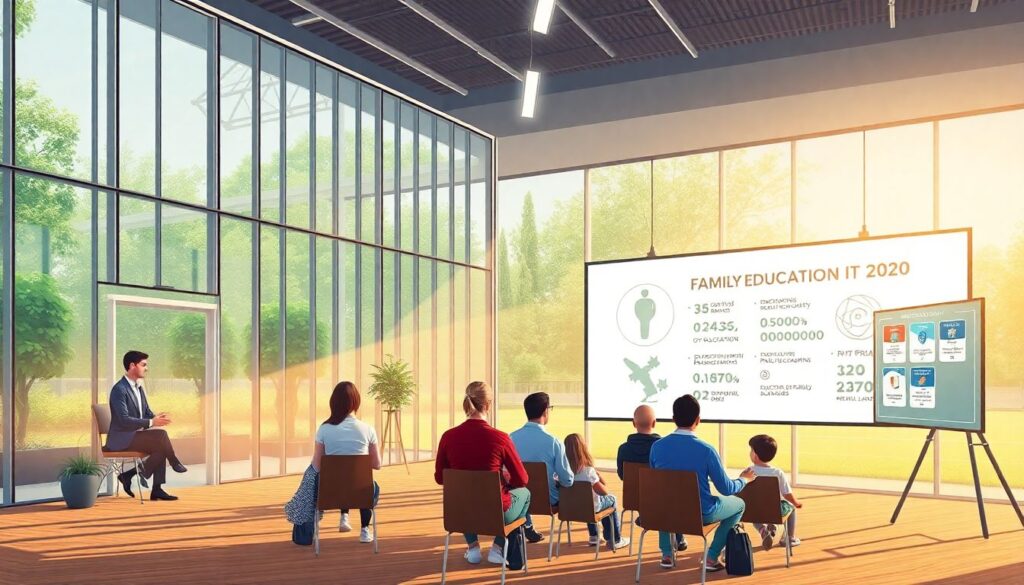
Assuming current trajectories remain on course, several forecasts for 2026–2030 are plausible:
1. Normalization of integrated family programs
By 2030, in most top European academies it will be considered unprofessional not to have:
– At least one staff psychologist.
– Structured family education modules.
– Clear protocols for handling parental interference and crisis situations.
2. Expansion of digital education for parents and players
Demand for cursos online de psicología deportiva infantil para fútbol is likely to keep growing, particularly in:
– Latin America.
– Africa and Asia, where elite academies are expanding.
These courses lower access barriers and standardize minimum knowledge on mental health, communication, and pressure management.
3. More regulation and ethical guidelines
Federations and players’ unions will probably produce more detailed guidelines on:
– Handling minors’ exposure to media and social networks.
– Limits on parental involvement in contractual decisions.
– Minimum psychological support structures in professional academies.
4. Data‑driven mental support
The use of digital platforms to monitor well‑being, sleep, stress, and mood will increase. Family‑club communication could be partially mediated by apps, allowing:
– Early detection of emotional issues.
– Tailored interventions involving both player and parents.
But it will require strong data protection standards to avoid misuse.
—
Practical functions of the family in the mental development of a young footballer
Key roles, explained simply
To move from theory to practice, families of young players generally end up performing at least five mental‑emotional functions:
1. Emotional “base camp”
Home should be the place where the player can be more than “the footballer”: a context where failure in football doesn’t equal rejection or loss of affection.
2. Filter and interpreter of pressure
Parents translate external messages (from coaches, social networks, agents) into digestible, age‑appropriate language. They can amplify or reduce pressure depending on how they talk about it.
3. Co‑regulator of expectations
Realistic expectations stabilize motivation. Unrealistic dreams (“you’ll definitely make it”) or catastrophic messages (“if you don’t make it, your life is ruined”) generate chronic tension.
4. Model of coping strategies
How parents react to wins, losses, injuries, and injustices offers live prototypes for the young player:
– Do they blame referees?
– Do they insult the coach?
– Do they reflect and adjust?
5. Negotiator of life balance
Families help define how much time goes to football, school, friends, and rest. This balance directly affects mental health, burnout risk, and long‑term development.
—
Influence on the wider football industry
Beyond the individual: systemic effects
The family’s role in the mental and emotional development of young footballers no longer stops at the household door; it has ramifications across the entire football industry:
– Talent identification and retention
Scouts and academies increasingly consider the family environment when making decisions. A technically gifted child with a highly disruptive family context is objectively a higher‑risk investment.
– Brand and reputation management
Clubs that visibly care for the well‑being of their youth players and their families gain reputational capital. This helps them:
– Attract better prospects.
– Negotiate with sponsors sensitive to corporate social responsibility.
– Reduce media crises linked to mistreatment or neglect of minors.
– Standardization of support models
The success of early adopters of holistic approaches puts pressure on other clubs to catch up. This feeds demand for:
– Integrated family‑club psychological services.
– More sophisticated programas de entrenamiento mental para futbolistas juveniles that include parent modules.
– External asesoría para padres de futbolistas jóvenes to coordinate individual goals with club policies.
– Cultural change in football discourse
The classic “toughen up, don’t think, just play” narrative is slowly giving way to a more nuanced vocabulary: resilience, emotional literacy, cognitive load, mental fatigue. Families who understand this language become active partners rather than obstacles.
—
Concluding thoughts: family as long‑term performance infrastructure
If we strip away the romanticism, the family is a long‑term performance infrastructure for the young footballer. It shapes:
– How pressure is processed.
– How identity is constructed.
– How failure is interpreted.
– How decisions are made at each career junction.
In 2026, with youth football more demanding and more exposed than ever, ignoring the family dimension is not just ethically questionable—it’s technically inefficient. Clubs, federations, agents, and educational platforms are quietly recognizing that the mental and emotional future of football will be built not only on pitches and in gyms, but also around dinner tables, in car rides home, and in late‑night conversations between players and parents.
The challenge for the coming years is clear: to turn family support from a lottery into a structured, accessible resource integrated into the development pathway of every young footballer, regardless of their postal code or their parents’ bank account.