
Copy only elite pregame habits that are safe, simple and clearly linked to performance: structured warmup, progressive activation, basic mental routines and consistent timing. Avoid extreme stretching, aggressive stimulants, complicated superstition and last‑minute experiments. Build a short, repeatable ritual that fits your sport, position, fitness level and medical advice.
What elite pregame routines actually change performance
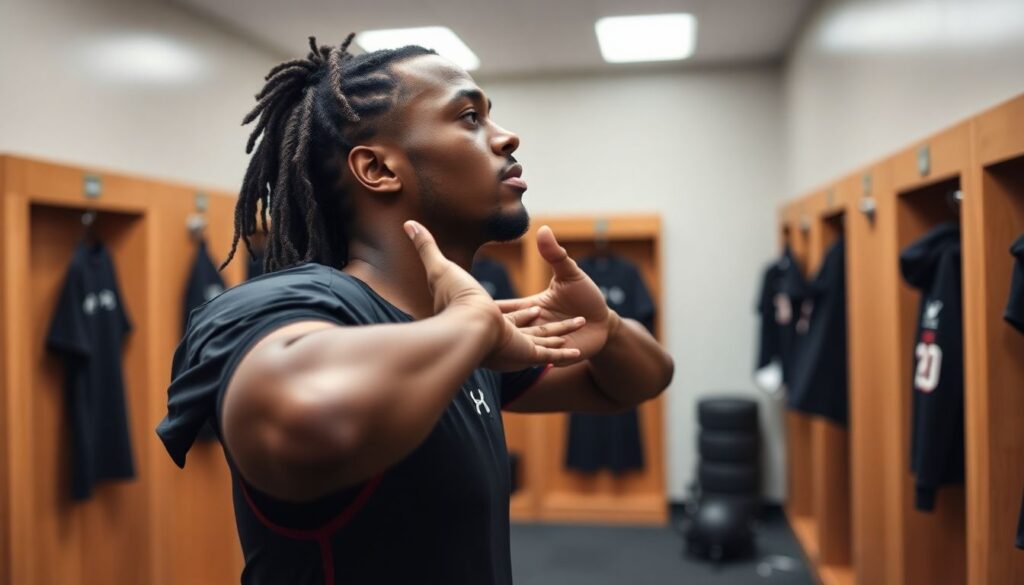
- Dynamic warmups and activation drills improve readiness more reliably than long static stretching or random jogging.
- Short, specific mental scripts and breathing patterns work better than vague motivation talks or social media hype.
- Simple, repeatable timing (same order, same duration) reduces stress and decision fatigue before competition.
- Nutrition and hydration planned hours before the game matter more than last‑minute energy drinks or sweets.
- Safe micro‑rituals can boost confidence, but heavy superstition or rigid rules make you fragile when plans change.
- Individual limits, injury history and competition level must guide which parts of rutinas prepartido jugadores de élite you adopt.
Evidence-backed warmups and activation drills worth adopting
Most athletes in Spain can safely borrow the structure of elite warmups, while adjusting volume and intensity. Do not copy high‑impact, high‑plyometric volumes if you are not conditioned, returning from injury, or competing on poor surfaces.
Use this simple sequence inspired by ejercicios de calentamiento prepartido fútbol profesional and other team sports:
- General pulse-raising (5-8 minutes) – light jog, skipping, side shuffles. The goal is to feel warm and slightly breathless, not exhausted.
- Dynamic mobility (5-10 minutes) – controlled leg swings, hip circles, arm swings, walking lunges with rotation. Avoid long static holds before explosive play.
- Muscle activation (5-10 minutes) – glute bridges, mini‑band walks, calf raises, core bracing. Emphasize joints and muscles you overload in your sport.
- Technical warmup (5-15 minutes) – ball touches for football, dribbling or shooting for basketball, shadow drills for racket sports.
- Progressive intensity (5-10 minutes) – short accelerations, changes of direction, or jumps with full recovery; finish close to game intensity.
This structure works as a starting point across sports, but adjust session length based on match duration, weather and your own conditioning. Stop or scale down if pain, dizziness or unusual fatigue appear.
Mental techniques elite players use – which are transferable
To apply a simple programa de preparación mental prepartido para deportistas, you only need a quiet corner, a notebook or notes app, and a timer or watch. More sophisticated tools (heart‑rate variability monitors, specialized apps) are optional.
Adaptable mental tools include:
- Breathing for arousal control – 2-5 minutes of slow nasal breathing (for example 4 seconds in, 6 seconds out) to reduce pre‑match anxiety or over‑excitement.
- Brief goal script – write 2-3 specific, controllable targets (e.g., «win first three duels», «communicate early in defence») and reread them right before warmup.
- Simple visualization – 2-3 mental repetitions of key actions in your role: a clean first touch, a safe landing, a confident serve.
- Trigger cue word – one short word or phrase you repeat at the tunnel, baseline or starting line («aggressive», «calm», «first step»).
- Reset routine for mistakes – a 10-20 second pattern (exhale, look up, cue word, re‑focus on next play) that you can rehearse in warmup.
Keep the total mental sequence under 10-15 minutes, and practice it in training first so it feels automatic on match day.
Rituals that boost confidence but carry performance risks
Before copying how stars behave on TV or social media, understand these common risks:
- Complicated rituals increase stress when travel, schedules or coaches force changes.
- Copying extreme routines (ice baths, stimulants, very late warmups) can worsen performance or health.
- Rigid superstition may distract from tactical instructions and basic warmup work.
- Unvetted supplements can conflict with medication, anti‑doping rules or individual sensitivities.
Use this step‑by‑step approach to cómo preparar un ritual prepartido efectivo without unnecessary risk:
- Clarify your performance needs – 5-10 minutes, a day before the match.
- Define 2-3 problems you want your ritual to solve: slow starts, nerves, lack of focus, stiffness.
- Decide what is realistic at your competitive level and schedule (amateur, semi‑pro, youth).
- Anchor the non‑negotiable basics – warmup, hydration, gear check.
- Place your warmup, last snack and bathroom break at specific times before kick‑off.
- Prepare equipment (boots, tape, shin guards, racket, glasses) the night before to avoid last‑minute panic.
- Add 1-2 mental cues, not ten – keep it short and repeatable.
- Choose one breathing pattern and one cue word, and link them to a place (tunnel, bench) or moment (team talk end).
- Practice them at least twice in training before using them in competition.
- Select safe, legal physical micro‑rituals – low risk, low complexity.
- Examples: specific order of stretches, same first drill with the ball, short jump pattern before serving.
- Avoid heavy static stretching, maximal jumps, or «punishment» push‑ups that cause fatigue.
- Be cautious with pregame supplements and stimulants
- Even when reading about mejores suplementos prepartido para alto rendimiento deportivo, consult a qualified professional before using anything new.
- Never test a new supplement on match day; trial it in low‑importance training sessions.
- Respect anti‑doping rules and any medical conditions (heart, blood pressure, sleep issues).
- Test, then simplify after each match
- After games, note 2-3 elements that felt helpful and 1-2 that felt forced or stressful.
- Remove what does not clearly help, so your ritual becomes lighter instead of heavier over time.
When superstition helps and when it undermines preparation
Use this checklist to review whether your pregame habits are healthy or starting to hurt performance:
- Your routine still works when the schedule changes (early kick‑off, travel delays, late team talk).
- You can perform well even if one element disappears (your «lucky» socks, usual locker, or entry song).
- You spend more time on warmup, tactics and communication than on personal superstitions.
- Teammates and staff are not delayed or disturbed by your ritual.
- You feel calmer and more focused after the routine, not more anxious or rushed.
- No part of your ritual contradicts medical advice or aggravates pain or injury.
- You are not hiding poor sleep, nutrition or fitness behind magical thinking.
- Your behaviours would look reasonable if seen on video by a coach or sports doctor.
Individualization: tailoring routines to sport, position and injury history
Copying elite stars in detail often leads to predictable mistakes. Watch out for these issues when personalizing your pregame approach:
- Directly importing ejercicios de calentamiento prepartido fútbol profesional into non‑football sports without adapting movements and intensity.
- Ignoring your position demands: goalkeepers, defenders, playmakers and strikers need different technical and visual focus.
- Skipping joint‑specific activation for old injuries (ankle, knee, shoulder) because «the pros don’t do it on camera».
- Assuming your amateur or youth match requires the same long routine as Champions League players.
- Copying pregame naps, caffeine doses or meal timing without considering school, work and digestion patterns.
- Using the same ritual for training and competition, so the body no longer links it to «switching on».
- Adding every new tip you hear instead of protecting a small, stable core routine.
- Not coordinating your personal habits with team schedules and coach expectations.
Practical checklist to build a safe, repeatable pregame routine
These alternatives show how to keep the spirit of elite habits while adapting them to real‑life constraints in es_ES contexts (tight facilities, travel, amateur schedules):
- Time-based mini‑routine (for tight schedules)
- Fix three blocks: T‑60 to T‑40 (arrive, snack, bathroom), T‑40 to T‑20 (team warmup), T‑20 to T‑5 (personal activation + mental script).
- Use it if you often face changing venues or short warmup windows.
- Equipment‑anchored routine (for shared spaces)
- Link steps to gear: taping, putting on boots, packing bag, walking to pitch; attach 1-2 breaths or cue words to each.
- Helps when dressing rooms are noisy or you do not control music and environment.
- Field‑zone routine (for team players)
- Design specific actions in three zones: sideline (mobility), central area (technical drill), competition zone (short sprints, visual scan).
- Good for team sports where individual time is limited but movement space is clear.
- Travel‑adapted routine (for away games)
- Keep a minimal kit: resistance band, small ball or grip trainer, earphones for focus track, water bottle.
- Use bus or car stops for light activation and breathing, then shorten on‑field ritual if time is tight.
Whichever alternative you choose, revisit it every few months to ensure it still matches your current level, calendar and health status.
Common practical concerns about copying elite pregame habits
Can I follow elite routines if I play only once or twice per week?
Yes, but reduce volume and intensity. Keep the structure (general warmup, activation, technical, mental) and shorten each block. Focus on consistency and safety rather than trying to feel as tired or hyped as professionals.
How long should a complete pregame ritual take?
For most intermediate athletes, 30-45 minutes from start of warmup to start of competition is enough. Very long rituals are hard to repeat and increase the chance of something going wrong with timing or logistics.
Are pregame supplements necessary for good performance?
No. Sound sleep, balanced meals and hydration are more important than any product marketed as mejores suplementos prepartido para alto rendimiento deportivo. If you still consider supplements, consult a professional and test them far from important matches.
What if my team warmup is bad or too generic?
Respect team structure, then quietly add 5-10 minutes of your own mobility, activation and mental reset within the same timeframe. Coordinate with your coach so your extra work does not disrupt tactical preparation.
How can I stay flexible if travel or kick-off times change?
Build a «full» version and a «compressed» version of your ritual. Keep the same order but have shorter versions of each block so you can drop duration, not entire elements, when schedules change.
Should I change my ritual after every bad game?
Avoid big changes based on a single performance. Review 2-3 matches at a time, identify patterns, and adjust only one or two elements while keeping the rest stable.
Can I mix influences from different sports in my routine?
You can, as long as the exercises and mental tools match your sport’s demands and do not add unnecessary fatigue or complexity. Prioritize warmup and focus elements that clearly support your actual competition tasks.