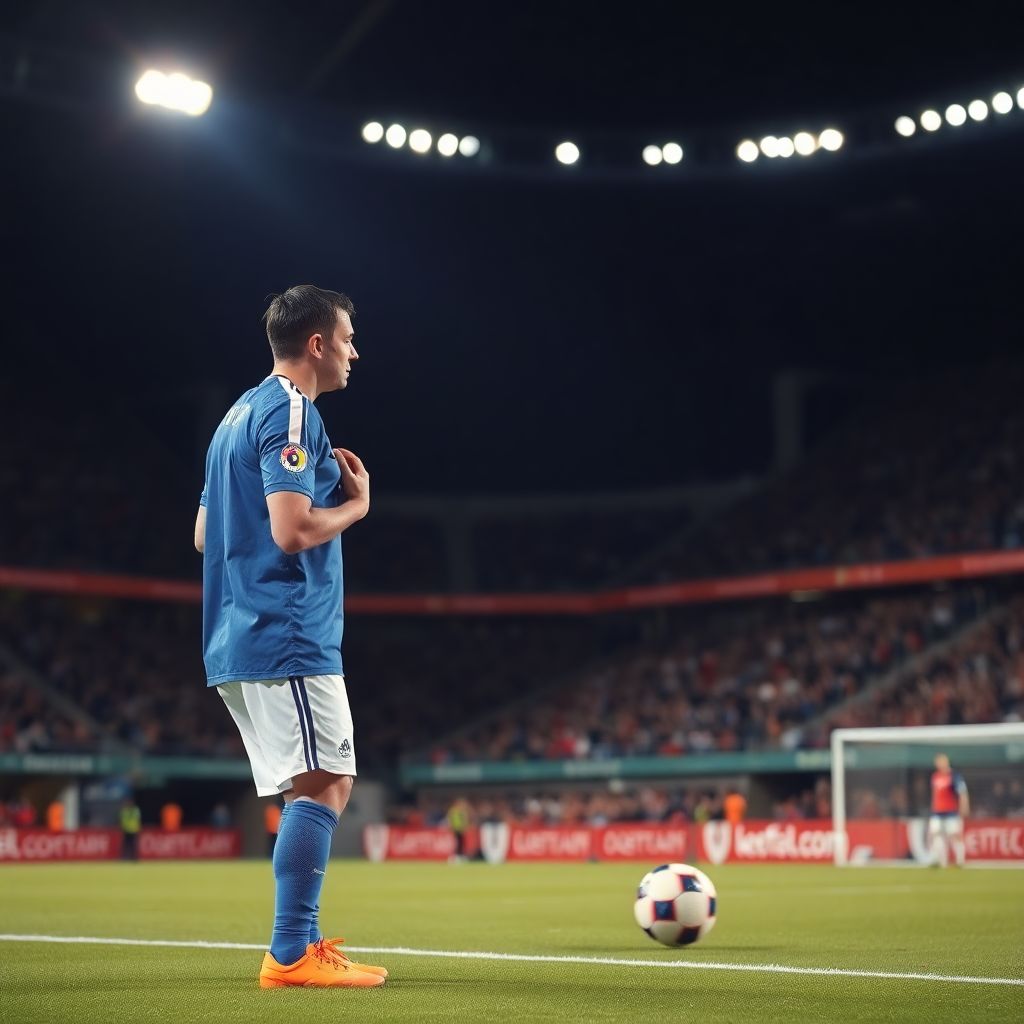
Mental training for penalties combines simple pre-kick routines, concentration techniques, and emotional control drills that you can practise on any pitch. Use short visualization scripts, controlled breathing, and fixed decision rules, then simulate pressure in training. Track consistency, not only conversion rate, and, after misses, review objectively instead of replaying them obsessively.
Essential mental anchors for spot kicks
- Decide target and run-up pattern before placing the ball and never change it on the spot.
- Use one short visualization image plus one physical cue instead of long, complex routines.
- Control breathing to keep heart rate and muscle tension in a functional range.
- Judge each penalty by routine quality and contact, not only by goal or miss.
- Simulate pressure regularly in training so matches feel familiar, not exceptional.
- After misses, run a brief review, extract one learning point, and mentally close the episode.
Pre-kick visualization: scripts and timing
Visualization for penalties works best when it is short, specific, and always attached to the same pre-kick routine.
This kind of mental rehearsal suits intermediate and professional players who already have a stable technical penalty and want extra consistency. It is less suitable when the basic technique is unstable, when a player is extremely anxious, or when a goalkeeper stands very close and disrupts focus. In those cases, simplify everything: one breath, one simple target, and hit.
One practical rule: your visualization should fit in three seconds between placing the ball and starting the run-up. Anything longer risks overthinking and tension.
Use this simple three-part script:
- Camera view: See yourself from behind the ball, as in a television replay, with your normal run-up.
- Kinesthetic cue: Feel one clean contact with the ball, including foot angle and follow-through.
- Outcome snapshot: See the ball in the net in your chosen corner, then blank the image and look at the real ball.
Drill suggestion (10 repetitions):
- Place the ball on the spot 10 times without a goalkeeper.
- For each repetition, run the three-second visualization, then strike.
- Target: at least 8 of 10 penalties struck with the same run-up tempo and contact feeling.
Diagnostic question: if, under mild pressure, you find your mind jumping to the goalkeeper or to the importance of the match during those three seconds, your script is too long or too vague. Shorten it to a single image plus a physical cue such as squeezing your hand or tapping your thigh.
If you are following an entrenamiento mental para penaltis curso online, adapt their visualization scripts to this three-second limit and test them in real shooting drills instead of only listening or reading.
Breathing and arousal control for consistent strikes
Stable breathing patterns keep arousal in the zone where muscles are ready but not tight.
You need only a quiet space on the pitch or at home, a watch or smartphone timer, and 5 to 10 minutes per session. No special apps are required, although some players like heart rate monitoring. The objective is to learn to lower tension by one or two levels on demand before each penalty.
Base drill: 4-2-4 box breathing.
- Inhale through the nose for a count of 4.
- Hold your breath for a count of 2.
- Exhale through the mouth for a count of 4.
- Repeat for 3 minutes, twice per day, away from training.
Pitch integration drill (12 penalties):
- Shoot in sets of 3 penalties.
- Before each set, perform 3 cycles of 4-2-4 breathing, then walk to the spot.
- Record subjective tension on a 1 to 10 scale before and after breathing.
- Target: at least a 2 point drop in tension and a repeatable tempo from walk-up to strike.
Quick diagnostic: if your legs feel heavy or sleepy after breathing, you are over-relaxing. Use a slightly faster pattern, such as 3-1-3, and finish with one short, sharper inhale through the nose to wake up your body before the run-up.
Players in a structured programa de control emocional para futbolistas penaltis can integrate these breathing patterns into their existing routines, aligning the same counts with cue words used in their coaching sessions.
Routines and cues to fix decision-making
Clear, repeatable routines reduce last-second doubt and improve decision quality under pressure.
Before the how-to steps, consider these risks and limitations:
- Overcomplicated routines increase stress and are harder to reproduce when tired or injured.
- Rigid rules that ignore match context can become unsafe, especially regarding goalkeeper movement and pitch conditions.
- Copying another player routine without adaptation often clashes with your natural tempo and body language.
- Trying to rebuild your entire penalty pattern in one week before an important match usually backfires.
- If you already freeze or black out in penalties, seek a psicólogo deportivo especialista en penaltis entrenamiento mental instead of relying only on self-guided routines.
Follow this step-by-step process to build a safe, simple, and reliable routine.
- Lock one target rule. Decide your preferred penalty pattern: for example, two main corners and one depth (high or low). Choose which corner you will use in each situation before the match.
- Write your rule on paper in one sentence.
- Test it in 20 training penalties and note how often you are tempted to change at the last second.
- Define a micro-sequence. Build a sequence of 3 to 5 actions from whistle to strike.
- Example: place ball, step back three steps, look at a distant point, one breath, focus on ball, go.
- Time the sequence; aim for a consistent length, usually between 6 and 10 seconds.
- Add one physical cue. Use a small, legal action to trigger commitment to your chosen target.
- Options: a quick exhale through pursed lips, a shoulder roll, or a thumb and index finger squeeze.
- The cue should happen at the same point in the sequence every time.
- Introduce a decision freeze point. Choose a moment in the routine after which you will not change target.
- For example, once you have taken the last backward step, the target is fixed.
- Practise 30 penalties where you consciously notice doubts only before this freeze point.
- Stress test in training. Combine your routine with mild distractions.
- Ask teammates to shout or move in your peripheral vision.
- Use a countdown out loud from 5 to 0 before your run-up to simulate referee pressure.
- Target: maintain routine quality in at least 24 of 30 kicks.
- Log and adjust briefly. After each session, take two minutes to score routine adherence.
- Use a 1 to 5 scale for how closely you followed your own steps, separate from goal or miss.
- If average adherence drops below 3, simplify one element instead of adding more.
If you use técnicas de concentración для lanzar penaltis coaching deportivo, integrate your coach keywords into one of these steps, usually just before the decision freeze point.
Managing fear and threat appraisal in shootouts
Fear becomes manageable when you label pressure correctly and use simple mental checks instead of fighting emotions.
Use this checklist during and after shootouts to see whether your threat appraisal is functional:
- You can describe the situation to yourself in one neutral sentence, such as a penalty in a knockout match, instead of catastrophic self-talk.
- Your physical fear signs, such as sweaty hands or fast heartbeat, feel uncomfortable but not overwhelming.
- You can still recall your target rule and micro-sequence just before starting the run-up.
- You accept that nerves are normal and focus on execution quality, not on trying to feel calm.
- Between kicks, you use simple grounding actions like feeling your boots inside the grass or touching the ball, rather than replaying previous penalties.
- After the shootout, you can talk about specific actions, such as stride length or contact point, not only about success or failure.
- You are able to sleep reasonably well the following night, even if the outcome was negative.
- You notice that every new shootout feels slightly more familiar than the previous one, not like a brand new threat.
If several of these points are consistently negative, consider adding guided work with a sports psychologist or following a structured programa de control emocional para futbolistas penaltis rather than relying only on self-help tools.
Pressure simulation drills and overload progression
Simulated pressure prepares you to execute your routine when stakes rise, without needing perfect calm.
During practice, many players make similar mistakes when trying to create match-like stress. Watch for these points and correct them early:
- Only practising penalties when relaxed at the end of training, without any realistic time pressure or physical fatigue.
- Using punishments such as extra running that create fear of training instead of constructive competitive pressure.
- Changing run-up or target pattern too often, making it impossible to measure progress in mental skills.
- Skipping video review, which can show hesitation, slow approach, or altered body language under pressure.
- Simulating pressure only with teammates and never asking staff or academy players to create a small audience effect.
- Jumping from casual training directly to cup shootouts without intermediate steps such as friendly match penalties.
- Ignoring differences in ball, pitch, and stadium context that affect perception and comfort.
- Not aligning mental drills with guidance from a psicólogo deportivo especialista en penaltis entrenamiento mental or from a qualified coach.
If you follow an entrenamiento mental para penaltis curso online or read a libro entrenamiento mental para penaltis fútbol profesional, treat their pressure drills as templates and adapt them gradually to your team environment and competition level.
Recovery routines: learning from misses without rumination
Post-miss routines protect confidence and convert emotional pain into specific learning.
Consider these alternative approaches and choose according to context and personal preference, always keeping them simple and emotionally safe:
- Two-minute technical debrief. After training or a match, answer three questions: what did I do well in the routine, what broke, and what one element will I adjust next time. Suitable for players who like structure and detail.
- Body-based reset. Use a short physical action such as a sprint, dynamic stretch, or quick breathing set to mark the end of the penalty episode. Useful when emotions are strong and words are not helping.
- Guided review with staff. Once emotions calm down, watch the clip with a coach or sports psychologist and identify one technical and one mental takeaway. Best for players who tend to blame themselves excessively or get stuck in self-criticism.
- Time-boxed reflection. Allow yourself a fixed short window, for example 10 minutes after the match, to feel and think freely about the miss, then deliberately shift to team or family activities. Good for players who ruminate late at night.
If self-guided methods are not enough, collaborating with a psicólogo deportivo especialista en penaltis entrenamiento mental can personalise these routines and link them with broader life stress management.
Concise practical clarifications
How many mental training sessions per week are effective for penalties?
Start with 3 short sessions per week of 10 to 15 minutes, including visualization and breathing, plus integration into regular finishing drills. Increase only when you can execute your routine consistently in training matches.
Should I change my penalty side based on the goalkeeper movement?
Most players perform better by fixing the decision before the run-up and keeping it unless the goalkeeper clearly moves early. Train both options and agree on a personal rule with your coach in advance.
How can I track progress in mental penalty work without relying only on goals?
Score each kick on routine adherence, decision clarity, and contact quality on simple 1 to 5 scales. Over weeks, your average scores should rise, even if some penalties are still saved.
What is a realistic time frame to feel more confident in shootouts?
With regular practice, many players notice more stability in their feelings after several weeks of focused work. Confidence tends to grow gradually through repeated exposure to controlled pressure drills.
Is it useful to read books or follow online courses about mental penalties?
Resources such as a libro entrenamiento mental para penaltis fútbol profesional or an entrenamiento mental para penaltis curso online can offer structure and ideas. Make sure you turn concepts into simple routines tested on the pitch, not just theory.
When should I seek professional help for penalty-related anxiety?
If you experience intense fear, sleep problems, or persistent avoidance of penalties despite training, consult a sports psychologist. A targeted programa de control emocional para futbolistas penaltis can address deeper patterns safely.
Can I combine team routines with my own personal habits before a penalty?
Yes, provided your habits are brief and fit inside the team framework. Test the combined routine in training to ensure timing and focus remain stable.