
Psychological keys for a decisive penalty under maximum pressure are: a clear pre-kick mindset, a consistent routine, control of arousal through breathing and tempo, focused mental rehearsal, simplified decisions, and specific training. Together they turn a chaotic, emotional moment into a repeatable technical action you can trust.
Core psychological elements for a decisive penalty
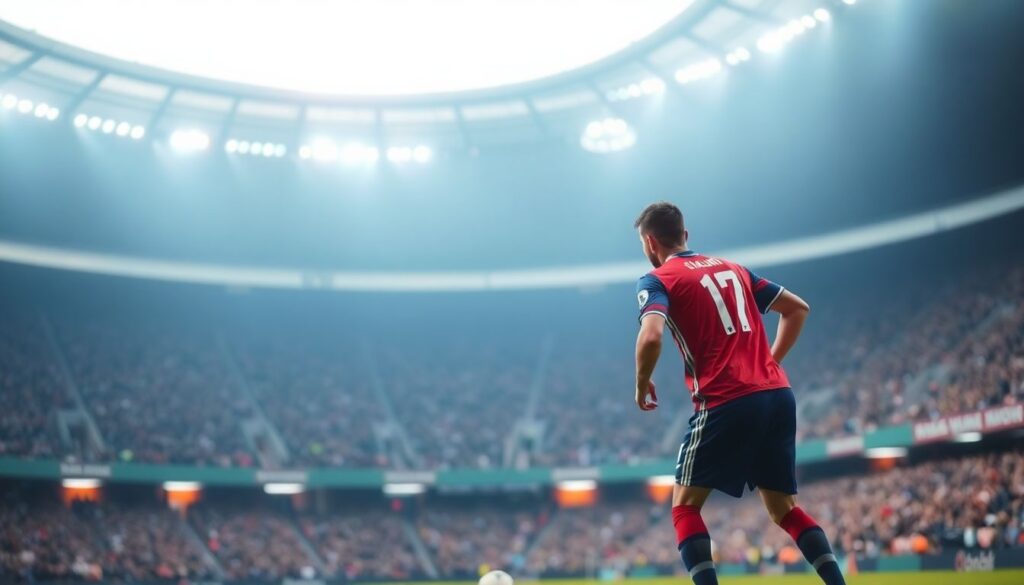
- Frame the penalty as a task you know, not a unique life-or-death moment.
- Use a stable, rehearsed pre-kick routine to create automaticity.
- Regulate activation: neither flat nor overexcited, just game-ready.
- Rehearse successful penalties mentally before and during matches.
- Decide your plan early and keep the decision simple.
- Train under pressure with realistic, competitive penalty scenarios.
Pre-kick mindset: framing the moment
The pre-kick mindset is how you interpret and label the penalty in your head during the seconds before you shoot. Under pressure, many players unconsciously frame a decisive penalty as a judgment on their value, instead of a football action they have executed hundreds of times in training.
Functional framing puts the focus on process, not consequences: run-up, contact, target zone. You accept that emotions and nerves will be present, but you do not fight them; you simply let them exist in the background while your attention stays on clear, controllable cues: ball, spot, breath, target.
A practical mental script you can rehearse: «This is just one more kick. Ball, breath, corner. I commit to my decision.» Repeating a short, rehearsed phrase like this is a simple form of entrenamiento psicologico penaltis futbol that aligns thoughts with your technical plan instead of with fear of failure.
Mini-scenarios of framing
- League match in La Liga, 90th minute, score 1-1: You feel the stadium noise rise. Internal cue: «This is the penalty I hit every day at training in Madrid.» Action: focus on the same target you use in practice. Effect: the brain recognises a familiar task instead of a threat.
- Penalty shootout in a Copa del Rey tie: You are the fourth shooter after a teammate has missed. Internal cue: «Their miss does not change my job.» Action: repeat your normal visualisation of ball entering your chosen corner. Effect: breaks the emotional contagion from previous kicks.
- First professional penalty for a young player in Segunda: Internal cue: «Opportunity to apply my routine, not to prove my career.» Action: silently count your steps and breath instead of thinking about scouts or media. Effect: attention returns to controllables.
Consistent pre-penalty routine and micro-rituals
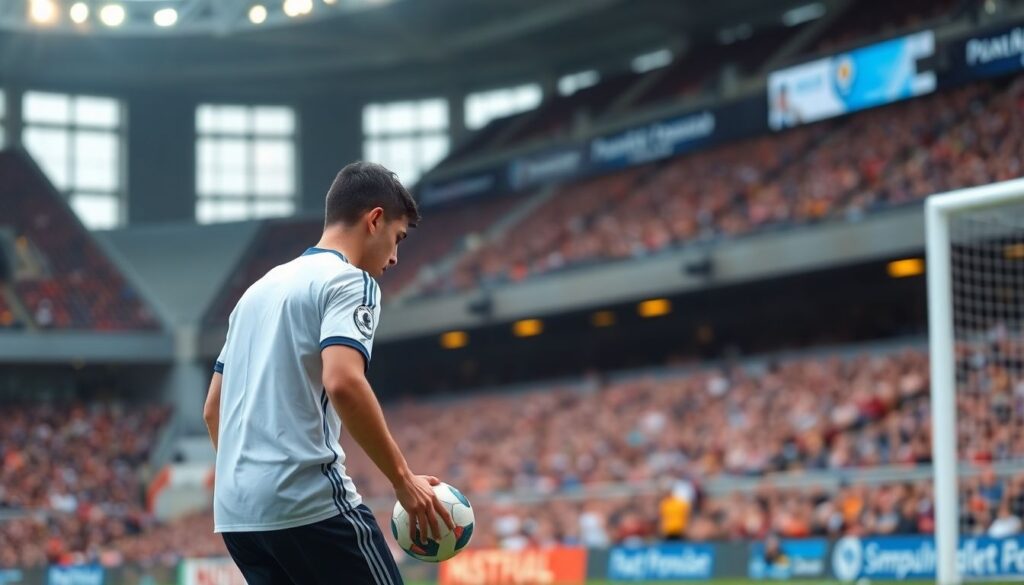
A pre-penalty routine is a fixed sequence of small actions and cues you repeat before every kick. Micro-rituals (like placing the ball in a specific way or taking the same number of breaths) help your nervous system recognise «we are doing that familiar thing again», reducing random variability from pressure.
- Step count and ball placement
Cue: Referee whistles and points to the spot.
Action: Walk to the ball, place it carefully, and step back the same number of steps every time (for example, four back, one to the side).
Expected effect: Body automatically sets up your preferred distance and angle, freeing mental space. - Breath plus gaze sequence
Cue: Ball is placed and you are in starting position.
Action: One slow exhale, brief look at the target zone, quick check of goalkeeper, then eyes back to the ball before starting the run-up.
Expected effect: Links a calm breath with the start of action, improving rhythm. - Trigger word
Cue: Just before you start running.
Action: Say a single trigger word in your head, such as «commit» or «through».
Expected effect: Shifts the brain from analysis to execution, reducing last-second doubts. - Run-up timing
Cue: Referee’s signal to shoot.
Action: Wait exactly the same short beat (for example, one second) before starting your run in every penalty, regardless of pressure.
Expected effect: Prevents rushing or freezing; tempo stays consistent. - Post-kick reset
Cue: After scoring or missing.
Action: One deep breath, short internal phrase («Next action»), then rejoin the team.
Expected effect: Trains emotional stability so that each future penalty feels similar, not heavier.
Well-designed routines resemble mini-protocols you repeat in every context. A curso de coaching deportivo para lanzadores de penaltis in Spain will often start by stabilising these routines before adding more advanced techniques.
Arousal regulation: breath, heart rate and tempo
Arousal regulation is about managing your physiological activation: heart rate, muscle tension and tempo. Under pressure, these often spike, leading to rushed run-ups, «snatched» shots and poor contact. The aim is not to be totally calm, but to stay within your individual optimal activation zone.
Controlled breathing, body scanning and tempo cues are practical tools for como controlar los nervios al tirar un penalti. You train them in low-pressure sessions first, then deliberately introduce noise, time limits and competition so you can keep using the same tools when your body’s stress response kicks in.
Typical scenarios where regulation matters
- Derby match with hostile crowd (away stadium in Spain): Use a 4-2 breathing pattern (inhale 4 seconds, exhale 2) while walking to the spot. This slightly activates you but prevents hyperventilation, helping you keep a strong, decisive run-up.
- Exhausted after extra time: Legs feel heavy and coordination is at risk. Perform a quick body scan as you place the ball (relax shoulders, jaw, and striking foot). This reduces unnecessary tension that can drag the shot wide.
- Facing a «penalty specialist» goalkeeper: Heart rate rises when you think about their reputation. Pair a slow exhale with your final look at the ball, and internally count «1-2-3-go» to fix your tempo, independent of the keeper’s movements.
- After a previous miss in the same season: Emotions spike as memories appear. Use a double exhale (short-long) before your routine, labeling the thought: «That was a different kick.» Then go back to your physical cues: breath, steps, contact.
In structured entrenamiento psicologico penaltis futbol, staff will often monitor whether players can keep their usual breathing and tempo under manipulated stress (crowd noise audio, time pressure, coach evaluations) to ensure skills transfer to real competition.
Mental rehearsal: imagery and outcome simulation
Mental rehearsal means repeatedly visualising yourself executing the whole penalty sequence successfully: walk-up, routine, strike, ball path and celebration. Imagery helps your brain encode motor patterns and emotional responses before the real event, so the situation feels less «new» when it happens in a high-stakes match.
Outcome simulation is a specific type of imagery where you picture not only the movement, but also the result: the ball hitting the net, crowd reaction and your own emotional state afterwards. For tecnicas de concentracion para penaltis decisivos, this combination of movement and emotional imagery is especially powerful.
Mini-scenarios of mental rehearsal
- Night before an important match: Lying in bed, you imagine three penalties: one to the left, one to the right, one low and central. For each, you feel the grass under your boots, hear the stadium, see the ball enter the net, and notice yourself breathing calmly.
- On the bench during a tight game: You suspect you might be called to take a late penalty. For 30 seconds, you close your eyes and picture walking from the halfway line to the spot, repeating your routine exactly as in training, and finishing with a clean strike.
Advantages of mental rehearsal
- Increases familiarity with high-pressure situations without physical fatigue.
- Strengthens the link between routine and successful outcomes.
- Improves confidence by reminding you of past successful executions.
- Allows you to pre-plan reactions to distractions (keeper gamesmanship, crowd noise).
Limitations and cautions
- Imagery does not replace technical training; it complements it.
- Over-focusing on perfect outcomes can create frustration if reality differs.
- Some players struggle to visualise vividly and need guided practice or asesoramiento psicologico para futbolistas profesionales.
- Negative imagery («seeing yourself miss») can reinforce fear if not redirected.
Simplified decision-making under time pressure
Decisive penalties become harder when the decision process is complicated. Over-analysing the goalkeeper, changing side at the last second or trying to be «too smart» can break the link between what you trained and what you execute. Simplifying choices directly improves consistency under pressure.
Common errors and myths
- Myth: «Good penalty takers always wait for the keeper.»
In reality, many top players pre-choose their target and only adjust height or power slightly. Forcing yourself to watch the keeper when it does not fit your style can create hesitation and poor contact. - Error: Changing side mid-run.
Last-second changes usually come from fear, not information. You are more likely to mis-hit the ball or telegraph your shot. Decide your side before the run, and use your routine to commit to it. - Myth: «You must always aim for the corner.»
For some players, a firm shot at medium height or low central with disguise is more reliable. The «perfect» corner is useless if you can only hit it rarely in training. - Error: Overloading with data.
Analysing goalkeeper tendencies is useful before the game, but at the spot your cues must be simple: target zone, contact, follow-through. Too many thoughts slow your run and stiffen your strike. - Myth: «If you feel nervous, you will miss.»
Nerves are normal. The issue is not feeling nervous; it is letting nerves change your routine and decision. Many penalties are scored by players who felt intense anxiety but stayed loyal to their process.
Training drills that replicate high-stakes conditions
Penalty psychology is solidified in training, not invented on match day. Training must progressively simulate time pressure, emotional stress and social evaluation so that your routines, breathing and decisions are stress-tested. Otherwise, even the best concepts collapse in real competition.
Example of a progressive pressure drill (pseudo-structure)
- Phase 1 – Technical baseline (no pressure)
10 penalties at training ground with normal warm-up, focusing only on routine and target. Objective: at least 8 of 10 on target with consistent contact. - Phase 2 – Light competition
Small internal challenge: teammates watching, basic reward/punishment (winner chooses music, loser collects cones). You must follow your full routine and breath cues before each kick. - Phase 3 – Simulated match context
Add loud crowd noise audio, coach timing you (must shoot within a short time limit), and shoot after a physically demanding drill (sprints or small-sided game). Objective: execute the same routine and decision quality with elevated heart rate. - Phase 4 – «Decisive» script
Coach describes a scenario: «Playoff second leg, last minute, score level.» One penalty decides whether your team goes up. You walk from the halfway line, follow your mental script, and take the kick in silence from teammates. Everything is filmed for later review. - Phase 5 – Review and psychological adjustment
With staff or through asesoramiento psicologico para futbolistas profesionales, you review the video: body language, tempo, breath, gaze, decision. You then adjust your routine and mental cues for the next cycle.
Spanish clubs increasingly combine these drills with a structured curso de coaching deportivo para lanzadores de penaltis, integrating tactical analysis of goalkeepers with mental routines and tecnicas de concentracion para penaltis decisivos. The goal is that your «decisive» penalty in a real match feels like the hundredth repetition of a known script.
Common player concerns and practical fixes
What if I still feel very nervous before a decisive penalty?
Expect nerves rather than fighting them. Use a short breath routine (slow exhale), repeat a simple internal phrase linked to your process, and focus on three concrete cues: ball, target zone, contact. Your goal is not zero nerves, but stable execution despite them.
How can I rebuild confidence after missing an important penalty?
Start by reviewing the miss objectively: routine, decision, contact. Then design a short block of training where you repeat the same scenario but with adjusted cues. Combine this with mental rehearsal of successful kicks to overwrite the memory of the miss.
Should I change my penalty style for finals or derbies?
Usually no. Big games are where familiar routines protect you. Only change your style if you have spent time training the new pattern under pressure. Keep your basic decision rules and simply refine details like disguise or run-up length.
What do I focus on if the goalkeeper tries to distract me?
Pre-plan this: decide that once you place the ball, your eyes go to the ground or to your target zone, not to the keeper’s games. Link your focus to physical cues such as counting your steps or feeling your plant foot on the grass.
How many different penalty options should I train?
For most players, two or three reliable options are enough (for example, low left, low right, and one central variation). Train them repeatedly with your full routine so you can choose calmly based on goalkeeper tendencies without overcomplicating the decision.
Is it useful to work with a sports psychologist for penalties?
Yes, especially if penalties are a recurring source of anxiety. Structured asesoramiento psicologico para futbolistas profesionales can help you design routines, manage thoughts before the kick, and integrate specific breathing and imagery tools into your weekly training.
How often should we practice penalties during the season?
Short, frequent blocks are better than rare marathons. Include a few high-quality penalties at the end of intense sessions, applying your full mental routine. Add occasional «decisive» scenarios so match-day situations feel normal.