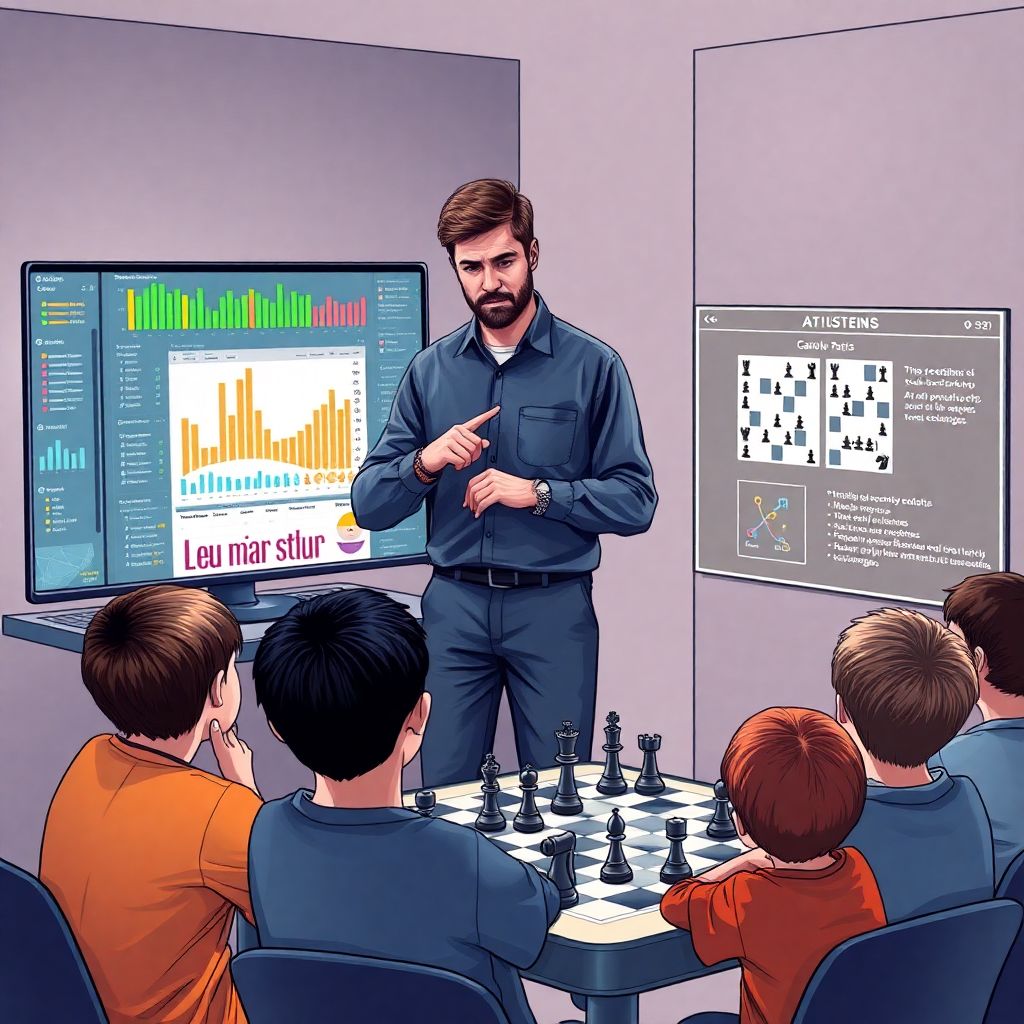
Why amateur coaches keep misreading game results (and what to do instead)
You can be a passionate coach, have a good eye for talent, and still completely misinterpret what’s actually happening in your players’ games.
Not because you’re lazy or “not smart enough”, but because the way we *naturally* look at results is full of traps.
Let’s unpack the most common errors amateur coaches make when analyzing game results, and how you can turn that weak spot into one of your superpowers in 2026 and beyond.
—
Error #1: Confusing result with quality of play
Many amateur coaches still think in a very binary way: win = good game, loss = bad game.
The classic scene:
Your player wins a wild game full of blunders → “Brilliant, keep it up!”
Next round they play a clean, solid game and lose to a stronger opponent → “You need to be more aggressive.”
In reality, both conclusions can be 100% wrong.
When you treat the score as the main measure of quality, you:
– Reward bad habits that happened to “work this time”
– Punish correct decisions that simply didn’t pay off in one game
– Create players who are afraid to play objectively good moves if they look risky
A more professional approach: evaluate *decision quality*, not just the final score.
Ask after each critical moment: “Given the information and time you had, was this decision reasonable?”
Sometimes a “bad move” in engine terms is actually a reasonable practical decision for that specific player and level.
—
Error #2: Looking only at tactics and ignoring patterns
A lot of amateur coaches open a game, switch on an engine and jump straight to “you missed tactic here, tactic there, tactic everywhere.”
Yes, tactics matter. But if every post‑mortem is a museum of missed forks and pins, you’re training a very narrow form of chess.
Behind the missed tactics, there are often deeper patterns:
– Time trouble caused by poor time management
– Repeated fear of exchanges
– Obsession with attacking kings and ignoring the rest of the board
– Panicking when the position is equal and “quiet”
If you only say “You missed Nxf7!” without asking *why* this pattern keeps appearing, you’re fixing symptoms and ignoring the disease.
Long-term improvement comes when you track invisible patterns across many games, not just the flashy tactics.
—
Error #3: Analyzing in a vacuum, without context
Another big mistake: treating every game like a separate universe.
Many amateur trainers open a PGN, talk for 20 minutes about moves, then close it and move on.
They don’t ask:
– Was this at the end of a long tournament day?
– Was the player already tilted from a previous loss?
– Is this the third identical opening disaster this month?
– Did the player sleep 4 hours or 8?
Context doesn’t excuse bad moves, but it explains them and guides your training priorities.
If your student repeatedly collapses in the last round, that’s a mental and physical preparation issue, not just a “missed tactic” problem.
The best coaches create a “story arc” of a player’s development. Each game becomes a chapter in that story, not an isolated event.
—
Error #4: Worshipping the engine instead of using it as a tool
Even in 2026, a lot of amateur coaches still fall into the same trap: the engine becomes the boss, and the coach becomes the narrator.
They click through the game with Stockfish or Leela and comment:
– “+0.8 here, so white is better.”
– “This is a blunder, -3.4.”
– “You should have played this move; engine says +1.2.”
The player nods, maybe writes something down, and… almost nothing changes in their understanding.
Engines are brutal at evaluation but terrible at explaining in human language.
Your role as a coach is to translate: *Why* does the engine want this move? What human principle is behind it? Development? Activity? King safety? Weak squares?
Used well, the mejor programa para analizar resultados de partidas de ajedrez becomes a microscope.
Used badly, it becomes a black box that kills your players’ intuition and confidence.
—
Error #5: Ignoring psychological patterns in games
A very common but subtle mistake: analyzing only *what* happened on the board, and not *what was going on in the player’s head*.
For example:
– Always offering draws in slightly better positions
– Refusing to play endgames even when they’re good
– Avoiding complicated lines after a single tactical blunder in the past
– Overreacting to rating difference (“He’s 200 points higher, I must simplify”)
If you never talk about fear, overconfidence, perfectionism, or tilt, you’re missing half the picture.
Modern high‑level coaching combines move analysis with psychological diagnostics:
“Here you didn’t trust your calculation, even though your first instinct was correct. Why?”
Once the player starts recognizing their mental patterns, games suddenly “slow down” for them, and the same positions start to feel much easier.
—
Error #6: Overloading players with feedback
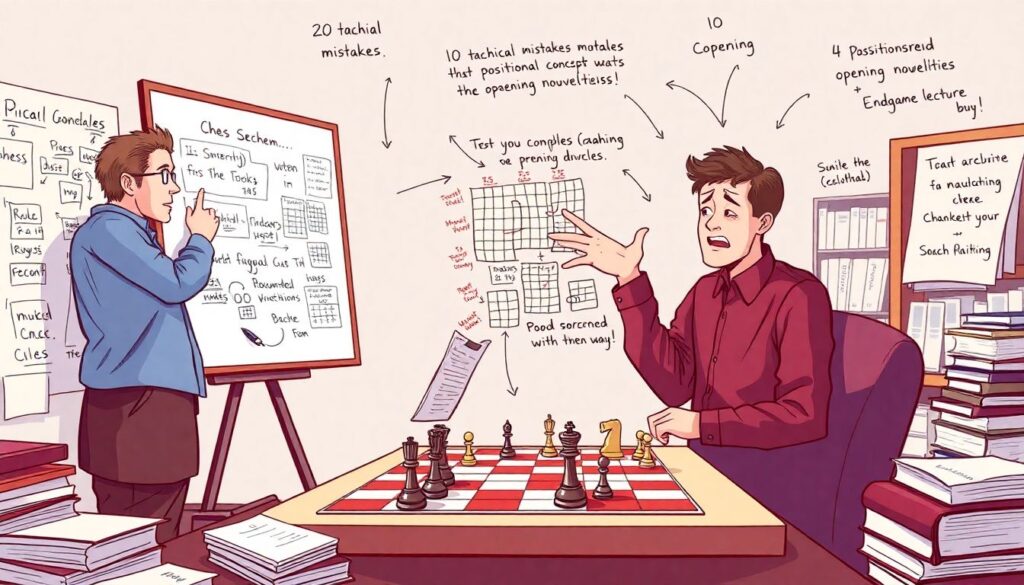
Many amateur coaches want to show how much they know… and overload their students in the process.
Typical session:
– 20 tactical mistakes
– 10 positional concepts
– 4 opening novelties
– an endgame lecture “by the way”
Result: the player leaves feeling impressed, but can’t remember what to fix first.
Good analysis is not about saying *everything* that’s true, but about choosing what’s *most useful right now*.
Try this rule:
For each game, define 1–2 main themes and 1–3 concrete action items. That’s it.
For example:
– “Theme: Time management
Action: By move 20, you must have at least 20 minutes left on the clock in 90% of your classical games this month.”
Clarity beats volume.
—
Error #7: Not using modern tools properly
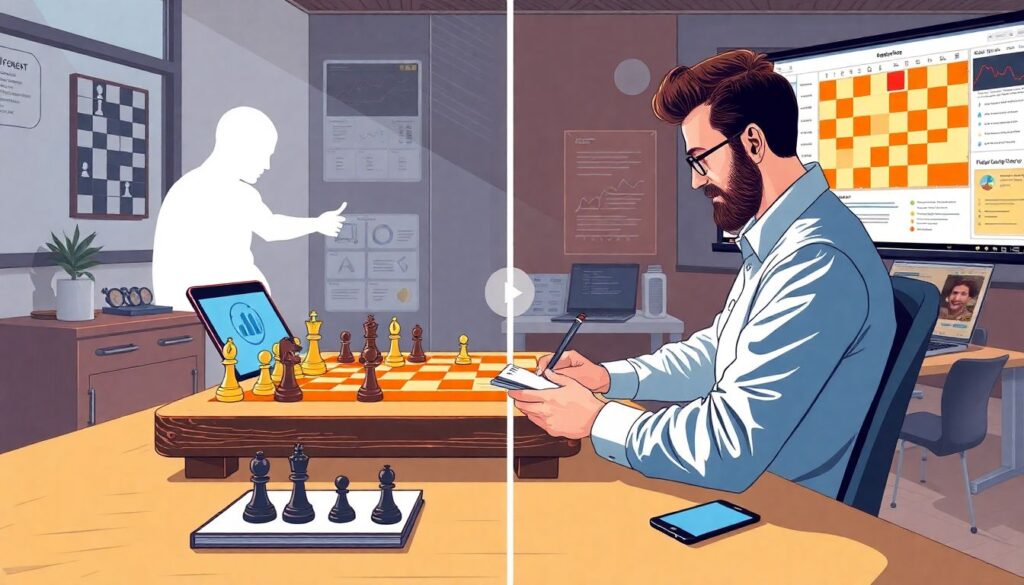
We live in 2026. If you’re still analyzing only with a board and a notebook, you’re voluntarily handicapping yourself.
That doesn’t mean you should drown in tech, but the right tools multiply your coaching impact.
A lot of amateur trainers either:
– ignore modern tools completely (“old school is enough”), or
– collect tools but use them shallowly (“I installed the engine, so I’m modern”).
Take chess tech seriously:
– Use software para análisis de partidas de ajedrez para entrenadores not just to check for blunders, but to organize databases by theme: “rook endgames”, “time-trouble blunders”, “sacrifices on h7”.
– Experiment with herramientas de análisis táctico para entrenadores de ajedrez that let you generate custom puzzle sets from *your own games* instead of random internet positions.
– Track stats: percentage of games decided by blunders, average centipawn loss in winning vs. losing games, typical mistake types by phase of the game.
When tools are aligned with coaching goals, they stop being gadgets and start becoming a competitive advantage.
—
Inspiring example: how one amateur coach reinvented his analysis
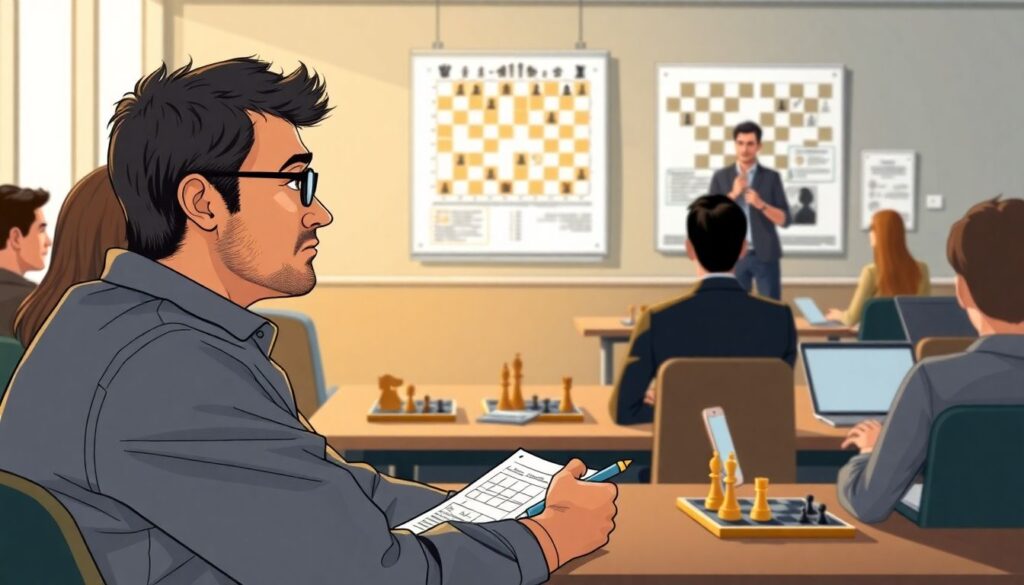
Carlos, a 35‑year‑old amateur chess coach, used to run lessons in a very traditional way:
players showed games, he gave verbal comments, they solved generic tactics. Progress was… slow.
In 2024, he finally joined a curso para entrenadores de ajedrez principiantes to “formalize” what he was already doing. At first, he thought it would be mostly theory he already knew. Instead, he got hit with a new approach:
– Structure every review session around *one* main theme
– Build a small database of each student’s games
– Use engines only after the player has given their own analysis
– Finish each lesson with 1–2 measurable training tasks
Within six months:
– His students’ average rating increased more than in the previous two years combined
– Parents started recommending him as “the coach who really understands why my kid blunders”
– He raised his fees confidently, because his value was obvious
Carlos didn’t become a genius overnight. He just stopped making the classic errors and started treating game analysis like a serious craft.
—
Case from another sport: amateur football analytics done right
This isn’t just about chess. Consider Marta, an amateur football coach working with U17 players.
Initially, she watched matches and shouted the usual:
“Pass faster!”, “Mark your man!”, “Don’t lose the ball there!”
Then she discovered formación online para entrenadores deportivos amateurs that introduced her to basic performance analytics:
– Breaking games into phases: buildup, transition, defense
– Tagging video clips by recurring mistakes
– Setting simple KPIs: successful passes under pressure, defensive recoveries, etc.
Her analysis sessions changed completely:
– Less “you’re not focused”
– More “in the last three games, you lose the ball 70% of the time when you receive with your back to goal — we’ll train that specific situation this week.”
Result: players saw *exactly* how their actions connected to results. Motivation shot up, because progress became visible, measurable, and personal.
The lesson for chess coaches: you can borrow this mindset. Tag moments, name patterns, track trends. Games become data, not just stories.
—
How to develop your analysis skills (step by step)
You don’t need a PhD or GM title to analyze games like a pro. You need a process.
Try this simple routine for each game you review with a student:
1. Start without any engine
– Ask the player to explain critical decisions.
– Mark positions where they felt unsure, scared, or overly optimistic.
2. Identify 1–2 key recurring themes
Examples:
– Rushing in winning positions
– Refusing to defend passive positions
– Misjudging exchanges
3. Only then turn on your engine or tool
– Confirm or adjust your impressions.
– Look for *human* reasons behind “best moves”: piece activity, king safety, weak squares.
4. Translate into training tasks
– Custom tactical sets based on their mistakes
– Specific type of endgames to study
– Opening lines to simplify if they constantly get lost
5. Review after 10–15 games
– Are the same themes repeating?
– If yes, go deeper; if no, move to the next layer of complexity.
This kind of structured thinking is what separates serious coaches from “friendly helpers who know more theory.”
—
Resources to level up your coaching in 2026
If you want to avoid repeating the same errors for the next 10 years, invest in your own growth. Some practical directions:
– Join specialized communities for coaches, not just general chess forums.
– Follow trainers who share full game‑review breakdowns, not just tactics clips.
– Consider at least one modern curso para entrenadores de ajedrez principiantes or advanced programs tailored to analysis methodology, not just opening theory.
– Test different tools to find the mejor programa para analizar resultados de partidas de ajedrez for *your* workflow, not just the one with the most hype.
Useful categories of resources:
– Video series focused on “how to analyze your own games”
– Books and articles on sports psychology and decision‑making under pressure
– Platforms that let you store, tag, and filter your students’ games by themes
The goal: build your own small “lab” where every game becomes a data point and a learning opportunity.
—
What’s coming next: the future of game analysis (2026 and beyond)
By 2026, we’re already seeing big shifts that will reshape how amateur coaches analyze games:
– AI‑assisted explanations, not just evaluations
Tools are starting to highlight human‑understandable concepts: “loss of control over dark squares”, “king became unsafe after this pawn move”, “you stopped challenging opponent’s best piece.”
– Personalized training loops
Your analysis of a game can automatically generate:
– A set of tactical tasks mirroring your typical mistakes
– Endgame drills from structures you misplayed
– Model games you should study next week
– Cross‑sport transfer
Concepts from football, basketball, and e‑sports analytics — expected value of decisions, pattern clustering, pressure indices — are flowing into chess training platforms.
Coaches who adapt will:
– Spend less time on mechanical tasks (“checking for blunders”)
– Spend more time on higher‑value work: guiding mindset, building strategic understanding, and setting long‑term training priorities
Those who don’t will feel increasingly “replaceable” by free apps.
The key is not to compete *against* technology, but to stand *on top of it*. Tools will do more of the heavy lifting; your role will be to make sense of it all, in human language, for real human players with emotions, fears, and ambitions.
—
Final thought: stop “reviewing games”, start building players
The most common error of amateur coaches when analyzing results of games is surprisingly simple:
They think they’re reviewing a *game*, when in fact they’re slowly shaping a *player*.
Every comment you make:
– Strengthens or weakens their confidence
– Trains or damages their intuition
– Builds their habits or cements their bad patterns
If you shift your mindset from “I have to say something smart about this game” to “I want this player to be stronger for their *next* 50 games,”
your analysis style will change overnight.
Be intentional. Use tools wisely. Learn from other sports. Invest in your own education.
And treat every game not as a judgment of your player, but as a doorway to their next level.