
Use international finals as a simple reference library: pick 2-3 clear tactical moments, translate them into small-sided games, add one clear rule that forces the behaviour, and repeat weekly. Keep decisions age‑appropriate, minimise contact, control work:rest ratios, and always prioritise enjoyment and safety over tactical complexity.
Tactical Insights to Transfer from Finals to Youth Training
- Start from one concrete scene of a final, not from abstract theory, and reproduce only its core decision in training.
- Prioritise small-sided formats and constrained rules that are safe, repeatable and easy to coach.
- Use short tactical phrases and consistent cues so players can recognise patterns from video to pitch.
- Progress intensity and complexity gradually across weeks, not within a single session.
- Link each drill to a match objective: pressing trigger, block height, transition route or set-piece zone.
- Review with simple questions; avoid overloaded video talks, especially with younger age groups.
Decoding Final-Stage Pressing: Simple Patterns for Youth Teams
High and coordinated pressing inspired by international finals is suitable for U13-U19 groups with basic technical control and reasonable physical condition. It fits teams training at least twice per week and coaches willing to insist on collective behaviour, not just individual duels.
Do not push complex pressing systems when:
- Players are still learning basic ball control (typically U9-U11) and struggle to pass under no pressure.
- The squad has many late beginners who tire quickly and lose coordination under high intensity.
- Your pitch or local rules limit building from the back so strongly that pressing patterns rarely appear in matches.
- You cannot supervise distances and contacts properly, making high pressing potentially unsafe or chaotic.
Practical options, often covered in a curso tácticas de fútbol base inspiradas en finales internacionales, that you can adopt safely:
- One simple trigger only – for example, press aggressively only when the opponent plays a wide pass to the full-back. Ignore all other moments to avoid confusion.
- Three-player pressing units – work with a triangle (9-10-11 or 7-8-11) in 3v3 or 4v3 formats so distances remain short and controllable.
- Short pressing waves – 8-12 seconds of intense press, then immediate drop and recovery. This reflects how teams in finals manage energy and reduces injury risk.
- Clear communication cue – one call (for example, «go» or a Spanish term your team likes) to start the press, and a silent hand signal from the coach to stop if shape breaks.
Keep rules stable for several weeks and only add new triggers once the first pattern works naturally in friendly games.
Translating Compact Defensive Blocks into Grassroots Drills
Compact defensive blocks from World Cup or Champions League finals can be turned into simple, low-risk exercises with limited space and numbers. This is also a common focus in any serious formación entrenadores fútbol base tácticas avanzadas de competiciones internacionales.
You will need:
- Cones to mark width and depth lines (for example, «do not cross» lines for defenders).
- At least 10-16 players to build a back four plus midfield line, and an attacking group.
- Two small goals or one big goal with a goalkeeper where possible; if not, gate goals with cones.
- Bibs in two or three colours to separate lines and special roles (pivot, 10, wingers).
- A watch or whistle to manage work blocks of 2-4 minutes with enough recovery.
Safe and clear rules to copy compactness from big finals into youth training:
- Width zones – divide the pitch into three corridors and ask the defensive line to stay within the two central ones when the ball is central.
- Depth limit – draw or cone a line that the back four cannot cross when defending high, protecting them from reckless sprints.
- Maximum distances – set a rule like «no more than five big steps between lines», and correct by freezing play and walking players into shape.
- Reward patience – give defenders a point if they force five sideways passes without diving in, teaching restraint rather than risky tackles.
All these tools are low-cost, easy to explain and manageable on standard community pitches in Spain.
Set-Piece Routines Proven in Finals Adapted for Developmental Sessions
Set pieces from international finals are perfect for structured, safe and repeatable learning, especially if you lack time or space. Many libro tácticas de fútbol base basadas en partidos internacionales dedicate full chapters to this because the risk is low and the tactical gain is high.
- Choose one clear routine from a famous final – for example, a near-post corner block, a short corner to create a 2v1, or a free-kick with a lay-off shot.
- Show a 10-20 second clip or a simple sketch; avoid long video talks.
- Explain the goal: free the best shooter, attack a specific zone, or win the second ball.
- Simplify roles to three basic tasks – taker, main target and support.
- Assign each player one job only: screen, run to front post, or stay for rebound.
- Use the same language every session to reduce confusion.
- Walk the routine step by step without opposition – rehearse the path of the ball and the first movements slowly.
- Place cones where players should start and where they should finish their runs.
- Repeat three to five times at low speed before adding defenders.
- Add guided defenders with clear limits – use passive or semi-active defenders who react but avoid heavy contact.
- Start with defenders who can block space but cannot tackle from behind.
- Stop play if any collision risk appears and adjust starting distances.
- Progress to small competitions – attackers have five attempts to score; defenders try to clear and then swap roles.
- Keep series short to prevent fatigue and maintain concentration.
- Rotate roles so all players learn attacking and defending responsibilities.
- Link the routine to match language – give it a short code word you can shout on game day.
- Practice calling the routine under mild distraction (crowd noise audio, light jog before).
- Remind players of their one simple task when they hear the code.
Fast-Track Version for Busy Sessions
- Pick one corner or free-kick from a famous final and draw it quickly on a whiteboard.
- Assign three roles only and walk through once without defenders.
- Run five medium-intensity repetitions with semi-active defenders.
- End with a short contest: first team to score twice wins.
Building Transition Speed: Exercises to Emulate Elite Counterattacks
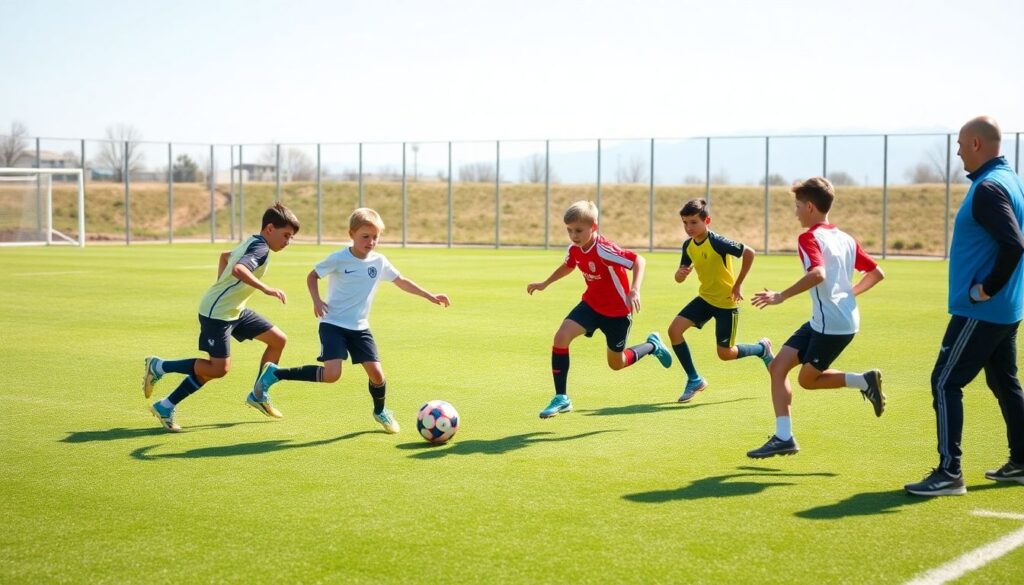
To know if your transition drills are bringing players closer to elite counterattack behaviour shown in finals, use this simple checklist during entrenamiento táctico fútbol base online con ejemplos de grandes finales or live sessions:
- Ball recovery is followed by an immediate forward-facing first touch in most repetitions.
- At least one wide player or full-back automatically sprints into depth within two to three steps of the turnover.
- The ball carrier usually has at least two clear passing lanes ahead, not just sideways or backwards options.
- Players recognise when to stop the counter and keep the ball if the path is blocked.
- Runs are mostly straight and into space, avoiding unnecessary dribbles through crowded central zones.
- Finishing actions (shot or cross) appear within a few seconds after recovery in simplified game formats.
- Defensive recovery runs happen immediately after losing the ball in a counterattack, not after visible frustration.
- The intensity of sprints stays relatively stable from the first to the last repetition of a series.
- Communication improves: clear shouts like «turn», «switch» or «hold» accompany good decisions.
- No dangerous sliding tackles or reckless shoulder charges are used to start counters; players win the ball in controlled ways.
Role Clarity and Positioning: Applying Final-Level Responsibilities to Young Players
Watching a clínic de fútbol base análisis táctico de finales mundial y champions helps you see elite role definitions, but transferring them to youth can go wrong. Avoid these frequent mistakes:
- Copying complex rotations from finals without adapting pitch size, age or training time.
- Using professional role names («inverted full-back», «false nine») with players who still struggle with basic positions.
- Assigning multiple tactical tasks to the same player in one session, leading to overload and hesitation.
- Forgetting to explain roles with and without the ball; many players only know where to stand in possession.
- Allowing lines to become flat (for example, three players on the same horizontal line) which kills passing angles.
- Ignoring the weaker foot of each player when giving positioning tasks that require specific body orientation.
- Changing roles every week, making it impossible for young players to build automatic habits.
- Correcting positioning only verbally instead of freezing play and moving players physically into the right spots.
- Rewarding only goals and dribbles, not good off-the-ball positions that create options or protect space.
Match Management: Teaching Game Phases, Time Control and Psychological Composure
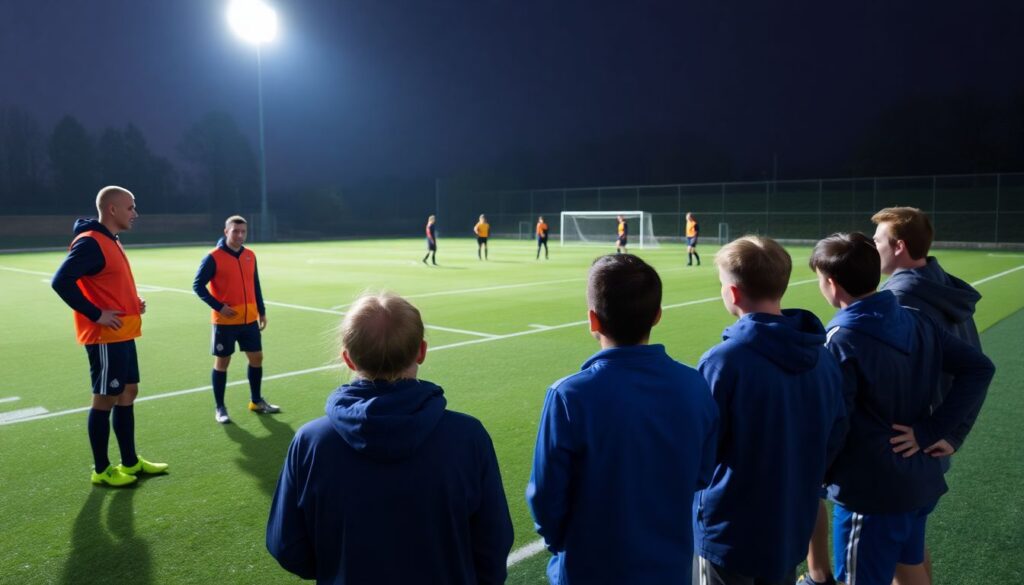
Not every team can or should mirror the full game management seen in international finals. Depending on age, context and time, consider these alternatives, often suggested in advanced formación entrenadores fútbol base tácticas avanzadas de competiciones internacionales programmes:
- Scenario-based small-sided games – instead of whole-match strategies, play 8-12 minute games starting from clear situations: «1-0 ahead, five minutes left» or «0-1 behind, need a goal». Focus on one behaviour like calm circulation or controlled risk.
- Simple time-awareness routines – teach captains to check the clock at specific breaks (throw-ins, goals) and make one short decision: slow, normal or fast tempo, rather than full tactical overhauls.
- Emotional reset habits – after conceding a goal, have a fixed, short team huddle and a breathing pattern or phrase; this is safer and more age-appropriate than complex psychological scripts.
- Video micro-lessons instead of full match breakdowns – use one or two clips per week from finals to show a clear example of calm, or panic, and ask players what they notice, rather than analysing entire games.
Practical Clarifications for Coaches Implementing These Lessons
How many tactical ideas from finals should I introduce per season?
Focus on two to four big ideas maximum: one pressing trigger, one compact block principle, one transition pattern and one or two set-piece routines. Revisit them across months instead of constantly adding new material.
Can I apply these concepts with very young teams (U9-U11)?
Yes, but keep everything extremely simple: 3v3 or 4v4 games, one basic rule at a time, and avoid heavy pressing demands. Emphasise safe duels, spacing and basic support rather than full tactical systems.
How much video from international finals should I show in grassroots environments?
Use very short clips, 10-30 seconds each, with one clear point. One or two clips before training are enough; the main learning should happen on the pitch, not in the meeting room.
What if my players do not watch football on TV and do not know the finals?
That is not a problem; treat the clips as stories, not as fan material. Explain who is who in simple terms and always connect the scene to a concrete rule in the next exercise.
How do I keep drills safe when I add intensity inspired by finals?
Limit pitch size, control work:rest ratios, forbid dangerous tackles and teach players to stay on their feet. Increase intensity mainly through speed of thought and passing, not through more collisions.
How long should I stay with one set-piece routine before changing it?
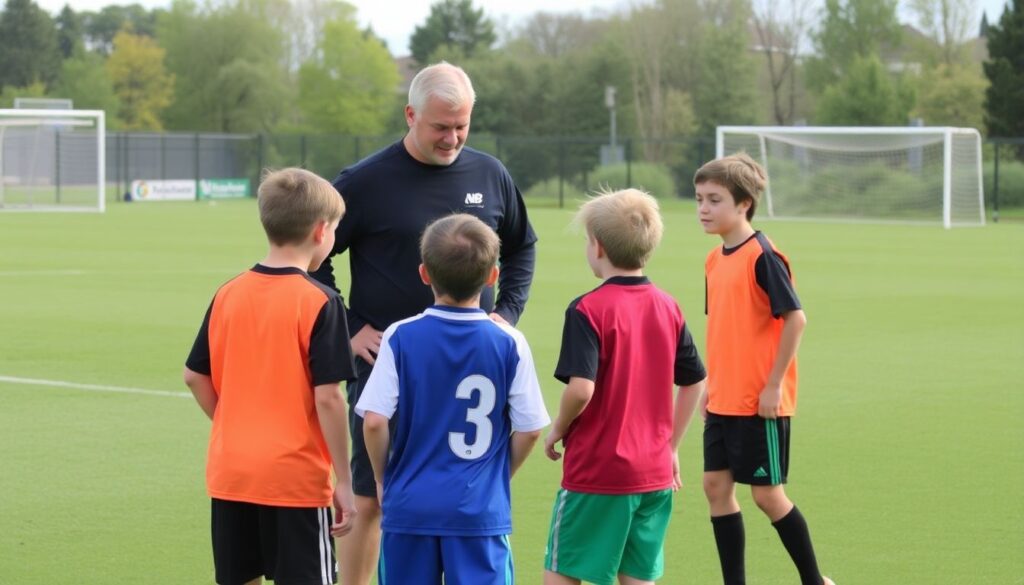
Stay with one main routine until players can execute it under light pressure in friendly games. Once it feels automatic, add a second variant or a different starting shape, but keep the core idea familiar.
Do I need special equipment to copy tactics from elite competitions?
No, cones, bibs and standard goals are enough. Whiteboards or tablets help with sketches and clips, but the crucial part is clear rules and consistent coaching language, not expensive technology.