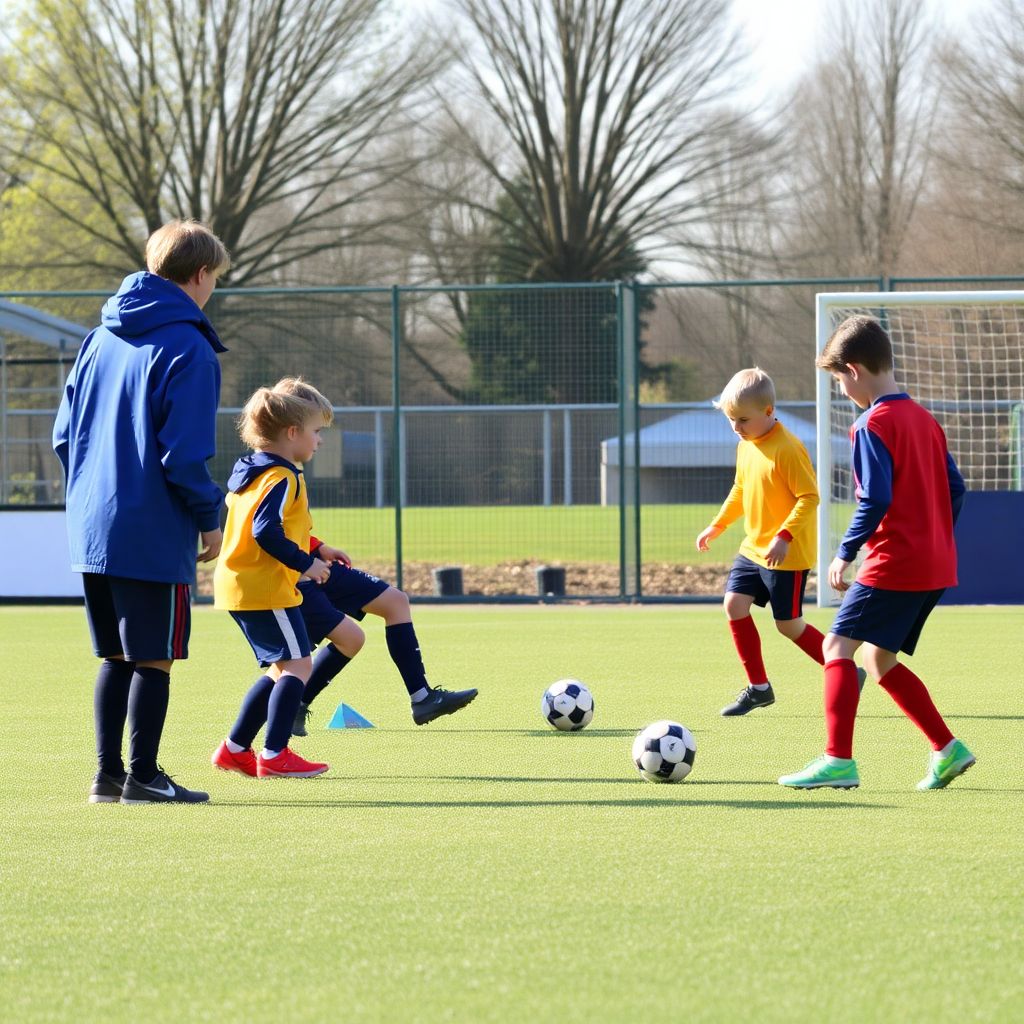
Modern tactical trends like high pressing, positional play and rapid transitions can be applied safely in youth football if you adapt complexity, space and rules to each age group. Start with simple game-like constraints, keep decisions clear, and progress only when players show stable understanding, not just isolated good actions in matches.
Essential Tactical Shifts to Prioritize
- Move from generic drills to game-based entrenamiento táctico fútbol base moderno with clear constraints and scoring rules.
- Introduce high pressing and compact blocks gradually, always linked to clear pressing triggers and cover.
- Use positional play to improve spacing, receiving angles and body orientation before complex patterns.
- Make transitions a daily habit: quick reactions after loss or gain, in small spaces first.
- Link ball progression to decision-making: when to play inside, outside, back or over.
- Use simple video and observation tools to review choices, not only technical execution.
- Plan annual progressions, not isolated sessions, inspired by any curso online táctica fútbol formativo or formal education you follow.
High-Press Structures and Age-Appropriate Progressions
High pressing suits teams U12 and above with reasonable fitness, communication and basic defensive discipline. Avoid it, or use it only in short blocks, when players lack physical readiness, your squad is very small, or you are facing much stronger opponents where constant pressing would create frustration and risk injuries.
| Age Group | Core Tactical Objectives | Sample Match-Realistic Drills |
|---|---|---|
| U8-U10 | Basic compactness around the ball, immediate chase after loss, simple 1v1 pressing. | 3v3 + 2 mini goals, press ball-carrier within 3 seconds; 1v1 channel press to side gate. |
| U11-U13 | First pressing line coordination, cover and balance, pressing triggers on bad touch or backward pass. | 4v4+3 neutral in central zone, front two press as a pair; 5v4 build-up vs press on half pitch. |
| U14-U16 | High-press structures (4-3-3/4-2-3-1), winger-9-10 coordination, trap to one side. | 7v7 on ¾ pitch, team must press in opponent half after every goal; guided pressing traps. |
| U17-U19 | Flexible pressing heights, situational mid-block, opposition-specific pressing plans. | 11v11 with pressing targets (e.g. win ball in final third 5 times); scenario-based restarts. |
Micro-session 1 (15-20 min): U11-U13 First-Line Press
- Organisation: 4v4+3 neutrals in 35x25m; neutrals inside, teams outside in diamonds.
- Rules: Team in possession uses neutrals; defending team scores by intercepting and finishing in 2 mini goals within 5 seconds.
- Coaching cues (measurable):
- First defender within 2 seconds of pass or bad touch.
- Pressing angle forces play to pre-agreed side 7 out of 10 times.
- Support defender at 3-5m distance, slightly inside line of ball.
Micro-session 2 (20-25 min): U14-U16 High Press in 4-3-3
- Organisation: 8v7 on half pitch. Build-up team: GK+back four+3 midfielders. Pressing team: front three+midfield three+1 full-back.
- Rules: Build-up scores by playing into target zone beyond halfway line; pressing team scores by regaining and finishing in big goal within 8 seconds.
- Coaching cues (measurable):
- Front three aligned to block central pass in less than 3 seconds after GK touch.
- At least one pressing trap (wide isolation) every 3 build-ups.
- Defensive line no more than 25-30m from front line when ball in final third.
Progression path: Start with fixed starting positions and slow tempo (foundational), remove constraints and increase tempo (adapted), then set match tasks like «win 5 balls in high press» (match application).
Building Positional Play: Principles, Roles and Drills
Positional play needs simple rules about width, depth and occupation of spaces. You need flat markers, bibs in three colours, 4-6 mini goals or target zones, and, if possible, a basic camera or mobile for short clips. Whiteboard or magnets help clarify roles quickly before you start the games.
Micro-session 1 (15-20 min): U10-U12 Lanes and Angles
- Organisation: Grid 30x25m divided into 3 vertical lanes. Play 4v4+3 neutrals.
- Rules: Max 2 players from same team per lane; to score, ball must travel through all three lanes before finishing in mini goal.
- Coaching cues (measurable):
- Receiver always half-turned (see inside and forward) in at least 7 of 10 receptions.
- Ball-holder has one wide and one inside passing option within 8m in 80% of possessions.
- Immediate width after regain: at least one wide lane occupied within 3 seconds.
Micro-session 2 (20-25 min): U13-U16 Third-Man Concept
- Organisation: 6v4+GK in 35x30m. Build-up team uses 2 jokers between lines.
- Rules: Goal worth 2 points if scored after a third-man combination (A-B-C where C runs beyond line that pressed A).
- Coaching cues (measurable):
- At least one third-man run every 3-4 attacks.
- Players between lines receive behind midfield line at least 5 times per block.
- Pass tempo: max 3 touches on the ball in middle lane.
Progression path: Begin with unopposed patterns to show lanes (foundational), then add passive defenders (adapted), and finish in small-sided games where points reward using wide and between-line options (match application). A good libro sobre tendencias tácticas fútbol moderno can offer pattern inspiration, but always adapt to your players’ level.
Transitional Play: Coaching Fast Counters and Rapid Recovery
Transitions should be trained with clear triggers, short distances and simple objectives. Focus on first 3-6 seconds after gain or loss. Use time limits, overloads and finish zones to keep players engaged and safe, especially in younger categories with less physical robustness.
- Define clear game moments and triggers. Explain «transition» as the first seconds after winning or losing the ball. Use simple triggers like lost pass, interception or rebound. Show one attacking and one defensive example on a whiteboard, then repeat them in warm-up games.
- Start with small-sided directional games. Use 3v3 or 4v4 with two goals each. When a team wins the ball, they must attack the nearest goal within a time limit. Limit touches to encourage head-up decisions and quick passing, not long solo runs.
- Add numerical superiority for the attacking transition. Move to 4v3 or 5v4. The team that regains always has one extra player. This rewards positive reactions and reduces risky duels. Defenders focus on delaying, attackers on finishing fast.
- Introduce defensive transition rules. After losing the ball, first two nearest players must sprint to close ball and prevent forward pass. Add scoring for «stopping the counter» by forcing play back or wide before halfway line.
- Integrate transitions in larger games. Play 7v7 or 9v9 with zones. Goals count double if scored within 10 seconds of regain, or if ball is recovered within 6 seconds after loss. Rotate roles so all players experience both fast counter and rapid recovery demands.
- Review, measure and adjust load. After the game, use short clips or observations: how many fast counters, how many successful recoveries. Adapt distances and numbers next session to avoid overload, particularly on growing players.
Fast-Track Mode: Transitional Play «Быстрый режим»
- Play 4v4 with two big goals; goal counts double if scored within 8 seconds of regain.
- On ball loss, first two nearest must sprint back; coach counts seconds aloud to reinforce speed.
- After 4-5 minutes, quick feedback: 1 thing to repeat, 1 thing to improve, then restart.
- Finish with 7v7 where you track only two metrics: number of fast counters and times you delay opponent’s counter.
Micro-session (20-25 min): U12-U16 Counter vs Counter
- Organisation: 5v5+GK in 40x30m with central «transition zone».
- Rules: Team A attacks; if Team B regains, they must counter through transition zone and finish in 6 seconds. If they fail, ball returns to coach and roles switch.
- Coaching cues (measurable):
- First forward pass after regain in less than 3 seconds in most counters.
- At least one wide run beyond the ball every counter-attack.
- On defensive transition, slow opponent down before they enter transition zone at least 50% of times.
Ball Progression: Routes, Risks and Developmental Milestones
Ball progression connects build-up with chance creation. In youth categories focus on reading pressure, choosing the best route (inside, outside, back, long) and protecting players from unnecessary risk in dangerous zones. Use this checklist to evaluate if your team is progressing safely and effectively.
- Players can identify at least two safe passing options before receiving in your own third.
- Central defenders choose inside pass only when central midfielder is unmarked and facing forward.
- Full-backs recognise when to drive forward vs recycle based on pressure from winger and full-back.
- Midfielders open body to play forward in one or two touches instead of always playing back.
- Forward line offers depth runs regularly, not all players to feet.
- Team can escape wide pressure by switching play across the pitch within three passes.
- In U13-U16, goalkeeper participates as extra player without forcing risky passes through middle.
- Error profile is acceptable: most turnovers happen in middle third, not in front of own box.
- Players show understanding of when to clear long safely under extreme pressure.
- Match video or notes show progressive improvement in entering final third with control, not only long balls.
Micro-session (15-20 min): Routes Out of the Back
- Organisation: 6v4+GK build-up in 35x30m. Three routes marked: centre, half-space, wing.
- Rules: Build-up team scores by entering any of three exit gates. Extra point if they progress through pre-defined route for the block.
- Coaching cues: Look for «scan-decide-execute» before ball arrives; encourage the safer of two vertical options.
Defensive Compactness: Line Management for Youth Teams
Compactness is about distances between players and lines, horizontally and vertically. Teach it in reference to the ball first, then add line coordination. These are frequent mistakes to monitor and correct with simple rules and field markings.
- Back line drops too deep early, leaving huge gap to midfield and making pressing impossible.
- Wingers do not track inside, leaving half-space unprotected despite good wing coverage.
- Lines shift towards ball but far-side full-back and winger stay too wide, breaking horizontal compactness.
- Striker presses alone without support, opening easy passing lanes for opponent centre-backs.
- Midfielders chase man-to-man and lose sense of zone, creating open channels between them.
- No clear reference for maximum team length, so distances expand over time in the match.
- Players defend on same vertical line instead of staggered, making through passes easier.
- Communication is absent: no one leads the line, so step/drop decisions are uncoordinated.
- Coaches change shape often during the season, preventing players from automating compactness habits.
- Pressing and compact block work are never linked, so team looks good in drills but not in 11v11.
Micro-session (15-20 min): U13-U19 Compact Block
- Organisation: 8v6 in 40x35m. Attacking team seeks to penetrate between lines; defending team holds mid-block.
- Rules: Defending team scores by forcing 3 consecutive backward passes or winning ball and playing to target in 8 seconds.
- Coaching cues (measurable):
- Team length no more than 30-35m while ball in middle third.
- Maximum 12-15m between defensive and midfield lines.
- All players shift inside one half of the pitch when ball is wide.
Using Video and Data to Accelerate Tactical Learning
Even without professional tools you can use video and basic data to support understanding. Record short clips from a high side angle, focus on one tactical topic per session, and review with the team in 5-10 minute blocks, keeping language simple and action-oriented.
- Alternative 1: Paper-based observation sheets. Assistant coaches or injured players record specific events (e.g. number of successful presses, compactness errors). Use them for quick feedback at half-time or next session.
- Alternative 2: Mobile video and simple drawing apps. Clip 3-5 actions per theme and draw basic lines to show distance, passing options or compactness. Great when you cannot invest in advanced platforms but want more than verbal explanation.
- Alternative 3: Player-led analysis groups. Split squad into small groups; each gets one theme (pressing, transitions, progression). They watch clips or recall situations and present one improvement idea. This builds autonomy and links nicely with any clínic de táctica para entrenadores de fútbol base you may attend.
- Alternative 4: Structured learning pathway. If you follow a máster en táctica y metodología del fútbol moderno or similar, translate complex concepts into one or two field rules per age group, then test them in your next session and review impact with simple stats.
For deeper understanding, connect your practice with external learning such as a curso online táctica fútbol formativo or a well-chosen libro sobre tendencias tácticas fútbol moderno, but always adapt ideas to your local context in Spain and the specific needs of your players.
Coaches’ Practical Concerns
How many tactical ideas should I focus on in one session?
Limit yourself to one main tactical objective and, at most, one secondary detail. For example, «high press triggers» plus «defensive line height». Too many ideas dilute feedback and make it harder for young players to understand success criteria.
How do I adapt modern trends to very low-level or mixed groups?
Simplify rules, reduce pitch size and lower the number of players. Keep the same tactical idea but change constraints so everyone can participate safely. Use more guided questions and less complex patterns.
Is high pressing safe for younger age groups physically?
Yes, if you use short work blocks, small fields and frequent rest, and avoid maintaining very high intensity for long periods. Monitor fatigue and growth spurts, and never punish players for not reaching unrealistic physical outputs.
How often should I include transition-focused games in my microcycle?
At formation level, you can include some transition component in almost every session. At least once per week, make it the main theme with clear metrics like time to counter or time to recover defensive shape.
What if parents or club directors do not understand my tactical approach?
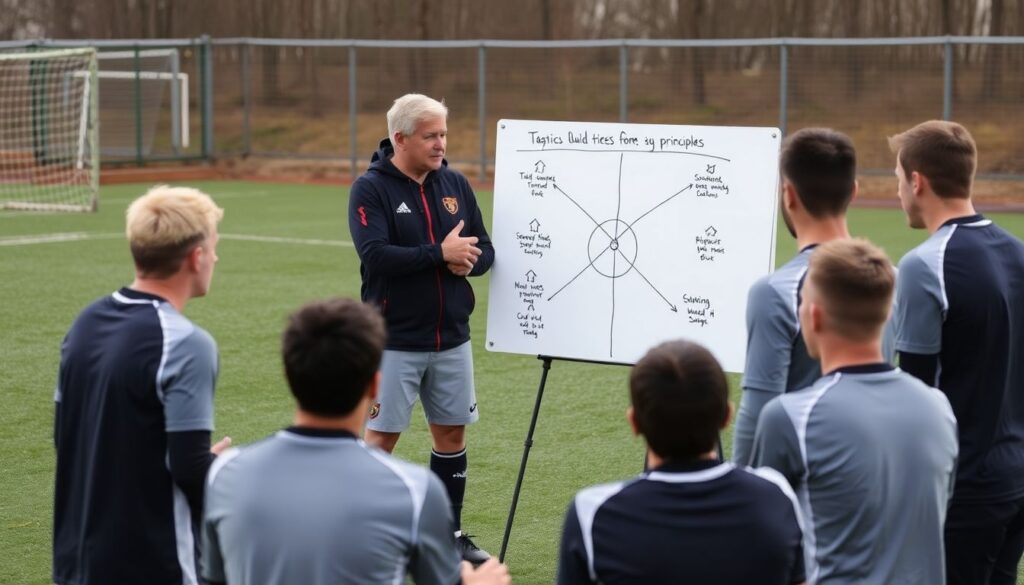
Prepare a simple explanation of your main principles and how they protect and develop players. Use short videos or drawings, and invite them to watch a part of training where the idea is visible. Clarity reduces resistance.
How can I evaluate if my team is ready for more complex structures?
Check if they consistently apply basic rules under pressure: distances, triggers, simple rotations. If they manage this in 7v7 or 9v9 games, you can add new roles or patterns gradually without overloading them.
Do I need advanced software to use data and video effectively?

No. A smartphone, tripod and basic tagging (paper or spreadsheet) are enough at first. The value comes from clear questions and short, focused feedback, not from the complexity of the tool.