
Mental training for competitive football uses simple, repeatable visualization and concentration drills before and during matches. You rehearse tactical options, calm your nervous system with breathing, and run mental simulations of key situations like set pieces. Done consistently, these brief sessions make decisions faster, actions cleaner and emotions more stable under pressure.
Essential mental anchors for match performance
- Define one clear role for each drill: tactical clarity, emotional control or confidence boost, not all at once.
- Use short, frequent sessions (3-8 minutes) linked to stable cues: boots on, warm-up, tunnel, half-time.
- Combine images, body sensations and self-talk; full-body imagery beats «cinema in your head».
- Measure progress with simple markers: heart rate drop, quicker decisions, fewer «switched off» moments.
- Align mental work with your team’s game model and weekly plan, not as random isolated routines.
- De-brief each match: note 1-2 situations where mental tools helped, and 1 where you need an upgrade.
Pre-match visualization routines for tactical readiness
Pre-match visualization is ideal for players in competitive leagues (from regional to professional) who already understand their team’s tactical model. It supports clarity, confidence and quicker pattern recognition. It is less suitable right after concussions, during acute anxiety or when medical or psychological professionals advise against intense imagery.
In Spain’s context, where entrenamiento mental fútbol competitivo is still growing, pre-match routines work best when coordinated with the head coach and, if available, a coach de concentración y visualización para fútbol. Keep medical staff informed if you have a history of panic attacks, sleep disorders or previous head injuries.
Core structure of a 10-minute pre-match routine
- Grounding and body check (2 minutes) Sit or stand with both feet on the floor. Notice contact points (feet, seat, back) and scan your body from head to toe. Release unnecessary tension, especially in jaw, shoulders and hips.
- Breathing to stabilise arousal (2 minutes) Inhale through the nose for 4 seconds, exhale for 6 seconds, staying relaxed. Aim for 8-10 breaths. Notice heart rate slowing slightly and a sense of mental space opening.
- Role and task reminder (1 minute) In one or two clear sentences, repeat your role today: position, key tasks in and out of possession. Example: «As a left-back I close the inside lane, support build-up and attack the space behind their winger.»
- Visualise first actions with detail (3 minutes) Imagine 3-5 specific early actions you are likely to face, in the actual stadium you will play in. See colours, feel the pitch, hear crowd noise. Always finish each scene with an effective decision and clean execution.
- Emotional anchor and exit (2 minutes) Recall a match where you played well under pressure. Briefly replay one clip, then choose a simple phrase (e.g. «Calm and aggressive») and one body cue (e.g. hand squeeze). Use both as your mental «on switch» when the whistle blows.
Position-specific variations
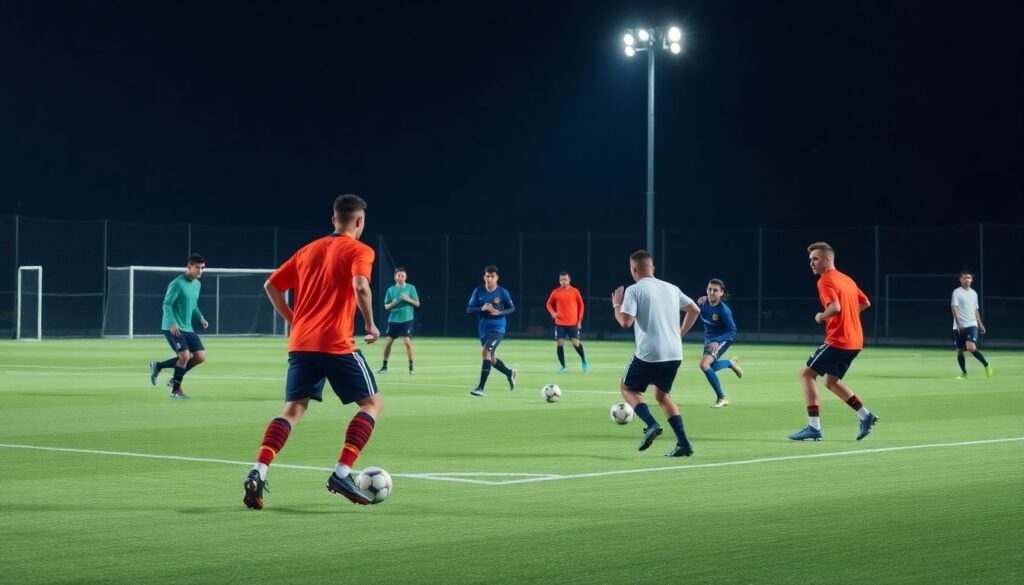
- Defenders: Visualise keeping the line together, winning aerial duels, delaying 1v1s and clear communication around you.
- Midfielders: Rehearse turning under pressure, scanning before receiving, switching play and tempo changes.
- Attackers: See different runs against the same back line, timing across defenders, and staying composed in the box.
Most técnicas de visualización para futbolistas de alto rendimiento use similar principles: specificity, repetition and alignment with real tactical demands. Adjust duration to your competition level and personal response; if imagery makes you overstimulated or sleepy, shorten or shift it earlier in the day.
Micro-focus drills to sharpen decision-making under pressure
Micro-focus drills are 30-120 second concentration exercises inserted into training and match-day routines to strengthen «mental zoom» on the right cues. They require no equipment beyond a watch or timer, a notebook or app for tracking, and ideally support from staff familiar with programas de preparación psicológica para jugadores de fútbol.
Recommended tools and settings
- Environment
- Quiet initial setting (home, locker room) to learn the drill.
- Progress to sideline during training, then into live game moments (e.g. before corners).
- Time-tracking
- Use a simple timer on your phone or watch outside the pitch.
- In matches, anchor duration to natural cues, e.g. one deep breath + referee count-in.
- Recording progress
- After training, note quick metrics: «3/5 good decisions after micro-focus reset», «1 lost mark».
- Weekly, review with coach or staff and adapt difficulty.
- Support staff
- Ideally involve a mental coach, sport psychologist or experienced assistant coach.
- They can design small-sided games that reward quick, accurate decisions after each micro-focus reset.
Example micro-focus drills
- Three-cue scan (for midfielders and defenders): between plays, choose 3 cues to lock on: ball, nearest opponent, space behind you. Hold attention there for 10-15 seconds, then re-join full play.
- Breath-and-keyword (for all positions): one controlled exhale plus one keyword linked to role («cover», «press», «finish»). Use it after you lose a duel or misplace a pass to re-centre.
- Boundary reset (for attackers): each time you cross the halfway line, briefly tighten your core and say your attacking task in your head («attack the space», «pin the centre-back»).
Imagery protocols for set pieces and penalty situations
Imagery for set pieces and penalties needs structure and safety. It should not replace technical training, tactical boards or video. Stop any drill that triggers intense anxiety, flashbacks or dizziness, and consult a qualified professional before continuing. Never practice while driving, cycling or in situations needing full external attention.
- Limit imagery sets to short blocks (3-6 repetitions) with breaks; avoid long, exhausting sessions.
- If you have a history of trauma or panic, keep scenes brief and neutral, focusing on process (run-up, contact) rather than crowd or consequences.
- Coaches should never force players to relive missed penalties in detail; invite, never coerce.
- Stop immediately if you feel dissociated, numb or disconnected from your body, and ground yourself by naming objects in the room.
- Define one clear objective per protocol Decide if your goal is confidence, consistency of technique or decision clarity (e.g. where to place the ball). Write this in one line before starting, and share it with your coach if working together.
- Build a safe, stable starting scene Sit or lie comfortably, close your eyes if safe, and imagine walking calmly towards the ball. Keep breathing smooth. The scene always starts with you feeling grounded and in control of your body.
- Replay your full technical routine Mentally go through your real-life routine: steps back, breaths, look at target, run-up, contact and follow-through. Match tempo to reality. Feel boot-ball contact, weight transfer and body alignment, not just the ball’s path.
- Vary scenarios while keeping technique stable Once your routine is clear, add variations: different keepers, crowd noise, score lines (ahead, behind, draw). Regardless of scenario, your breathing, run-up and strike mechanics stay identical and smooth.
- Integrate «imperfect» but effective outcomes Include a few scenes where the strike is not perfect (slight mishit, small slip) but still goes in or creates a rebound. This reduces fear of minor errors and prepares you to stay composed after imperfect contact.
- End every sequence with emotional closure After each imagined set piece or penalty, feel the physical and emotional relief of successful execution, then mentally jog back or re-join team shape. This trains your nervous system to «close the loop» instead of staying stuck on the kick.
Example scripts by role
- Penalty taker (attacker or midfielder) «I place the ball, step back, exhale. My eyes scan keeper, then spot. My run-up is smooth; I hit through the ball with confidence. Even if the keeper moves early, I stay with my decision. Ball hits the net, I jog back calmly.»
- Defender on defensive corner «I check man and zone. On the taker’s signal I track my player without grabbing. I win the first contact or make it hard for him. If the ball drops, I react first and clear with direction, then move the line out.»
- Goalkeeper on free kick «I build the wall clearly, position myself, one last look at ball and runners. As the taker starts, I stay patient, push explosively and finish with strong hands. Whatever happens, I reset with one breath and organise the next phase.»
Breath and attention strategies for rapid in-game resets
Rapid resets are very short (5-20 second) routines used after mistakes, heavy sprints or emotional spikes. They combine breathing patterns, simple attention cues and body posture. Use this checklist to verify if your reset strategy is effective during entrenamiento mental fútbol competitivo and matches.
- You can perform the full reset in under 10 seconds without losing tactical connection to the game.
- Heart rate or tension drops slightly, but you do not feel sleepy or disengaged.
- Your eyes lift quickly to scan ball, teammates and opponents right after the reset.
- Self-talk shifts from blame («I’m useless») to task-focused phrases («Next action», «Win the duel»).
- You make the next decision faster and more decisively, even if the previous play was a mistake.
- Coaches notice you recover body language quickly: upright posture, clear communication, not slumped shoulders.
- Across several matches, you experience fewer long «negative spirals» after one error.
- Your reset routine is consistent: same breath pattern and keyword used in training and competition.
- Teammates can recognise and respect your reset (for example, they give you 2 seconds before shouting instructions).
- No dizziness, hyperventilation or tingling appears; if it does, breath length is adjusted and symptoms disappear.
Periodized concentration training across the competitive week
Concentration training should be periodized like physical work across the microcycle (for example, Monday-Sunday in La Liga or Tercera RFEF). Misuse creates mental fatigue or resistance. These are common errors to avoid when structuring weekly programas de preparación psicológica para jugadores de fútbol.
- Loading heavy, complex visualization sessions on match day, leading to mental overload instead of readiness.
- Ignoring recovery days: adding long focus drills on rest days instead of using very light, relaxing imagery.
- Not matching drill intensity to physical or tactical load (for example, heavy mental work on already intense tactical days).
- Using the same script all season without adapting to tactical evolution, opponents or player development.
- Forcing every player into identical routines instead of position-specific and personality-based adjustments.
- Skipping debriefs, so players cannot connect specific mental tools to concrete match situations.
- Letting only the psychologist handle mental work, without integration into coaches’ language and drills.
- Introducing new complex techniques (e.g. advanced imagery) in the decisive last weeks of the season.
- Underestimating cognitive fatigue from school, work or travel when scheduling concentration blocks.
- Failing to rehearse reset and focus tools in friendly matches before expecting them to work in play-offs.
Measuring and adapting mental skills: metrics and coach feedback
Measurement keeps mental training honest and practical. Work with your coach or a specialised coach de concentración y visualización para fútbol to choose simple indicators. For many players in Spain, accessible cursos online de entrenamiento mental para fútbol competitivo also provide templates and tracking sheets.
Alternative or complementary approaches
- Process rating scales instead of detailed logs After each session or match, rate 3 items from 1-5: focus, emotional control, and reset speed. This suits players who dislike writing but can handle quick numbers.
- Video-based self-review sessions Once a week, watch 10-15 minutes of clips focused on your reactions after mistakes, set pieces and transitions. Note where mental tools appeared or were missing, then adjust next week’s routines accordingly.
- Peer feedback circles In small position groups (defenders, midfielders, attackers), share one situation per week where mental training helped or failed. This builds shared language and often reveals blind spots more cheaply than individual consultations.
- Structured work with specialists When available, join structured programas de preparación psicológica para jugadores de fútbol or targeted cursos online de entrenamiento mental para fútbol competitivo. Choose programmes that include baseline assessments, periodic re-tests and clear adaptation rules rather than generic motivational content.
Common implementation pitfalls and practical fixes
How long should a visualization session last for a competitive player?
Most players respond well to 5-12 minutes per session, depending on intensity and timing. Shorter is often better before matches; slightly longer blocks fit better on low-load training days or in pre-season.
Is it necessary to work with a sport psychologist to use these techniques?
It is not strictly necessary, but guidance from a sport psychologist or an experienced mental coach helps you avoid overload, adapt drills to your profile and integrate them with your coach’s tactical plan. Seek professional help if imagery increases anxiety instead of reducing it.
How many times per week should I practice mental drills?
Start with 3-4 brief sessions per week, linked to existing routines such as warm-ups or cool-downs. Increase only if you feel fresher and more focused, not more tired or mentally saturated.
What if I cannot «see» clear images in my head?
High-definition images are not required. Focus on body sensations, sounds, timing and simple verbal cues; many elite players use kinesthetic and verbal imagery more than visual detail.
Can I use the same routine for league, cup and friendly matches?
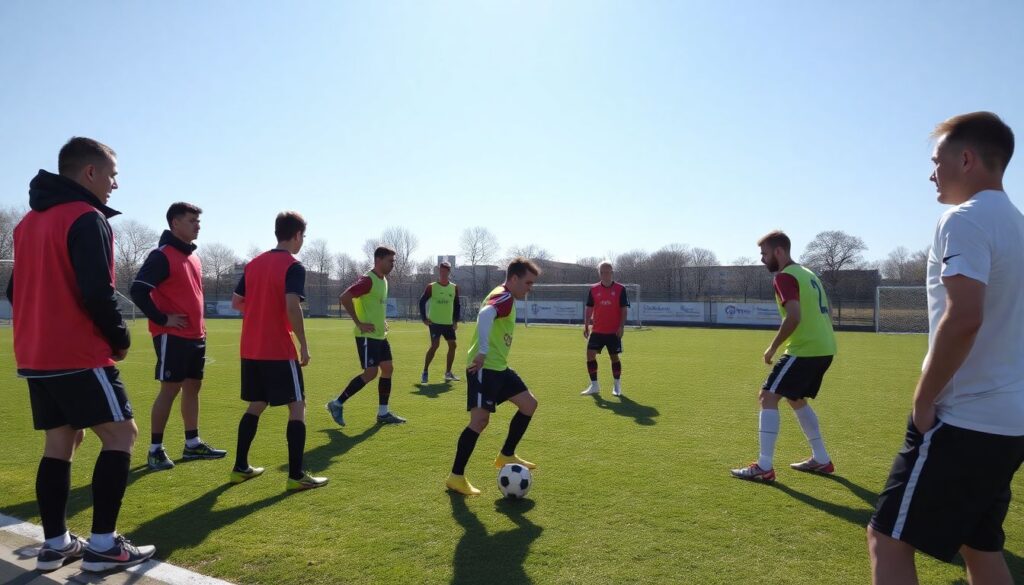
You can keep the core structure, but adjust intensity and content slightly. Friendlies are ideal laboratories to test and refine routines before using them in decisive league or cup games.
How do I stop visualizations from turning into negative scenarios?
Set one clear objective before starting and script the first and last 10 seconds of the scene as safe and controlled. If negative images intrude, pause, open your eyes, ground yourself and restart from the stable beginning.
What should coaches avoid when introducing mental training to a team?
Coaches should avoid imposing identical routines, mocking players who struggle, or using mental tools mainly as punishment after mistakes. Instead, present them as performance aids and gradually co-design options with players.