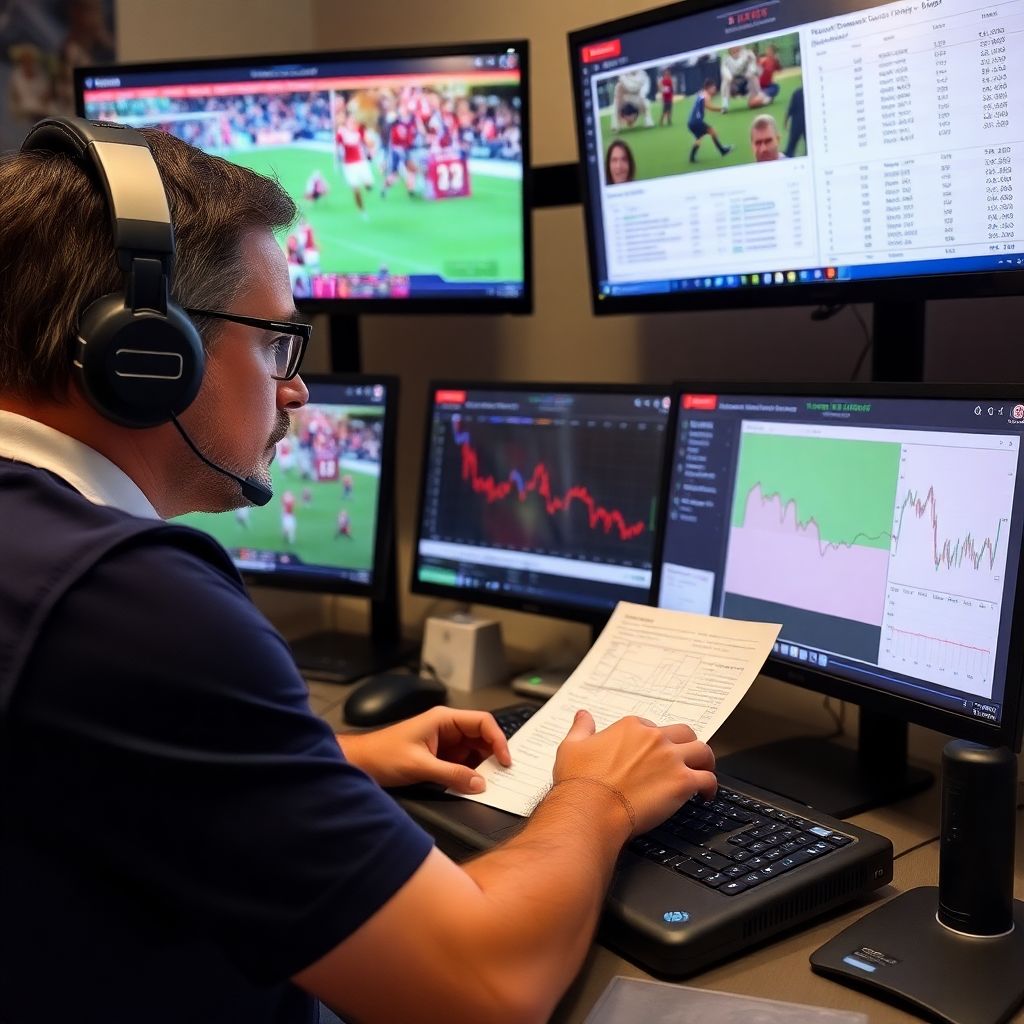
The most common match-analysis errors come from ignoring context, over-focusing on single stats or clips, and drawing conclusions from biased samples. To avoid them, define a clear question, gather enough representative data, combine numbers with video, and always verify your conclusions on future matches before risking money or reputation.
Essential pitfalls to flag before analysis

- Judging a team without considering match context, game state and schedule congestion.
- Trusting one metric, highlight or replay instead of full-possession sequences and long samples.
- Letting recent results or a few extreme games dominate your view of a team.
- Misreading body language, substitutions or "momentum" as facts instead of hypotheses.
- Building cluttered dashboards that hide key patterns instead of clarifying them.
- Skipping post-match verification and never checking if your read was actually correct.
Neglecting match context and game state dynamics
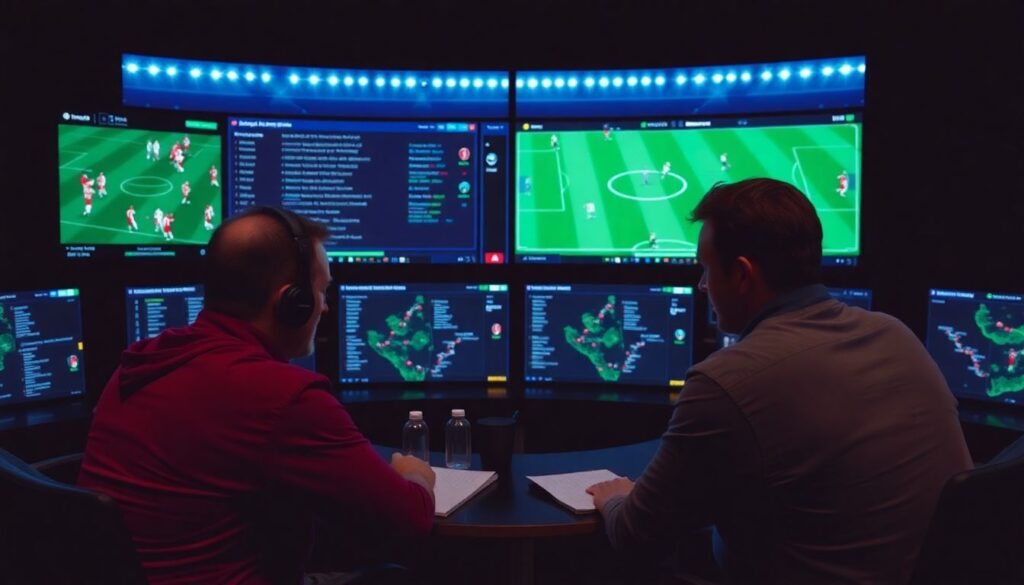
- Clarify: league or cup, first leg or second leg, neutral venue or home/away.
- Check recent schedule density and travel for both teams.
- Identify incentives: must-win, rotation match, or low-stakes game.
- Mark turning points: goals, red cards, injuries, and formation changes.
Neglecting match context usually comes from analysing isolated stats or clips without asking why the game looked that way. The consequence is overrating or underrating teams and players, especially in LaLiga or other top leagues where tactical game states change fast. This section suits anyone doing video or data review, and it is especially relevant if you are following a curso análisis de partidos de fútbol online and want to connect theory with real matches. It is less useful if you only track casual fan impressions and are not using the results for betting, scouting or tactical preparation.
Focus on these contextual dimensions:
- Competition and format – League matches, cups and European ties create different incentives. Two-legged ties often produce conservative first legs and chaotic second legs.
- Game state and timing – A team leading 2-0 will often sit deeper; a team chasing a goal will push fullbacks higher and accept more risk. The same xG numbers can mean very different things depending on the scoreline and minute.
- Squad status – Rotations, injuries and suspensions change roles. A high press that works with the starting XI may fail badly with tired backups.
- Schedule and fatigue – In Spain, midweek matches, long away trips and heat can reduce intensity. If you ignore this, you will misread a passive block as "lack of motivation" instead of energy management.
- External factors – Pitch quality, weather, and even referee style (strict vs lenient) influence pressing, duels and tempo.
To prevent this error:
- Always write a one-paragraph context note before opening stats or video.
- Segment your analysis by game state (0-0, leading, trailing) instead of only full-time totals.
- Tag key events (goals, reds, injuries) when watching so you can link them to stat swings later.
Overreliance on single metrics or highlight plays
- Define the main question: performance, style, or bet value.
- List 3-5 core metrics that truly relate to your question.
- Decide in advance how you will combine stats with video clips.
- Set a limit: maximum number of highlights per player or team to review.
A classic trap is falling in love with one number (possession, xG, shots) or one spectacular clip and turning it into a full conclusion about a player or team. The result: you overrate flashy wingers, underestimate quiet controllers, or misjudge a team that looks dominant in highlights but not across 90 minutes.
To avoid this, you need both metrics and structured video. Modern software para análisis de partidos y estadísticas deportivas lets you link events (pressing actions, entries into the final third) with clips, so you can see not just how many things happened, but how they happened.
Causes of this mistake:
- Using app dashboards with a few big numbers and ignoring everything else.
- Watching social media highlight reels instead of full matches or long compilations.
- Confusing a metric that is easy to understand with a metric that is actually predictive.
Practical prevention steps:
- Bundle metrics into small groups – For example, for attacking quality look at xG, shots from inside the box, big chances, and touches in the box together.
- Use video to explain numbers – If a striker has low xG but scored, check if the goal was a low-percentage shot or a clear chance created by team play.
- Set rules for highlight selection – For each player, pick not only the best and worst actions but also 3-4 neutral, typical actions so you understand their normal level.
- Compare across matches – Do not call a trend if you have seen it in only one or two games.
If you are interested in cómo hacer un buen análisis de apuestas deportivas, this discipline is critical: your goal is not to predict one shot or one goal, but how a team usually behaves over many games.
Biased sample selection and the recency trap
- Decide your sample size before looking at results (for example: last 8-10 league games).
- Include both home and away matches whenever possible.
- Note if your sample contains many red cards or unusual game states.
- Separate league, cup and friendlies instead of mixing them blindly.
- Keep a log of which matches you chose and why.
This section gives a safe, practical method to avoid biased data and the recency trap, suitable for analysts, coaches, and bettors. Follow the steps in order and do not skip checks, especially if you later rely on your conclusions for money or competitive decisions.
- Define the exact question you want to answer
Write one sentence: for example, "How strong is Team A’s high press in LaLiga home matches this season?" A clear question prevents you from cherry-picking only impressive or terrible performances to support a narrative. - Set objective inclusion criteria for matches
Decide in advance which games you will include:- Competition (league only, or league plus European matches).
- Venue (home, away, or both, but not randomly mixed).
- Time frame (for example, from the start of the season to now).
Stick to those criteria even if some matches contradict your expectations.
- Check for unusual or extreme conditions
Mark games with early reds, heavy rain, or experimental line-ups. These still belong in the sample, but you should:- Flag them as outliers.
- Analyse them separately so they do not distort your general view.
- Balance recency with stability
Recent matches feel more vivid, so you may overweight them. To reduce this:- Use a fixed window (for example, last 10 matches) instead of saying "recent form" vaguely.
- Compare indicators from the last 5 matches with those from the previous 5.
This helps you see if a new trend is real or just noise.
- Cross-check numbers with video from different phases
For each key pattern you notice in the stats, watch clips from:- Matches early in the season.
- Mid-season.
- Recent weeks.
This protects you from thinking that a short hot streak defines the entire team.
- Record your selection and reasoning
Keep a brief log of which matches you analysed and why. When your prediction fails, you can go back and see if the mistake came from biased sampling or from misreading the games.
Misreading qualitative cues: body language, momentum, substitutions
- Pause and write your first impression before checking numbers.
- Mark moments when you feel a change of momentum.
- Note every substitution with minute, role, and immediate effect.
- Use slow-motion only to clarify, not to dramatise.
Qualitative cues are powerful but subjective. Analysts and bettors often see a few frustrated gestures, a couple of lost duels, or a late attacking push and build a whole story that the data does not support. To avoid this, use the following verification checklist after your first viewing:
- Did I confuse frustration with lack of effort, or was the player actually still running and pressing?
- Did every supposed "momentum swing" coincide with a change in shots, xG or field tilt, or was it purely emotional?
- Did substitutions clearly change the team’s structure (line, width, pressing height), or just bring fresh legs?
- Did I check whether a tired-looking team had a congested schedule that explains body language?
- Did I evaluate substitutions in relation to the game plan (protecting a lead, chasing a goal) instead of my personal taste?
- Did I review 3-4 similar matches to see if the same qualitative patterns repeat?
- Did I compare my live impression with post-match data before drawing conclusions?
- Did I avoid strong labels like "team collapsed mentally" unless multiple indicators supported that view?
Cluttered or misleading data visualizations
- Choose 1 main question per graphic or dashboard.
- Limit colours and chart types to what your audience already understands.
- Test readability on a laptop and a phone screen.
- Show raw values and context (minutes, game state) near each visual.
Bad visuals waste good analysis. When dashboards are overloaded, people cherry-pick whatever confirms their opinion. Common mistakes include:
- Mixing different scales in the same chart (e.g. shots and pass accuracy) without clear axes labels.
- Using too many colours, making it impossible to distinguish teams, players, or zones.
- Showing full-season aggregates when your question is specifically about recent tactical changes.
- Hiding game state: presenting xG per 90 without separating minutes when the team was leading or trailing.
- Choosing fancy but confusing chart types (radar overload, 3D bars) when a simple line or bar chart would work.
- Leaving out units or definitions so the reader cannot tell if numbers are per match, per 90, or totals.
- Not adapting visuals to your public: coaches, bettors and fans often need different levels of detail.
When you pick herramientas profesionales para analizar partidos de fútbol or a dashboard inside a servicio de pronósticos deportivos con análisis detallado, prioritise tools that keep visuals simple, customisable, and tightly linked to video or event timelines.
Skipping hypothesis validation and post-match verification
- Write down your pre-match prediction in 2-3 sentences.
- Note the key assumptions (tactics, fitness, motivation) behind that prediction.
- Schedule 20-30 minutes after the match for a quick review.
- Track your own accuracy over multiple matches, not only big wins or losses.
Many analysts and bettors behave as if the job ends when the preview is published or the bet is placed. In reality, the learning starts after the match. If you skip validation and verification, you will repeat the same biases for months. Consider these practical alternatives for different levels of time and tools:
- Lightweight review notebook
Keep a simple log (digital or paper) with date, match, your pre-match view, actual match events, and what you mis-read. This is the safest, fastest option for solo analysts and small bettors. - Structured tagging in analysis software
If you have access to professional tools or a curso análisis de partidos de fútbol online that gives you templates, tag clips where your pre-match expectations failed (press not working, set-piece plan failing). Review those tags weekly. - Peer review or group session
In clubs, academies or betting groups, discuss 1-2 matches per week where the collective prediction was wrong. Focus on which assumptions were wrong, not just on bad luck. - Data-driven calibration
If you use a betting model, compare your predicted probabilities with real outcomes over time. Adjust your model or your interpretation whenever you systematically over- or under-estimate certain teams or markets.
Combined with good software para análisis de partidos y estadísticas deportivas, these methods steadily improve your judgement with low risk, especially if you start small before scaling stakes or decision impact.
Concise clarifications and quick troubleshooting
How many matches should I analyse to trust my conclusions?
Avoid strong conclusions from only one or two matches. For team-level patterns, aim for a consistent window of recent league games and keep league, cup and friendlies separate. The more volatile the metric, the more matches you need before calling it a stable trend.
How do I combine stats and video without spending too many hours?
Use stats to narrow down key questions, then watch targeted segments instead of full matches. Many herramientas profesionales para analizar partidos de fútbol allow you to filter by events or zones so you can review only the most relevant sequences for your question.
What is a safe way to start applying analysis to betting?
First learn cómo hacer un buen análisis de apuestas deportivas on paper: simulate bets without risking money. Track your reasoning and results for several weeks, then introduce very small stakes only after you see stable, repeatable decision quality.
Are online courses useful for improving my match analysis?

A good curso análisis de partidos de fútbol online gives you structured frameworks, examples, and often access to software or datasets. It is useful if you actually practice on your own matches and not just watch lessons passively.
Which tools are essential for serious match analysis?
Start with reliable event and tracking data, a video platform with easy tagging, and clear dashboards for key metrics. From there, consider software para análisis de partidos y estadísticas deportivas that lets you export, filter and visualise data according to your specific role.
How do I know if a prediction service is actually analytical?
Look for a servicio de pronósticos deportivos con análisis detallado that explains reasoning, metrics, and limitations instead of just posting picks. Transparent methods, long-term records, and clear sample sizes are better signs than short hot streaks.
What should I do when my analysis and the market strongly disagree?
Slow down and re-check context, sample selection, and injuries. Markets can be wrong, but if your view is very different you should either reduce stake, pass, or wait for new information instead of forcing action.
Комментарии