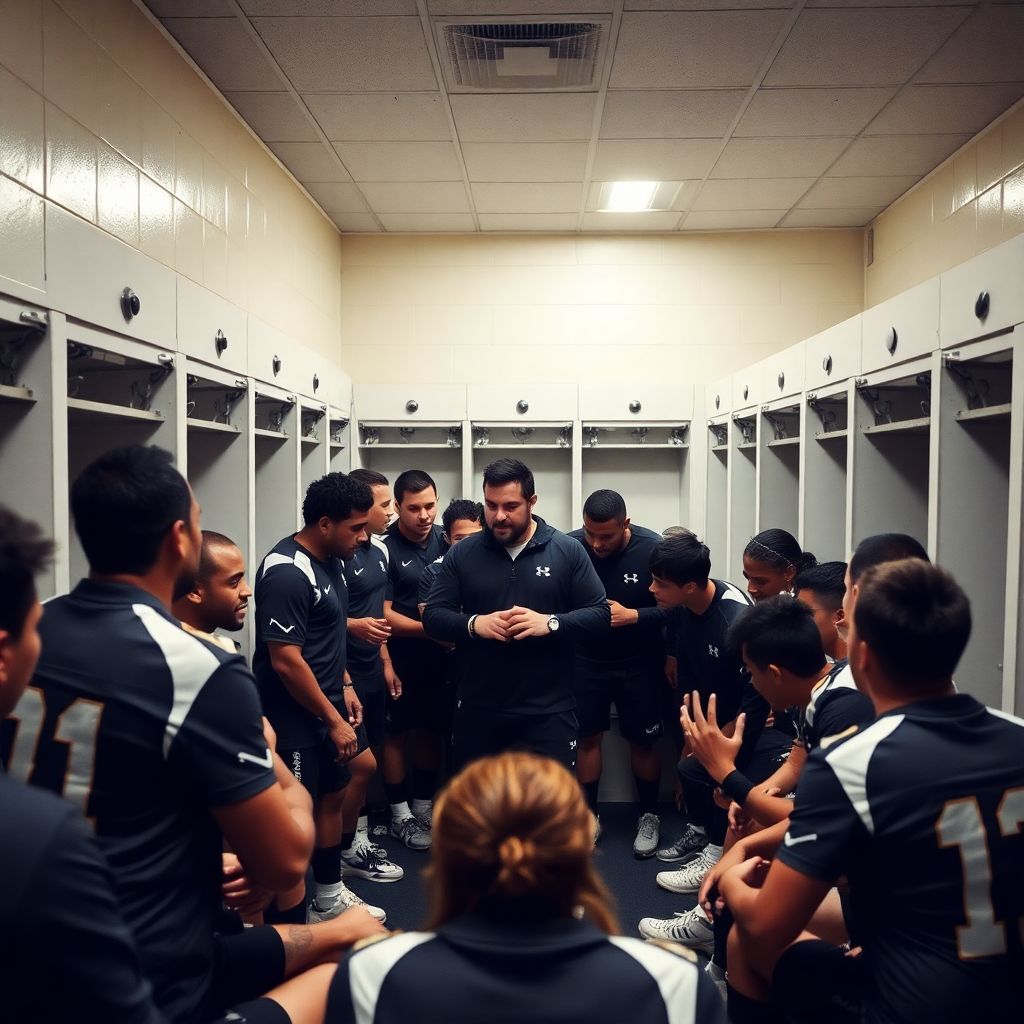
Leadership inside the locker room is the daily, often invisible work that turns individual talent into a united, emotionally safe and demanding group. It matters because matches are decided by trust, habits and reactions under pressure that are built in the dressing room long before the referee’s whistle.
Core Insights on Leadership Inside the Locker Room
- Locker-room leadership is more about emotional safety, clear standards and honest feedback than motivational speeches.
- Influence usually comes from a mix of formal captains and informal reference players, not from the armband alone.
- Safe, small routines (check-ins, debriefs, rules for conflict) prevent most serious crises.
- Good leaders listen more than they talk, especially after defeats and in selection conflicts.
- Crisis moments are opportunities to redefine norms, but only if blame and public humiliation are avoided.
- Leadership skills can be trained through targeted work with captains and role players, not only through talent.
Persistent Myths That Weaken Team Leadership
In football clubs in Spain, liderazgo en el vestuario fútbol ejemplos reales often reveal that what people believe about leaders is incomplete or simply wrong. These myths create unsafe environments, silence younger players and limit performance, even in technically strong squads.
Myth 1: «The loudest player is the leader.» In reality, the most impactful figures are often those who regulate emotions, keep standards and speak clearly in small groups. Volume without emotional control usually increases anxiety instead of focus.
Myth 2: «Leadership belongs only to veterans or the captain.» Age and the armband help, but micro-leadership appears in every line of the team: the defender who organises the line, the midfielder who connects sub-groups, the substitute who keeps the bench engaged.
Myth 3: «Strong leaders must be hard and distant.» Distance can protect the coach’s authority, but inside the locker room it usually damages trust. Emotional closeness with clear boundaries works better: you can be demanding and human at the same time.
Safe steps to counter these myths:
- Explicitly name the type of leadership you want: calm under pressure, honest feedback, respect for roles.
- Invite quieter players to speak in small meetings so influence is not monopolised by extroverts.
- Separate behaviour feedback from personal attacks: address actions, not identities.
Limitations: myth‑busting talks alone change little. Without consistent daily behaviours from staff and senior players, the old beliefs return quickly, especially after a bad run of results.
Formal vs. Informal Leaders: how influence actually forms
In most squads there is a formal hierarchy (captains, vice-captains, staff) and an informal one (players others follow in silence). Effective leadership inside the locker room aligns both. When they are disconnected, you see cliques, passive resistance and public discipline problems.
- Role clarity for captains
Clarify with each captain what «being a leader» means in your club: communicating between staff and players, setting tone in warm-ups, protecting team rules.
Action points:- Write a one-page captain role description and discuss it, not just hand over the armband.
- Schedule a 15-minute weekly meeting coach-captains focused on locker-room climate.
- Include captains in decisions about sanctions and team rules to protect their credibility.
- Identifying informal leaders
Informal leaders are those players others watch in key moments: before big games, after mistakes, during substitutions. They may be stars or role players.
Action points:- Ask players privately: «Whose reaction most affects the group after a defeat?»
- Observe who people sit next to and follow during stretching and recovery sessions.
- Invite these informal leaders to leadership conversations, even if they are young.
- Aligning formal and informal influence
A common issue in coaching liderazgo deportivo aplicado al vestuario is when the star undermines the captain with jokes or cynicism. You need explicit agreements.
Action points:- Hold a short meeting with the captain and main informal leader to align messages.
- Agree on «non-negotiables» they will both support (punctuality, reactions to referees, respect on the bench).
- Review these agreements monthly and adjust to new dynamics.
- Protecting limits of peer leadership
Players are not mini-coaches. They should not own tactical decisions or selection. Safe boundaries avoid role confusion and power struggles.
Action points:- State clearly which topics belong to staff only (game model, starting XI).
- Use captains as messengers and ambassadors, not as co-selectors.
- Stop any attempt to use «leadership» as a justification for bullying or public shaming.
Trust, Accountability and Communication: dissecting real cases
Trust, accountability and communication appear in very concrete locker-room moments. Below are typical scenarios where liderazgo en el vestuario is decisive, with safe responses and limits.
- After a heavy defeat
Case: The team concedes several goals, media pressure increases, and players enter the dressing room angry and silent.
Safe leadership response:- First 5 minutes: no speeches. Let emotions cool, allow players to breathe and hydrate.
- Then: one captain speaks briefly («Responsibility is shared, we respond together Monday»).
- Coach adds 1-2 clear messages, postponing deep tactical analysis to the next day.
Limitations: trying to «fix everything» immediately often leads to blame and loss of trust. Emotional processing needs time.
- Conflict between two key players
Case: A striker and a midfielder argue loudly at half-time, each blaming the other for lack of passes.
Safe leadership response:- Separate them physically for a few minutes; let an assistant or captain talk individually.
- Refocus on shared objective: «What do we both need to do to win the second half?»
- Schedule a short mediated conversation the next day to close the issue.
Limitations: captains should not become therapists. If conflict repeats, staff or a sports psychologist must intervene more formally.
- Integration of a new foreign player
Case: A new signing arrives mid-season, different language and culture, sits alone, rarely speaks.
Safe leadership response:- Assign a «locker-room buddy» for the first month (same position if possible).
- Include the player in small group exercises where words matter less (rondos, finishing games).
- Use simple phrases in Spanish and some in their language to reduce distance.
Limitations: integration needs club support (language classes, housing help). Captains alone cannot solve structural adaptation problems.
- Benched veteran losing influence
Case: A long-time starter becomes a substitute, feels humiliated and starts making ironic comments in the dressing room.
Safe leadership response:- Coach holds a private, honest talk about role and expectations in front of the group.
- Agree on visible ways the veteran can still lead (helping youngsters, set-piece organisation).
- Captains reinforce and publicly appreciate these new contributions.
Limitations: if the veteran rejects the new role, you may have to reduce their presence in key meetings to protect the group.
Crisis Leadership: conversions of conflict into cohesion
Crisis leadership is not about eliminating conflict but about transforming it into clearer norms and stronger unity. The key is to keep emotional safety while increasing collective responsibility. This is where many entrenamientos de liderazgo para capitanes de equipo fail: they train speeches, not processes.
Advantages of strong crisis leadership
- Faster recovery after defeats because players know the steps: calm-reflect-decide-act.
- Deeper trust as problems are faced openly instead of through gossip or social media.
- Clearer standards: crises force the group to define what is acceptable and what is not.
- Better alignment between staff and players thanks to structured, short crisis meetings.
Inherent limits and healthy boundaries
- Not every crisis can be «turned positive»; some require firm sanctions or separations.
- Captains and informal leaders should not manage serious mental health or family problems; refer to professionals.
- Time pressure on matchdays limits depth of discussions; use next-day sessions for full debriefs.
- Leadership cannot compensate for chronic organisational issues (non-payment of wages, unsafe facilities).
Daily Habits and Rituals That Cement Locker-Room Authority
Authority inside the dressing room is built by repetition of small, predictable behaviours, not by rare heroic speeches. Many safe steps are simple but require discipline. Below are common mistakes and myths that quietly erode leadership.
- Myth: «Motivation is created only in big talks.»
Reality: daily mini-interactions (greetings, eye contact, checking in on injuries) matter more. Skipping these creates distance and coldness. - Inconsistent punctuality rules
When stars are forgiven and substitutes are punished, authority collapses. Safe habit: one clear rule, one clear consequence applied to everyone. - Private complaints, silent meetings
Players complain in corridors but say nothing in team meetings. Leaders must invite disagreement in the room and close topics there. - Using sarcasm as «humour»
Irony about weight, mistakes or contracts damages psychological safety. Establish a norm: humour without humiliation. - Training intensity mismatch
If the locker-room message is «we are ambitious» but some players train at half-gas, words lose value. Leaders must align talk and visible effort.
Safe daily rituals you can implement:
- Two-minute «temperature check» before training: captains quickly ask 3-4 players how they are.
- Short circle after training: one positive observation, one point to improve, then break.
- Monthly locker-room meeting (no staff at first 10 minutes) where captains gather concerns to take to the coach.
Limitations: rituals lose power if they become mechanical or if leaders ignore what players express in these spaces.
Assessment and Development: practical tools to grow leaders
Developing locker-room leaders safely requires structured observation and feedback, not improvisation. Many coaches and directors now look for cómo ser líder en el vestuario deportivo curso online or libros sobre liderazgo deportivo en el vestuario, but without translating ideas into simple tools, nothing changes.
Simple assessment checklist
Once per month, rate key players (including captains and informal leaders) from 1-5 on these behaviours:
- Stays calm and clear after own mistakes.
- Supports teammates verbally after their mistakes.
- Respects team rules regardless of personal status.
- Helps connect different language or age groups.
- Brings problems to staff directly instead of gossiping.
Use scores not as labels but as conversation starters in leadership development meetings.
Mini-case: applying a development plan in a Spanish football club
Imagine a Segunda RFEF club in Spain with three captains. The coach decides to apply a three-month leadership development cycle inspired by coaching liderazgo deportivo aplicado al vestuario:
- Month 1 – Observe and diagnose
- Staff uses the checklist above after each match to rate captains’ visible behaviours.
- Players anonymously answer two questions: «Who helps you most when you are under pressure?» and «What behaviour from leaders bothers you most?»
- Month 2 – Agree on two concrete behaviours
- In a 45-minute workshop, captains pick two focus habits: for example, «first reactions after goals» and «how we speak to substitutes.»
- They design one simple script for each situation and practice it in role-plays.
- Month 3 – Implement and review
- Captains intentionally apply the scripts in matches and training; assistants take brief notes.
- At the end of the month, the group reviews improvements and selects the next two behaviours.
Safe limits of such a plan: it improves communication and emotional climate but does not replace tactical work or physical preparation. Also, leadership training must respect players’ time and energy; too many meetings can create fatigue and resistance.
Practical Clarifications for Implementing In-Club Leadership
How can we start improving locker-room leadership without big budgets?
Begin with consistent daily habits: clear time rules, short debriefs and regular coach-captain meetings. These cost nothing and immediately increase clarity and trust. Add simple observation checklists before investing in external consultants or long courses.
Is it useful to send captains to an online leadership course?
A well-designed entrenamiento liderazgo para capitanes de equipo or cómo ser líder en el vestuario deportivo curso online can help if you connect lessons to specific behaviours you want in your club. Always schedule follow-up meetings to translate theory into 1-2 new habits.
Do we need a sports psychologist to manage locker-room conflicts?
Not always. Captains and coaches can solve many day-to-day tensions with basic listening and clear norms. Bring in a psychologist when conflicts repeat, affect performance strongly, or involve personal issues beyond sport.
How many leaders should a team have inside the locker room?
You need several micro-leaders: captains, position leaders, experienced substitutes. Too few leaders overload one person; too many without clarity create confusion. Define roles explicitly so each leader knows their space of influence.
What is the coach’s role versus the captain’s in the dressing room?
The coach defines the framework: values, rules, tactical plan. Captains translate this into daily behaviours, protect standards when staff are absent and bring the players’ perspective back to the coach.
Can leadership training replace natural charisma?
Training cannot turn everyone into a charismatic speaker, but it can significantly improve listening, clarity, self-control and consistency. These «quiet» skills often have more impact on team performance than charisma alone.
Which resources are most useful for learning about locker-room leadership?
Combine libros sobre liderazgo deportivo en el vestuario with practical workshops and observation of experienced captains in your club. Discussion of real matches and training sessions usually teaches more than abstract theory.