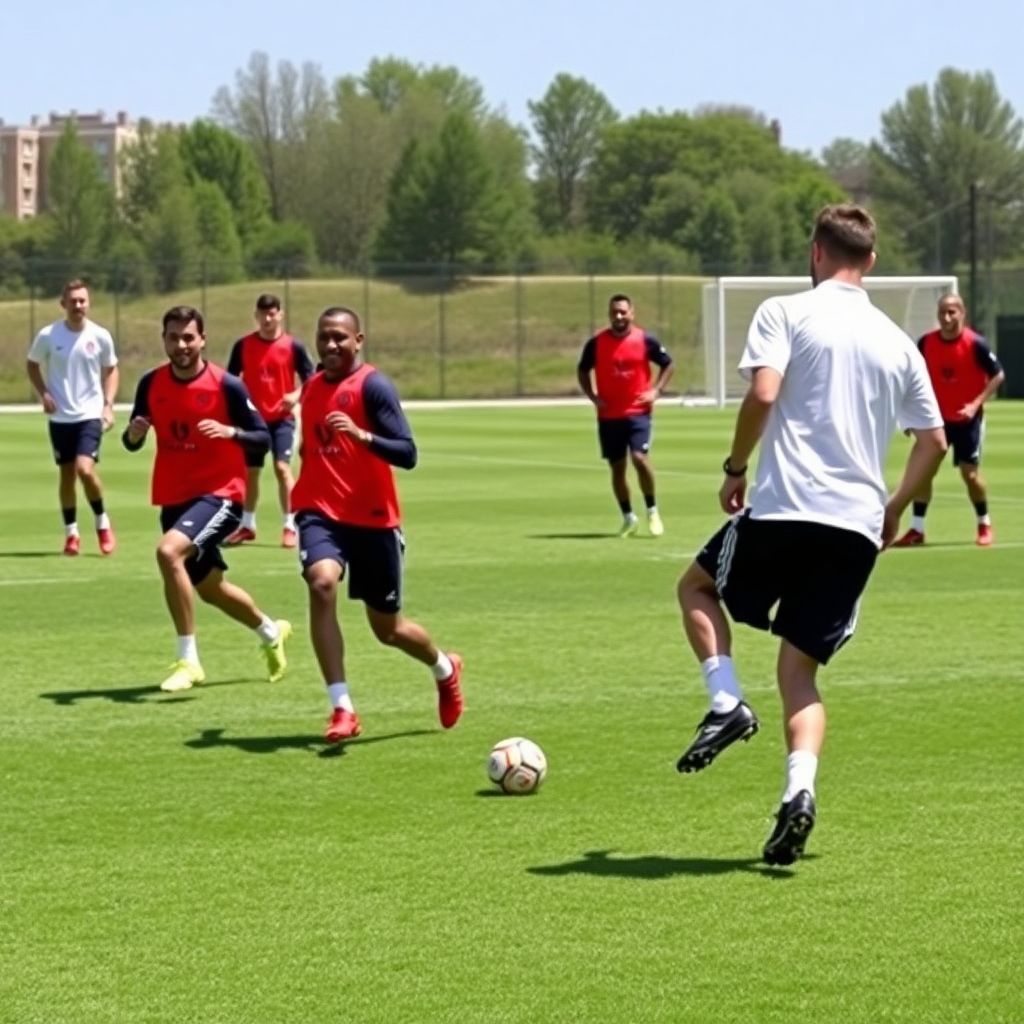
Preseason physical preparation in football is about building a safe progression from basic capacity to match‑specific intensity. You start by testing and profiling players, then structure weeks into clear loads, combine conditioning with strength and injury prevention, control recovery, and finally integrate football‑specific match play before the first competitive game.
Preseason objectives: target markers to reach by matchday one
- Each player tolerates full‑intensity training sessions without pain spikes during or after.
- Ability to repeat high‑intensity runs and sprints in game‑like blocks with stable technique.
- Basic strength and power restored or improved versus last season’s end, especially in lower limbs and core.
- Clear individual risk profile and adapted workload for players with previous injuries.
- Stable weekly rhythm of training, recovery, sleep and nutrition compatible with competition demands.
- At least several full‑duration, high‑intensity friendly matches completed without major incidents.
Baseline evaluation: tests, diagnostics and individual risk profiling
Before designing any programa de pretemporada para futbolistas, check what each player brings from the off‑season and from past seasons.
Suitable for: semi‑pro and amateur teams, and also for players working with an entrenador personal preparación física fútbol who can individualise tests. It is especially relevant in Spain, where competitive calendars are dense and breaks are short.
When you should postpone or simplify preseason testing:
- Recent injury, surgery or persistent pain that has not been cleared by a doctor or physiotherapist.
- Players returning after long inactivity who cannot yet tolerate simple jogging without discomfort.
- Lack of minimal pitch or gym access; in that case, use simple field tests instead of maximal efforts.
Key elements of the baseline evaluation in a preparación física pretemporada fútbol context:
- Medical and injury history: chronic issues, previous ligament or muscle injuries, and workload in the last season.
- Movement quality: fundamental movements such as squat, lunge, hip hinge, landing and change of direction at controlled speed.
- Aerobic fitness: simple continuous run or shuttle‑type test to estimate capacity without forcing maximum.
- Acceleration and sprint form: short, controlled accelerations to observe technique and asymmetries.
- Strength balance: practical checks of hamstring, quadriceps, glutes and core under bodyweight or light external load.
Use the information to group players by risk and by needs instead of applying a single plan de entrenamiento pretemporada fútbol pdf style to everyone.
Periodization blueprint: structuring macro-, meso- and microcycles
To reach peak form for the first competitive match, you need a clear structure rather than random sessions.
Tools and requirements for practical periodization:
- Calendar and constraints: competition start date, number of friendly matches, pitch availability, travel, and work or study schedules.
- Macrocycle layout: divide the whole pre‑season into clear phases: general preparation, specific preparation and match‑tuning.
- Mesocycle focus: each multi‑week block emphasises a main theme, such as aerobic base, high‑intensity endurance or speed and sharpness.
- Microcycle template: weekly pattern for high, moderate and low days, plus at least one day prioritising recovery.
- Session categorisation: label sessions as strength‑dominant, conditioning‑dominant, tactical or mixed to avoid accidental overload.
- Simple monitoring: session rating of perceived exertion (RPE), short wellness check and quick pain scale before training.
If you use a digital plan de entrenamiento pretemporada fútbol pdf as reference, adapt it to the periodization logic above rather than copying rigid schedules.
Conditioning plan: aerobic capacity, high-intensity intervals and repeat-sprint ability
Conditioning should progress from general to specific while respecting individual profiles and previous injuries.
Risk and limitation checkpoints before increasing intensity:
- Unusual fatigue lasting more than a day after training or repeated sleep problems.
- New or increasing pain in joints, tendons or muscles, especially during high‑speed runs.
- Large drop in technical quality (poor control, late reactions) when players get tired.
- Players with history of muscle strains should not jump directly into maximal sprints and long intervals.
- Hot weather and afternoon heat in Spain increase dehydration risk; adapt work and rest durations accordingly.
-
Establish an aerobic base with ball‑orientated work
Start with continuous and intermittent running integrated into simple technical drills. The aim is to sustain moderate effort without excessive breathlessness.
- Use rondos, possession games and passing patterns with relatively large spaces and moderate tempo.
- Allow regular short pauses where players can drink and check their breathing.
-
Introduce controlled high-intensity intervals
Once players tolerate moderate continuous work, add bouts of faster running or intense small‑sided games with structured recovery.
- Use short blocks of game‑like intensity separated by equal or slightly longer rest periods.
- Monitor players’ perceived effort; if most describe it as maximal early in the block, reduce either duration or density.
-
Develop repeat-sprint ability in safe progressions
Prepare players for repeated accelerations and sprints by gradually shortening rests and increasing directional changes, not by immediate all‑out efforts.
- Start with accelerations below top speed and a limited number of total sprints per session.
- Combine straight‑line sprints with gentle curves before adding aggressive changes of direction.
-
Blend conditioning with tactical scenarios
Move from isolated running to game‑specific patterns where players make decisions under fatigue.
- Use position‑specific runs: full‑backs overlapping, midfielders pressing, forwards making deep runs.
- Alternate directional pressing games with organised build‑up to train both offensive and defensive transitions.
-
Fine-tune volume and intensity before the first match
In the final phase, reduce global volume while keeping or slightly increasing intensity to arrive fresh and sharp.
- Avoid trying new, very demanding drills during the last days before competition.
- Use friendly matches as the main conditioning stimulus and protect recovery between them.
Choose mejores ejercicios preparación física fútbol that are simple to coach, easy to scale and clearly related to match demands rather than complex, fashionable patterns.
Strength and power development with injury-prevention priorities
Use this checklist to verify whether your strength and power work supports performance and reduces injury risk.
- Lower‑body training covers hip, knee and ankle with both bilateral and unilateral exercises.
- Posterior chain (hamstrings, glutes, calves) is trained regularly, not only quadriceps and visible muscles.
- Knee‑dominant and hip‑dominant movements are both present during the week.
- Core exercises include anti‑rotation and anti‑extension tasks, not only traditional crunches.
- Power work focuses on controlled jumps, hops and quick accelerations with good landing mechanics.
- Progression in load or complexity is gradual, with extra care for players with previous tendon or joint issues.
- Strength sessions are not placed immediately before or after the most intense conditioning days whenever possible.
- Players understand and can demonstrate key techniques before adding heavier external resistance.
- Sessions finish without significant pain spikes; any discomfort is noted and followed up next day.
Load management: monitoring, recovery strategies and sleep/nutrition rules
Common mistakes in managing load and recovery during pre‑season, especially frequent in non‑professional environments in Spain:
- Planning sessions based only on coach’s intuition, without tracking how players actually feel.
- Jumping from low activity in off‑season directly to very dense weeks of training and friendlies.
- Ignoring sleep quality and daily stress from work or studies when interpreting performance in training.
- Using long, monotonous runs as punishment instead of targeted conditioning tools.
- Scheduling intense gym work and maximal speed on the same day for players with previous muscle problems.
- Underestimating hydration and basic fuelling in hot Spanish summers, especially in afternoon sessions.
- Keeping the same intensity for all players, including those returning from injuries or with late arrivals.
- Adding extra unsupervised individual sessions on rest days without considering total weekly load.
Progressive match-rep exposure and tactical integration before kickoff
Alternatives for integrating match‑like work depending on resources, level and calendar.
- Internal match scenarios in training: When friendlies are limited, use extended tactical games with official rules, referees if possible, and clear roles to simulate match stress.
- Shorter, more frequent friendlies: For squads with lower fitness or many returning from injuries, prefer shorter matches or mini‑tournaments over a few very long games.
- Position-specific conditioning blocks: When full team sessions are difficult to organise, run targeted blocks for defenders, midfielders and forwards with roles and patterns they will use in competition.
- Individualised top‑ups around matches: For some players, use brief conditioning or strength work before or after friendlies to harmonise minutes played across the squad.
Practical concerns and concise solutions from coaches and sports scientists
How can a small amateur team structure a safe pre-season without a big staff?
Use a simple weekly template with clear hard, moderate and light days. Prioritise a mix of ball‑based conditioning, basic strength and at least one recovery‑orientated day. Track perceived effort and pain with quick verbal scales before and after sessions.
What if players arrive with very different fitness levels?
Group players by current capacity using basic field observations and initial tests. Keep the same drill structure but adjust distances, work durations and rest periods per group. Allow slower progression for those with lower fitness or previous injuries.
Is it necessary to sprint at full speed early in pre-season?
No, full‑speed sprinting should be introduced gradually after players show good tolerance to sub‑maximal accelerations and change‑of‑direction drills. Rushing maximal speed work increases muscle injury risk, especially in players with a history of strains.
How can I use a generic PDF plan without overloading my team?
Treat any generic plan de entrenamiento pretemporada fútbol pdf as a menu, not as strict law. Reduce total volume, simplify complex drills, and insert extra recovery when players report excessive fatigue or when matches pile up.
What indicators show that players are not recovering well?
Warning signs include persistent muscle soreness, declining technical quality, irritability, and rising minor pains. If these appear, reduce training density, prioritise sleep and hydration, and temporarily lower high‑intensity work until players stabilise.
Do I need a personal trainer to design my pre-season?
An experienced entrenador personal preparación física fútbol can accelerate progress and reduce errors, but is not mandatory. If you self‑manage, keep plans simple, progress gradually and regularly reassess how players respond, adjusting volume and intensity accordingly.
How many friendly matches should we play before the league starts?
There is no universal number. Aim for a progressive sequence where the group accumulates enough game minutes to tolerate competitive intensity without exhaustion. Focus on quality of play, adaptation and post‑match recovery more than on counting friendlies.