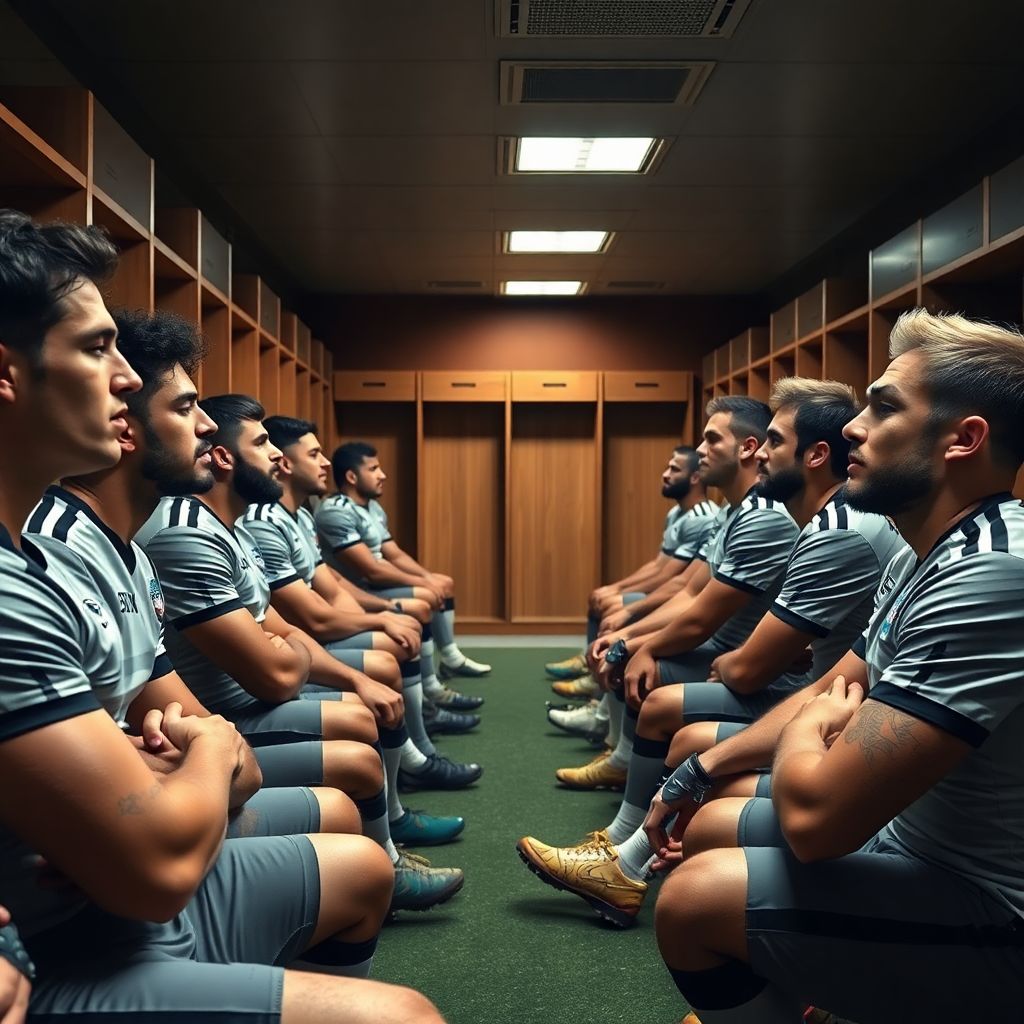
Mental routines used by elite footballers before big matches follow a clear structure: short goal-setting, specific visualization, breathing to regulate activation, brief match-simulation in the mind, simple focus anchors, and quick post-warm-up reflection. You can apply these steps safely in 5-30 minutes, both individually and with your team.
Pre-match mental checklist

- Define 1-3 personal performance goals for the match in clear, controllable language.
- Run a 5-10 minute visualization of key actions and tough scenarios you may face.
- Use 3-5 minutes of breathing to stabilise arousal and body tension.
- Mentally rehearse your first 5 minutes on the pitch with detail and composure.
- Choose one simple focus anchor (cue word, gesture, or breath pattern) for pressure moments.
- Agree 2-3 short communication cues with teammates for organisation and calm.
- After warm‑up, adjust your plan with a 2-3 minute reflection based on how you actually feel.
Goal-setting and visualization drills
This block suits footballers who already have basic tactical understanding and want a structured entrenamiento mental para futbolistas de élite without overthinking. It works best from U16 to professional level, especially in a programa de preparación psicológica antes de partidos importantes where pressure is high.
Avoid doing long, intense visualization if you tend to become anxious, obsess over mistakes, or if you have trouble sleeping before games. In that case, keep drills shorter (3-5 minutes), more neutral, and focus mainly on breathing and simple cue words.
3-step goal-setting script (5 minutes)
- Result context (30 seconds)
Silently name the match context: competition, rival, and what is at stake. This creates clarity without obsessing about the result.
- Performance goals (3 minutes)
Write or say 1-3 specific, controllable actions you will repeat throughout the game, for example:
- Defender: "Win first contact in aerial duels and guide striker outside."
- Midfielder: "Offer at least two passing lines when we build from the back."
- Forward: "Attack the box aggressively on every wide cross."
Link these goals to your current role in the tactical plan your coach gave you.
- Trigger phrase (2 minutes)
Create one short cue phrase that reminds you of your goals, for example: "Win duels and stay available" or "Fast decisions, calm body". Repeat it 5-10 times while breathing slowly.
Técnicas de concentración y visualización para futbolistas (8-10 minutes)
- Safe starting point (1 minute)
Sit or lie down, close your eyes, and feel five breaths going in and out. Notice feet, legs, and shoulders relaxing into the chair or floor.
- Stadium and environment (2 minutes)
Imagine walking onto the pitch in a real stadium you know in Spain, including sounds, colours, and temperature. Accept the noise and tension as part of the experience.
- Key actions at match intensity (3-4 minutes)
Visualise 3-5 specific actions at game speed from your position:
- Receiving under pressure and playing the correct pass.
- Tracking a runner and timing your tackle cleanly.
- Finishing quickly and decisively after a through ball.
Always end the image with a successful, controlled execution, even if you picture a mistake first.
- Stress scenarios (2-3 minutes)
Rehearse 1-2 difficult moments: conceding early, missing a chance, or a hostile crowd. See yourself taking one breath, using your cue phrase, and staying in the game plan.
For extra structure, consider a curso de coaching mental para jugadores de fútbol, where a trainer guides you step by step in tailoring these drills to your position and league.
Breathing and physiological regulation routines

To apply elite-level regulation like an entrenador de mindset deportivo para futbolistas profesionales would teach, you only need a quiet corner, a watch or phone to track time, and sometimes a bench or mat to sit or lie comfortably. No special devices are required.
Plan these routines into your matchday schedule so they never clash with nutrition, tactical meetings, or the physical warm-up. Typical safe windows are in your hotel room, on the bus before arrival, or 20-40 minutes before the team warm-up in the dressing room.
Pre-match breathing sequence (5-7 minutes)
- Position and check-in (1 minute)
Sit with your back supported, feet flat on the ground. Notice current tension from 0-10 in jaw, shoulders, and stomach. There is no good or bad number; you just observe.
- Extended exhale breathing (3 minutes)
Inhale calmly through the nose for about 3-4 seconds, then exhale through the mouth for about 6-8 seconds, as if fogging a glass. Repeat 12-18 cycles. Keep shoulders relaxed.
- Activation top-up (1-3 minutes, optional)
If you feel too flat or sleepy, add 1-2 minutes of slightly faster breathing: inhale for 2 seconds, exhale for 2-3 seconds, plus a strong, athletic exhale as you stand up at the end.
Solo and team variations
- Solo: do the full routine with eyes closed and headphones if needed, before putting on boots. Avoid doing it lying down if you tend to fall asleep.
- Team: some squads in Spain use a 1-2 minute collective breathing circle before entering the tunnel. Everyone inhales together through the nose and exhales together with a quiet sound.
Match-simulation cognitive rehearsals
These rehearsals act like mental small-sided games. Do them after you know the line-up and tactical plan, usually 30-60 minutes before warm-up. They complement any structured programa de preparación psicológica antes de partidos importantes and fit naturally into professional routines.
- Define the scenario and time window
Choose a clear segment: "first 5 minutes", "defending corners", or "closing the last 10 minutes when we are winning". Limiting the window keeps the rehearsal sharp and realistic.
- Take the camera into your own eyes
Imagine the pitch from your usual position, as if you are looking through your own eyes, not from above. Notice where teammates and opponents are, plus reference points like lines and stands.
- Run through tactical triggers
Mentally replay the coach's key instructions for this rival:
- Pressing cues: when exactly you jump to press and when you stay.
- Build-up patterns: which teammate you look for first when you receive.
- Transitions: your "first three steps" after losing or winning the ball.
See yourself reading these cues early and acting fast but under control.
- Add emotional and physical detail
Feel your heart rate slightly elevated, legs light, and some nervous excitement. Let this be present while you still make clear decisions, talk, and use your body language with confidence.
- Introduce one setback and response
In your mini-simulation, include a mistake, tough duel, or referee decision against you. Immediately visualise your recovery: deep breath, cue phrase, quick communication, and correct next action.
- Finish with your ideal end of segment
End the rehearsal with the segment going well: defending solidly, controlling possession, or creating chances according to the plan. This anchors your mind on behaviours that support performance.
Fast-track pre-match routine
When time is tight, use this shortened version (3-5 minutes):
- State one performance goal clearly in your head.
- Take 5 slow breaths with longer exhale.
- Mentally run through your first 3 actions after kick-off at real speed.
- Picture one setback and your calm response.
- Repeat your cue phrase once while standing up and moving towards warm-up.
Arousal modulation and focus anchoring
Use this checklist right after your routines to verify if your activation level and focus are in the useful range.
- You can rate your energy from 0-10 and it feels in the "ready to compete" zone, not sleepy and not out of control.
- Your breathing is deeper and more regular than 10 minutes ago.
- Muscle tension is mainly in the core and legs, not locked in jaw, neck, or shoulders.
- You can say your 1-3 performance goals without hesitation.
- You remember your main cue phrase and one backup cue if needed.
- Imagining the first duel or first touch feels challenging but not terrifying.
- You can shift attention on purpose: from breathing, to sounds in the stadium, to the feel of the ball in your hands or at your feet.
- Small distractions (noise, media, rival gestures) are noticed and then fade without long internal dialogues.
- Your body language in the mirror or reflection (posture, eye contact) looks more assertive than earlier.
Team rituals, cues and communication patterns

Well-designed rituals help, but many teams make avoidable mistakes. Review these to keep your process sharp.
- Overcomplicated rituals that take too long, increase stress, or depend on props you may not always have.
- Shouting-heavy huddles that spike adrenaline but leave players unfocused and tactically confused.
- Copying rituals from other clubs without adapting them to your squad's culture in Spain or to your age group.
- Using negative language in speeches (talking only about avoiding mistakes) instead of reinforcing desired behaviours.
- Ignoring quieter players, whose body language might show overload even while the group seems highly motivated.
- Changing pre-match routines every week so players never build automatic calm and familiarity.
- Letting phones, media, or last-minute ticket issues invade the dressing room in the last 30 minutes.
- Lack of clear in-game communication cues (e.g., one word for pressing, one for slowing down) agreed in advance.
Brief reflection and rapid adjustment protocol
After the warm-up and once you feel how your body is reacting today, use a short reflection to adjust your plan. This can be self-guided or supported by staff, similar to what you would get in a tailored entrenamiento mental para futbolistas de élite.
Adjustment options when time is limited
- Self-check micro-journal (2-3 minutes)
On paper or in a notes app, answer three quick prompts: "Energy (0-10)", "Focus (0-10)", "One adjustment I will make". Choose a matching action (slightly more breathing, more activation, or no change).
- Brief talk with coach or staff (2-5 minutes)
Use a clear sentence with your coach or an entrenador de mindset deportivo para futbolistas profesionales if available: "Today I feel a bit flat/over-activated; I will focus on X in the first 10 minutes." This keeps everyone aligned.
- Buddy system within the squad (1-2 minutes)
Pair up with a teammate and exchange one goal and one cue each. You both commit to reminding each other of these cues during the game when tension rises.
- Structured external support (between matches)
Between games, consider a curso de coaching mental para jugadores de fútbol with a sports psychologist, so that this reflection protocol becomes automatic and adjusted to your role, league, and personal tendencies.
Quick answers to common pre-game mental hurdles
How long should a full pre-match mental routine last?
For most players, 10-20 minutes is enough: 5 minutes for goals and visualization, 5-7 for breathing, and a few minutes for match-simulation. If you have less time, use the fast-track routine of 3-5 minutes focusing on one goal, breathing, and first actions.
What if I get more nervous when I visualise the game?
Shorten the visualization to 2-3 minutes and keep images more neutral and simple, like first touch and basic passes. Combine it with longer exhale breathing. If anxiety stays very high, focus mainly on breathing and cue phrases for a few weeks.
Can I use music as part of my mental routine?
Yes, as long as it supports your goals. Use calmer tracks during breathing and more energetic ones closer to warm-up if you need activation. Avoid music that makes you drift into memories or emotions not related to the match.
How can I align my routine with the team's schedule?
Place your personal blocks in free windows: in your room, on the bus, or just before the official warm-up. Coordinate with staff so your routine never clashes with tactical talks, medical treatment, or nutrition guidelines at your club.
Do young players need different mental routines than professionals?
The structure is similar, but duration and language should be simpler for youth players. Use shorter drills, fewer goals, and more concrete images. Professionals can handle more complex tactical rehearsals and longer periods of focused breathing.
Is it better to do these routines the night before or on matchday?
Both can help, but with different focus. The night before, keep routines short and calming to support sleep. On matchday, add activation, sharper images, and match-simulation segments closer to kick-off.
Can these routines replace working with a sports psychologist?
They are a safe, practical base, but they do not replace personalised work if you struggle with strong anxiety, confidence issues, or repeated blocks in big games. In those cases, a structured mental coaching programme is recommended.