
In football, a good coach focuses mainly on training, tactics and short‑term performance, while a true mentor also cares about the person: long‑term growth, values, career choices and life outside the pitch. Choosing between them depends on your age, level, goals and current support environment.
Core distinctions between a coach and a mentor
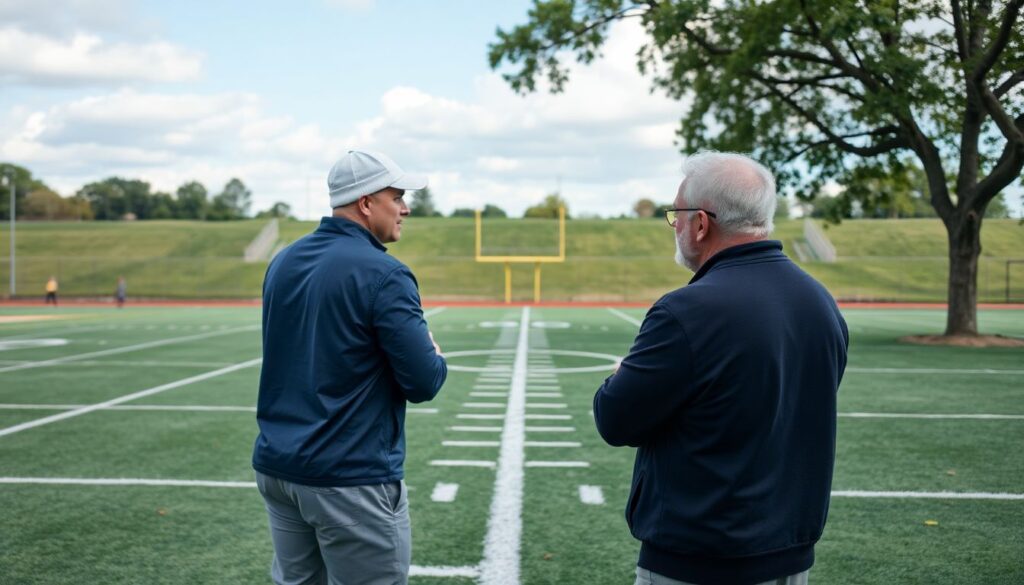
- A coach is performance‑driven; a mentor is development‑driven.
- Coaches design sessions and game plans; mentors shape careers and mindsets.
- Coaching is often directive; mentoring is more dialogic and reflective.
- Coaches judge success by match outcomes; mentors by long‑term progress and decisions.
- Coaches mainly influence training and matches; mentors influence life choices around football.
- Coaching relationships are usually formal and time‑bound; mentoring can be informal and long‑lasting.
- One person can play both roles, but only if expectations are made explicit.
Underlying purpose: short-term performance vs. long-term development
At the most basic level, coaching answers «How do we win this weekend?» while mentoring answers «Who are you becoming through football, and where are you going?» You need clarity on purpose before deciding whether to invest more in a coach, in a mentor, or in a hybrid relationship.
For a youth player in a programa de mentoría deportiva para jóvenes futbolistas, the priority might be building confidence, learning to handle school‑sport balance and preventing dropout. A professional worried about contract stability may need strategic mentoring around agents, clubs and personal branding more than extra tactical detail. An academy director must balance match results with the long‑term identity and wellbeing of the entire pathway.
Use these criteria to decide what role you need most right now:
- Main pain point: If your biggest frustration is game performance (losing duels, poor pressing, weak build‑up), emphasise a coach. If it is confusion about future, confidence, or decisions, emphasise a mentor.
- Time horizon: Short‑term (next tournament, next trial) calls for coaching; multi‑year goals (reaching LaLiga, combining studies) call for mentoring.
- Complexity of decisions: The more you face choices about agents, contracts, education or club changes, the more a mentor becomes critical.
- Existing support: Strong club coaching but no trusted adult? Search for mentoring. Good parental and school support but weak tactical input? Increase coaching.
- Emotional load: If anxiety, fear of failure or identity issues dominate, you need mentoring plus possible psychological support, not only extra drills.
- Stage of pathway: Early specialization in an academy, national youth teams or first professional contract all increase the value of mentoring.
- Role diversity: Goalkeepers, captains and players who lead dressing rooms benefit disproportionately from mentors that shape leadership style.
- Club culture: In a results‑only environment, an external mentor can protect long‑term development; in a development‑oriented club, the coach may already integrate mentoring behaviours.
For academy directors, mapping squads across these criteria helps decide where to invest in a formal mentoring structure alongside regular coaching.
| Aspect | Coach focus | Mentor focus | Typical indicator of success |
|---|---|---|---|
| Time frame | Upcoming matches, current season | Several seasons, full career and life | Stable progression across age categories |
| Behaviour | Plans drills, corrects technique, sets tactics | Asks reflective questions, shares experience, listens | Player makes better decisions independently |
| Goal | Improve performance metrics | Develop person, values and resilience | Healthy identity and sustainable motivation |
| Scope | Training ground, match day | Training, home, school, social context | Balanced life around football demands |
Technical training and tactical coaching: scope and methods
When comparing purely coaching‑oriented options and more mentoring‑oriented ones, think in terms of how each option shapes the player’s behaviour and decision‑making on the pitch. Below are typical formats you will encounter, and how their scope and methods differ.
A youth player might start in an escuela de entrenadores de fútbol con prácticas en clubes environment, where staff mainly act as coaches. Later, that same player could combine club training with a private mentor who also guides school choices. A professional might choose a specialist positional coach plus a separate mentor who has experience with transfers and media. An academy director could invest in hybrid roles and support staff trained through a máster en coaching deportivo y liderazgo futbolístico so that coaching sessions already include mentoring elements.
| Variante | Quién se beneficia más | Pros | Contras | Cuándo elegirla |
|---|---|---|---|---|
| Club tactical head coach | Academy and senior squads needing collective organisation | Understands club model, sets game plan, coordinates staff, clear structure | Limited time for individual life issues, focus on results and team priorities | When your main need is fitting into the system and winning matches |
| Independent position-specific coach | Players seeking extra work (e.g. full‑backs, strikers, keepers) | Very targeted technical work, flexible schedules, can complement club training | May ignore bigger career picture, risk of overload if not coordinated with club | When specific weaknesses block selection or progression |
| Holistic football mentor | Youth and pros needing guidance on life, mentality and career | Covers mindset, habits, relationships, career decisions, not just training | Less focused on micro‑details of technique; impact is more long‑term | When you feel lost, demotivated or unsure about next steps in football |
| Hybrid coach-mentor within academy | Clubs building strong player pathways and culture | Integrates technical work with personal development, fewer conflicting messages | Demands extra training for staff, risk of burnout if role becomes too broad | When academy leadership wants aligned philosophy across teams |
| Online coach or mentor (remote) | Players in smaller cities or with schedule constraints | Access to experts via video, match analysis and planning at distance | Hands‑on correction is limited, depends on video quality and self‑discipline | When local options are weak and you can commit to structured remote work |
Online options can also be used to train the adults around players. For example, a parent or youth coach might use a curso de entrenador de fútbol online con certificado to improve technical‑tactical knowledge, then combine that with specific formación para ser mentor de futbolistas profesionales to add the mentoring layer. Academy directors often favour hybrid coach‑mentor roles but should still define which parts of the week are «coach time» and which are «mentor time».
Psychological support and life guidance: where mentoring extends
Mentoring steps in where purely tactical coaching has less impact: beliefs, identity, emotions and life choices. It does not replace sports psychology or therapy, but it supports players in applying mental skills and values inside a real football context.
For a youth player balancing school and a demanding programa de mentoría deportiva para jóvenes futbolistas, the mentor can help organise time, handle parental expectations and navigate social media pressure. A professional dealing with repeated injuries may need a mentor who has lived a similar journey and can normalise setbacks. An academy director will want mentors who can detect early signs of burnout, over‑specialisation or disengagement before they appear in metrics.
Use practical scenario thinking:
- If a player’s main issue is fear of making mistakes in matches, then a mentor should work on self‑talk, meaning of errors and realistic expectations, while the coach sets controlled game‑like drills to gradually increase risk‑taking.
- If a talented youth is skipping school or underperforming academically, then mentoring conversations must link education to football longevity and post‑career options, with concrete agreements involving family and academy staff.
- If a professional is considering changing agents or clubs, then a mentor can help clarify values, non‑negotiables and long‑term plan, instead of deciding purely on salary or short‑term playing time.
- If a captain struggles to manage dressing‑room conflicts, then mentoring should focus on leadership style, conflict strategies and communication patterns, while the coach adjust tactical roles to reduce overload.
- If an academy as a whole shows high dropout around key school transitions, then directors need a structured mentoring programme and trained staff, not only more intense training cycles.
Mental skills are best transferred when the mentor respects the coach’s tactical plan and vice versa. Aligning both roles around the player’s long‑term narrative avoids mixed messages and overload.
Communication patterns: directive instruction compared to collaborative dialogue
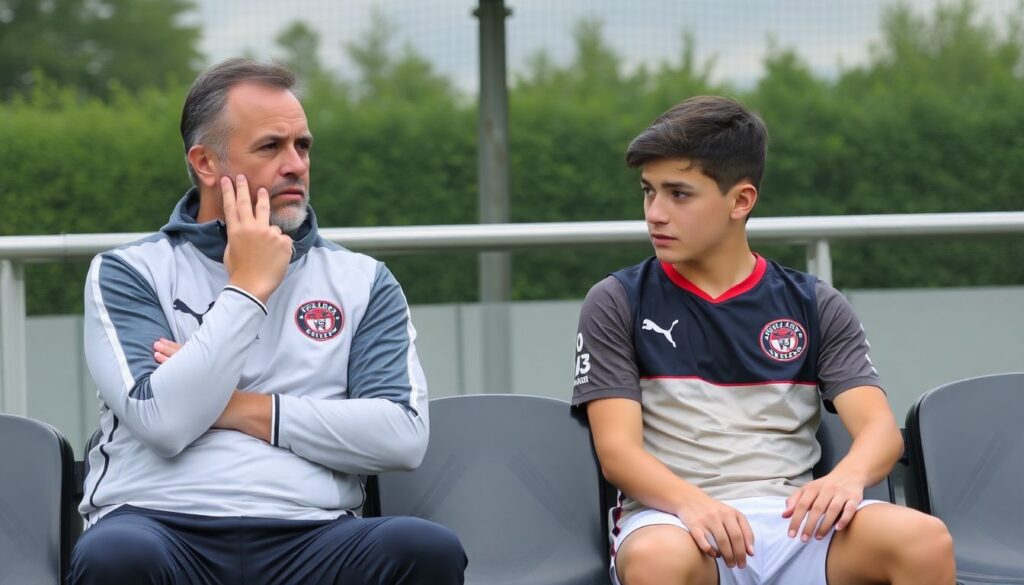
The core difference is how power and voice are shared. Coaching tends to use more top‑down instruction; mentoring uses more questions and joint reflection. Neither is «better» in isolation; the right mix depends on the situation and the person in front of you.
A youth player new to an academy often needs clear, simple instructions at first, with mentoring conversations added gradually once basic habits are stable. A seasoned professional may reject constant directives but respond very well to collaborative problem‑solving around tactical tweaks. An academy director should audit whether staff only give orders or also create space for player voice and reflection.
- Define the immediate objective: if the priority is installing a new pressing scheme before Sunday, choose directive coaching language; if it is understanding why a player is disengaged, choose mentoring dialogue.
- Assess player maturity: the younger or less experienced the player, the more structure and instruction they usually need; as they grow, shift towards questions and shared decisions.
- Check emotional state: in crisis (red card, public mistake), start with calm, clear guidance; once emotions settle, move into reflective mentoring about lessons learned.
- Look at learning style: some players learn best by being told and shown; others by discovering solutions themselves. Blend instruction with guided discovery accordingly.
- Separate roles in time: for example, during team meetings the head coach leads; in one‑to‑ones outside training, the same person can intentionally switch into mentor mode.
- Align staff messages: assistant coaches, fitness staff and mentors should use consistent language so that players are not confused by mixed levels of directiveness.
- Review after key events: after tournaments, trials or injuries, schedule debriefs where mentoring dialogue dominates, even if the lead‑up was more directive.
Structuring progress: session plans, career roadmaps and follow-up
Good coaches plan sessions and cycles; good mentors plan stages of a career and life. When choosing between options, many clubs and families make avoidable mistakes that limit progress, even when they work with capable professionals.
A youth player’s parents may invest in many extra technical sessions but never sit down with anyone to map the next three years of development. A professional might work intensely with a tactical coach but lack any roadmap for post‑playing roles, such as scouting or enrolling in a máster en coaching deportivo y liderazgo futbolístico. An academy director may invest in an escuela de entrenadores de fútbol con prácticas en clubes for staff, but forget to implement formal mentoring reviews with players.
Typical mistakes when selecting or combining coaching and mentoring:
- Focusing only on this season’s team role and ignoring long‑term positional fit and potential.
- Buying isolated services (extra shooting sessions, random workshops) with no integrated development plan.
- Assuming a great ex‑player is automatically a great mentor, without checking listening skills and availability.
- Confusing qualification with fit: a fancy certificate or popular curso de entrenador de fútbol online con certificado does not guarantee compatibility with your context.
- Overloading young players with multiple voices (club coach, private coach, parent‑coach, mentor) that are not coordinated.
- Ignoring school and family realities when building training and mentoring schedules.
- Not defining clear check‑points: no seasonal reviews, no written plans, no agreed indicators for both performance and personal growth.
- Leaving transitions unmanaged: no mentoring support when moving between age categories, countries or professional levels.
- Failing to upgrade roles: a coach who naturally mentors is not formally recognised or supported to keep doing it.
For players considering formación para ser mentor de futbolistas profesionales later in life, it is valuable to experience good mentoring now and to observe how mentors structure follow‑up, goals and reviews. Academy directors can codify this into club standards and onboarding processes.
Accountability and success metrics for coaches and mentors
A coach is generally best when you need clear structure, tactical clarity and measurable performance gains in the short to medium term. A mentor is generally best when you face complex decisions, identity questions or long‑term career planning. For most youth and professionals, a coordinated hybrid of both roles is the safest, most sustainable option.
Recurring mentorship dilemmas and quick clarifications
Can my head coach also be my mentor, or should it be a different person?
One person can play both roles if boundaries and expectations are clear. However, some players feel safer discussing contracts, doubts or personal issues with someone who does not decide their weekly selection, so many clubs separate the roles.
How do I know if I need extra mentoring rather than just more training sessions?
If your main questions are about who picks the squad or how to press higher, you likely need more coaching. If your main questions are about motivation, future pathways, agents or balancing life and football, you likely need mentoring as well.
What should an academy director prioritise when building a mentoring structure?
Start by training a small group of trusted staff in listening, feedback and ethical boundaries, ideally through targeted education such as a mentoring module within a coaching course. Pilot with one or two age groups, measure impact and then scale.
Is online mentoring effective for young players in smaller towns?
Yes, if it is structured and coordinated with the local coach. Use regular video calls, share training clips, and ensure parents understand the goals. Online options work best when combined with at least occasional in‑person contact or club visits.
How can a professional player find a trustworthy mentor?
Look for someone with relevant experience, time availability and no conflicting interests in your contracts. Ask for references, start with a trial period, and agree on confidentiality and topics upfront before committing long term.
Should mentors have official coaching licences or psychology degrees?
They do not have to, but some formal training in coaching, mentoring or psychology helps. The key is competence and ethics: good listening skills, clear boundaries, willingness to refer to specialists when needed, and alignment with your values.
What role do parents play alongside mentors for youth footballers?
Parents remain primary supporters and decision‑makers, especially with minors. A good mentor includes them appropriately, clarifies responsibilities and keeps communication open so that player, family and club pull in the same direction.