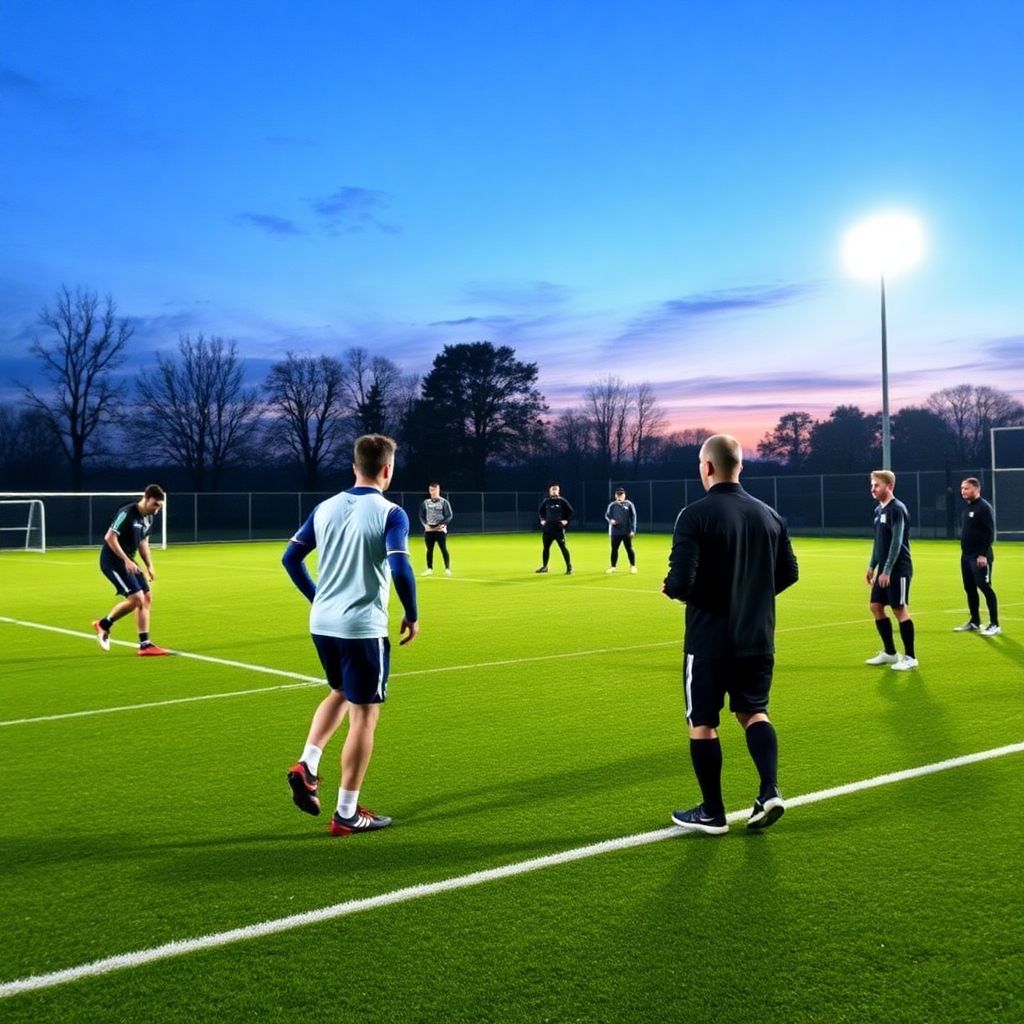
A safe, effective plan de entrenamiento físico para futbolistas según posición starts with understanding each role’s movement patterns, energy demands and injury risks. From there, you organise the week, select strength, power and conditioning drills, and integrate technical-tactical work while monitoring load, pain signals and recovery to adjust the programa de entrenamiento personalizado para jugadores de fútbol.
Core principles for position-specific training
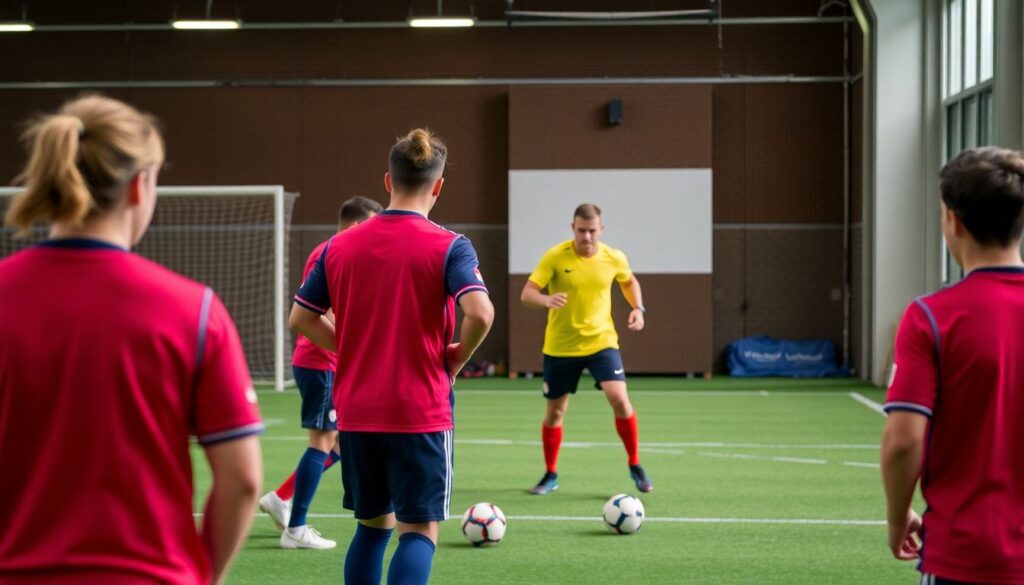
- Start from match demands: distance covered, sprint profile, accelerations, duels and typical fatigue pattern for each position.
- Progress from general to specific: build basic strength, mobility and aerobic base before highly specific drills.
- Balance pitch work and gym work so total load stays appropriate for age, level and calendar (partidos, pretemporada, playoffs).
- Use simple tests (RPE, wellness, jump or sprint times) to guide weekly volume and intensity.
- Prioritise quality of movement and injury prevention over chasing fatigue in every session.
- Adapt exercises específicos por posición en el campo de fútbol to available space, equipment and player experience.
Assessing positional demands: movement, energy systems and injury risks
This structure suits amateur to semi-professional teams, staff working with limited resources, and individual players who want clearer rutinas de entrenamiento para delanteros y defensas en fútbol. It works best when you can train at least three times per week and have minimal access to a ball and some space.
Avoid copying this framework blindly if players are returning from serious injury, dealing with unexplained pain, or have known cardiac, respiratory or neurological conditions. In such cases, they should first be cleared by a sports physician and, ideally, receive individual guidance from a qualified physical coach or physiotherapist.
Before designing any programa de entrenamiento personalizado para jugadores de fútbol, map demands by position:
- Goalkeepers: Explosive dives, short lateral shuffles, jumps, landings, repeated getting up from the ground; high shoulder and lumbar load, low total running volume.
- Full-backs and wingers: Repeated overlapping and recovery sprints, long high-intensity runs along the flank, frequent accelerations and decelerations.
- Centre-backs and defensive midfielders: Duels, jumps, body contacts, short sprints, positional shifts; high eccentric load on adductors and hamstrings.
- Attacking midfielders and forwards: Sharp changes of direction, explosive sprints into space, jumps, shots; frequent eccentric loading of hamstrings and hip flexors.
For each role, note typical injury sites (ankle, knee, groin, hamstring, low back, shoulder for keepers) and technical actions that drive those risks. This will guide exercise choice and load management when you decide cómo entrenar fuerza y resistencia por posición en el fútbol.
Translating match analysis into weekly training objectives
To turn match demands into a clear weekly plan, you will need a few basic inputs and tools. High-tech GPS is helpful, but not essential at grassroots level.
- Observational analysis: Note for each position per match: approximate number of sprints, duels, jumps, long runs, shots and high-intensity actions.
- Simple time-motion data: If GPS is unavailable, use video tags or manual notes (e.g. sprints per half, high-intensity actions per 5 minutes).
- Session structure: Access to at least 60-90 minutes per session, 3-5 times per week, including team and individual work.
- Basic equipment: Cones, mini-hurdles, resistance bands, a few free weights or kettlebells, boxes or stable benches, balls and bibs.
- Monitoring tools: RPE scale (1-10), simple wellness questionnaire (sleep, soreness, stress), and a log of pain or injuries.
- Calendar overview: Match days, travel, school or work exams, tournaments; this defines which days can hold higher-intensity work.
From your analysis, define 2-3 weekly objectives per position: for example, «increase high-speed running tolerance for full-backs», «improve dueling strength for centre-backs», or «enhance repeat sprint ability for forwards». Align each objective with specific drills and volumes across the week.
Designing strength and power routines tailored to each position
Before applying the steps below, consider these key risks and limitations:
- Unexplained joint pain, swelling, or sharp discomfort during basic bodyweight movements is a red flag; reduce load and seek professional assessment.
- Adolescents in growth spurts may tolerate less heavy lifting; prioritise technique, moderate loads and full recovery.
- Never add maximal strength or plyometrics on days of extremely high running volume or immediately after long matches.
- Asthma, cardiac disease or previous serious injury require medical clearance and modified intensity.
- Lack of adequate warm-up and progression significantly increases injury risk, especially for hamstrings and groin.
-
Clarify strength and power priorities by position
Decide what physical qualities most support performance in each role, then allocate 2-3 gym or strength-focused slots per week (shorter at amateur level).
- Goalkeepers: upper-body power, core stability, hip mobility, landing mechanics.
- Defenders and pivots: maximal strength for duels, hip-adductor robustness, deceleration control.
- Wide players: unilateral leg strength, elastic stiffness, horizontal acceleration.
- Forwards: hip-dominant strength (hamstrings, glutes), jumping and shooting stability.
-
Select position-appropriate primary strength lifts
Use 2-4 main compound movements per session, adjusted to equipment: barbells, dumbbells, kettlebells or pure bodyweight if needed.
- Lower body staples (all field players): squats or split squats, hip hinge (Romanian deadlift or hip thrust), calf raises.
- Upper body staples: push (push-up, bench press), pull (row, pull-up or band row), shoulder stability (Y-T-W, external rotations).
- Goalkeeper-specific: landmine press, half-kneeling press, lateral lunges, Copenhagen adduction progressions.
-
Define safe set and rep ranges
For intermediates in-season, use moderate volume: 2-4 sets per exercise, 4-8 reps for the main lifts, leaving 2-3 reps in reserve (never true maxes).
- Off-season or pre-season: slightly higher volume (3-4 sets) and some heavier days, always respecting technique.
- In congested weeks: reduce to 2 sets and focus on maintaining strength rather than progressing load.
-
Add power and plyometric work progressively
Introduce jumps and throws after 4-6 weeks of basic strength, starting with low ground contacts and simple patterns.
- Goalkeepers: lateral bounds, low box drop to lateral dive, medicine ball overhead and rotational throws.
- Wide players and forwards: pogo jumps, single-leg hops over cones, short bounds, medicine ball chest pass into sprint.
- Use 2-3 exercises, 3-5 sets of 3-5 fast reps, 2-3 times per week, with full rest and perfect landings.
-
Individualise accessory work
Use 2-4 accessory exercises to address injury history, asymmetries and positional weaknesses.
- Hamstring-focused (forwards, wingers, full-backs): Nordic curls (gradual), sliders, hip extensions.
- Groin-focused (defenders, pivots): Copenhagen progressions, lateral lunges, adductor squeezes.
- Core and trunk: anti-rotation presses, side planks, dead bugs, carries for all positions.
-
Place strength sessions intelligently in the weekly schedule
Align strength days with lower running load when possible, avoiding heavy lifting immediately before high-speed sessions or matches.
- Typical amateur week with weekend match: heavier strength early in the week, lighter or power-focused midweek, no heavy strength within 24-48 hours of the game.
- Goalkeepers can tolerate some strength later in the week, but avoid heavy upper-body work the day before the match.
Conditioning plans: aerobic, anaerobic and sprint profiles by role
Use this checklist to verify that your conditioning plan, including specific rutinas de entrenamiento para delanteros y defensas en fútbol, actually reflects positional demands and respects safety:
- Each position has at least one day focused on aerobic maintenance (continuous or intermittent runs, extensive small-sided games) at low to moderate intensity.
- High-intensity intervals and repeat sprint drills are tailored: e.g. longer runs and more total distance for flank players, more short sprints from static for central defenders and forwards.
- Sprint work includes both linear and change-of-direction actions, with enough recovery between reps to keep speed quality high.
- Total weekly high-speed running and sprint contacts are tracked roughly (even by simple counting) to avoid sudden spikes.
- Conditioning often occurs with the ball in realistic scenarios to bridge physical and tactical demands.
- At least one lighter recovery session or active rest day is scheduled every week.
- Players with a history of hamstring or groin injury have slightly modified sprint and change-of-direction volumes.
- Weather, pitch conditions and match congestion are factored in when deciding volume and intensity.
- No player reports persistent exhaustion, dizziness or chest pain during conditioning; such symptoms trigger immediate reduction and medical review.
Technical and tactical integration within physical sessions
To keep sessions both safe and game-relevant, avoid these common mistakes when integrating technical and tactical elements with physical goals:
- Overloading players with long isolated running before technical drills, leading to poor movement quality and higher injury risk.
- Designing conditioning blocks that ignore tactical roles, such as making central defenders do the same long sprints as wingers every session.
- Using small-sided games without clear rules or pitch dimensions, producing random rather than targeted physical loads.
- Skipping specific finishing or crossing patterns for forwards and wide players on days intended to develop their match actions.
- Failing to brief players on the physical objective of each drill, which reduces intensity control and focus.
- Stacking high-contact tactical drills, dueling, and heavy strength on the same day for defenders and pivots.
- Ignoring goalkeepers in the physical design, leaving them underprepared for diving, landing and repeated getting up work.
- Not adapting content to age and level, giving youth players professional-level volume without sufficient rest or technical support.
Monitoring, progression and return-to-play considerations
When standard progression is not possible, or resources are limited, use these alternative approaches that still fit a structured plan de entrenamiento físico para futbolistas según posición:
- Low-equipment strength focus: If you lack a gym, use bodyweight strength (single-leg squats to box, step-ups, push-ups, inverted rows) and bands, progressing through tempo, range of motion and unilateral difficulty instead of heavy loads.
- Pitch-only conditioning structure: When GPS or heart-rate monitors are absent, build conditioning around well-timed, position-specific intervals and small-sided games, tracking perceived exertion and simple performance markers (sprint times, distance to ball).
- Return-to-play micro-cycles: For players coming back from injury, run short 1-2 week micro-cycles with progressive exposure to speed, contact and positional tasks, instead of immediately rejoining full team load.
- Rotating emphasis weeks: If time is tight, alternate weekly focus (e.g. Week 1 strength maintenance, Week 2 repeat sprint focus) while ensuring a minimal stimulus for all physical qualities.
Practical clarifications and common implementation challenges
How many strength sessions per week are ideal for most positions?
For intermediate players training regularly, aim for 2-3 strength-focused sessions per week, with at least one being relatively light in-season. Prioritise quality of movement and freshness over chasing maximal loads, especially around key matches.
Can I build an effective plan without access to a gym?
Yes. You can build strength and power using bodyweight, bands and partner resistance. Emphasise unilateral leg exercises, controlled tempo, jumps and sprints. Progress by adding sets, reps, or complexity rather than weight.
How should positional training change during a congested match schedule?
Reduce total volume, keep intensity but shorten sessions, and focus on maintaining key qualities. Use brief, sharp drills and small-sided games instead of long conditioning blocks, and remove non-essential high-fatigue exercises.
What is the safest way to introduce Nordic curls and intense hamstring work?
Start with assisted variations, low volume (1-2 sets of 3-4 reps), and only after a base of general posterior chain strength. Increase slowly over several weeks and avoid introducing new intense hamstring work just before matches.
How do I adapt training for younger players in growth spurts?
Focus on coordination, mobility, basic strength and technical quality rather than heavy loads. Use more games, shorter sessions, and longer recovery, and reduce jumping and sprint loads if they report knee or heel pain.
Should goalkeepers follow the same conditioning sessions as outfield players?
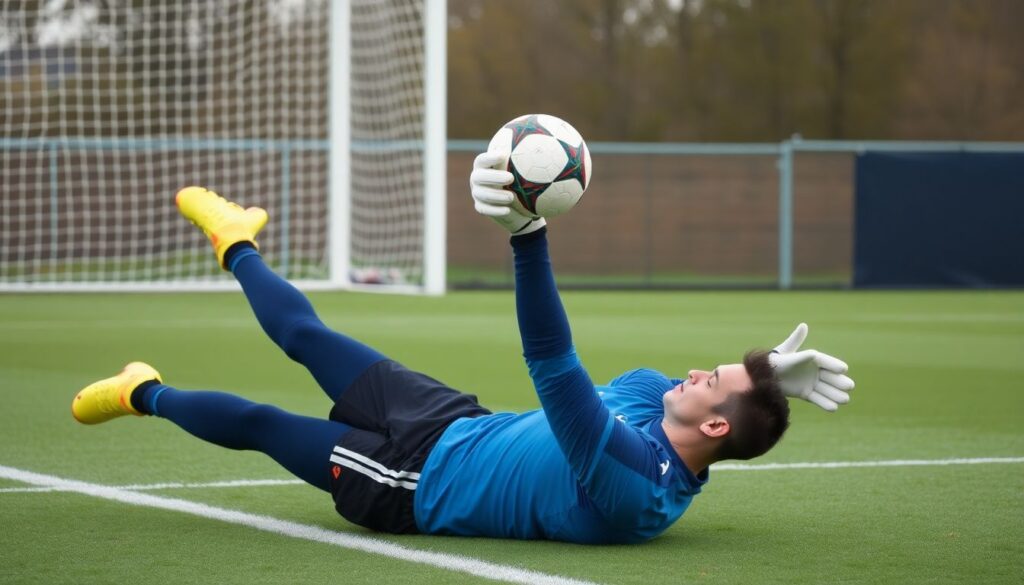
Not exactly. They should share warm-ups and some general work, but most conditioning should be explosive, short-range, and integrated into position-specific diving and reaction drills rather than long running.
How do I know if the weekly load is too high for a player?
Warning signs include persistent soreness, declining performance, mood changes, and increased minor injuries. If several of these appear, reduce volume and intensity for a week and monitor response.