
A winning mindset speeds up emotional recovery after a painful loss by turning the defeat into clear learning, controlled emotion, and concrete action. Instead of self-blame or denial, you analyse, regulate, and reset your goals. This guide shows safe, practical steps to apply that mindset after any competition.
Essential Recovery Insights
- A winning mindset is not toxic positivity; it is honest analysis plus confident, disciplined response.
- Emotional regulation (sleep, breathing, routines) must come before deep tactical analysis of the defeat.
- Clear, written learning points prevent rumination and keep you moving toward performance growth.
- Support from a psicologo deportivo para superar derrotas or coach structures your recovery process.
- Short, controllable goals rebuild confidence faster than obsessing about future titles or rankings.
- Tracking mood, focus, and training quality makes progress visible even when results are not immediate.
How a Winning Mindset Shapes Emotional Recovery

A winning mindset focuses on controllables: effort, preparation, tactical choices, and emotional responses. In recovery, that means asking «What can I improve next time?» instead of «Why am I a failure?». It accepts pain, protects self-respect, and channels energy into specific training and behavioural changes.
This approach is especially useful for:
- Athletes in entrenamiento mental para deportistas de alto rendimiento who face frequent pressure and public evaluation.
- Competitors returning from injury who cannot afford long emotional slumps.
- Young athletes learning to handle selection cuts, benching, or crucial mistakes.
- Adults in amateur leagues who want healthy competitiveness without burnout.
However, do not rely only on mindset tools when:
- You notice persistent sadness, sleep problems, or loss of interest in daily life beyond sport.
- You have impulses for self-harm or thoughts that life is not worth living.
- Defeat triggers past trauma or panic attacks.
- People close to you express serious concern about your behaviour or mood.
In these cases, mindset exercises must be combined with professional help from a clinical psychologist or psychiatrist, not used as a replacement.
Immediate Steps After a Painful Loss
Use this short, safe checklist in the first 24-72 hours after the defeat, before you go deep into analysis.
- Protect physical basics — Prioritise sleep, hydration, light food, and gentle movement. This stabilises your nervous system and reduces emotional volatility.
- Limit impulsive decisions — Avoid posting on social media, sending angry messages, or announcing retirement. Give yourself at least one night before decisions.
- Name your emotions accurately — Say or write «I feel disappointed/ashamed/angry» instead of «I am useless». Labelling feelings lowers their intensity.
- Do a brief body reset — 5-10 minutes of slow breathing or a walk without headphones. This calms fight-or-flight and prevents overreactions.
- Set a small time frame for reflection — Decide: «Tomorrow I will review the match for 30 minutes.» Contained reflection stops endless rumination.
- Signal to your support team — Tell a trusted teammate, family member, or your coach mental deportivo online: «I am not okay; let us talk tomorrow.» This keeps you connected.
Cognitive Strategies to Reframe Defeat
Before you start the deeper mental work, prepare with this mini-checklist:
- Choose a quiet space without phone notifications for at least 30 uninterrupted minutes.
- Have paper or a notebook plus a pen; writing by hand slows thinking and clarifies ideas.
- Gather objective data if possible: video, stats, coach notes, or your own training diary.
- Decide your focus: technical-tactical, physical, or emotional aspects of the performance.
- Agree with yourself to use non-judging language (no insults, no catastrophising) during the exercise.
-
Describe the defeat factually, without judgment
Write a short, neutral description: who, where, result, key moments. Avoid words like «disaster», «humiliation», or «embarrassing».- Example: «Lost 1-2, conceded in minute 88 after losing the ball in midfield.»
- Goal: separate what happened from what you think it means about you.
-
Identify automatic thoughts and extreme beliefs
Note the first thoughts that appear: «I always fail under pressure», «The coach will drop me», «I am not made for big moments».- Underline «always», «never», and other extremes; these often distort reality and increase suffering.
-
Challenge thoughts with specific evidence
For each extreme belief, write evidence for and against it from your actual history.- Question: «Is it true that I always fail? When have I handled pressure well?»
- Replace with a balanced version: «I sometimes struggle in finals, but I have also delivered strong performances.»
-
Extract controllable learning points
Turn your analysis into 3-5 clear, controllable lessons, never character judgments.- Examples: «Start individual warm-up 10 minutes earlier», «Call defensive switch loudly on set pieces», «Use breathing cue before each serve.»
- Avoid: «Stop being a choker», «Be stronger mentally» — they are vague and not actionable.
-
Create a short performance narrative
Write 3-5 sentences that explain the defeat with responsibility but without drama.- Template: «I lost because A, B, C. I contributed with X mistakes and Y positive actions. Next time I will focus on Z.»
- Use this narrative with your coach or your psicologo deportivo para superar derrotas to align future training.
-
Design one mental rehearsal script
Choose a key situation from the defeat (penalty, final minutes, decisive play) and rewrite it in your mind as you would like it to happen.- Write a brief script: where you look, what you say to yourself, your breathing, your action.
- Rehearse this mentally for 2-5 minutes, 3-4 times per week before sleep or training.
Micro-case: A tennis player who lost after leading in the third set rewrote her thought «I always choke» to «I lost concentration when I was ahead; I will practise closing games with a serve routine and deep breathing.» Over several tournaments, she reported less anxiety when leading and better decision-making at 5-4.
Behavioral Routines That Accelerate Comebacks
Use this checklist weekly to ensure your behaviour supports recovery and a winning mindset, not hidden self-sabotage.
- Pre-training focus ritual — Do you spend 2-5 minutes before each session defining one clear focus (e.g., «first touch under pressure», «aggressive defence in last minutes»)?
- Post-training reflection note — After sessions, do you write 2-3 lines: what improved, what stayed the same, one adjustment for next time?
- Consistent sleep and wake times — Are you within roughly the same 30-60 minute window most days, even after a bad result?
- Scheduled mental training — Do you have 2-4 short weekly blocks for breathing, visualisation, or self-talk practice, like any other drill?
- Healthy debrief conversations — When talking about the defeat, do you use solution-focused language instead of repeating blame or excuses?
- Protected recovery activities — Do you keep non-sport activities (friends, studies, hobbies) active, instead of isolating yourself after losses?
- Planned contact with support professionals — Are sessions with your coach mental deportivo online or psychologist scheduled, not only booked during crises?
- Media and social media limits — Do you control exposure to comments, news, and highlights that trigger unhelpful comparison or shame?
- Return-to-competition plan — Have you and your staff mapped the next competitions with realistic performance aims instead of «I must win everything»?
Building Resilience Through Goal Recalibration
After a painful defeat, many athletes try to «compensate» by setting extreme goals or changing everything at once. These common mistakes slow recovery and reduce resilience.
- Keeping only outcome goals — Focusing solely on medals, rankings, or selection lists and ignoring process goals like decision speed, body language, or tactical choices.
- Doubling training volume abruptly — Thinking «more is always better» and increasing work without considering recovery, sleep, or injury risk.
- Copying others' plans blindly — Imitating routines from a famous athlete or a curso mentalidad ganadora deportistas without adapting them to your reality and schedule.
- Resetting goals in anger — Setting harsh rules right after the defeat («If I lose again, I quit») instead of waiting until emotions cool down.
- Ignoring current constraints — Planning as if injuries, studies, or family responsibilities did not exist, which leads to inevitable failure and more frustration.
- Refusing to lower unrealistic standards — Treating every non-perfect performance as failure instead of defining «good enough for today».
- Not involving your team — Recalibrating goals alone, without feedback from your coach, physical trainer, or psicologo deportivo para superar derrotas.
- Forgetting emotional goals — Neglecting aims like «compete with calm body» or «recover from mistakes within one play» in favour of only technical targets.
Better resilience comes from building a small ladder of process goals (daily/weekly) that connect realistically to your long-term vision and are adjusted whenever circumstances change.
Measuring Progress: Practical Metrics and Milestones
You do not need complex technology to see if your recovery mindset is working. Choose the option that fits your context, personality, and access to support.
Option 1: Simple self-monitoring diary
Once per day, rate from 1-5: mood, confidence in your sport, training quality, and self-talk (harsh-supportive). Add one sentence: «Biggest win of today». Over weeks you will notice if the global trend goes up, down, or stays flat.
Micro-case: A footballer in Spain tracked his mood and confidence this way after being dropped from the starting eleven. Even before regaining his position, he saw his averages move from mostly 2-3 to 3-4, which kept him engaged in training and reduced his frustration on the bench.
Option 2: Structured work with a professional
Working with a coach mental deportivo online or sport psychologist, you can define specific indicators: pre-competition anxiety level, number of focus losses, speed of recovery after mistakes. Regular sessions turn these into concrete targets inside programas de coaching para recuperarse de una derrota deportiva, where you review both numbers and subjective experience.
Option 3: Integrated feedback from your staff
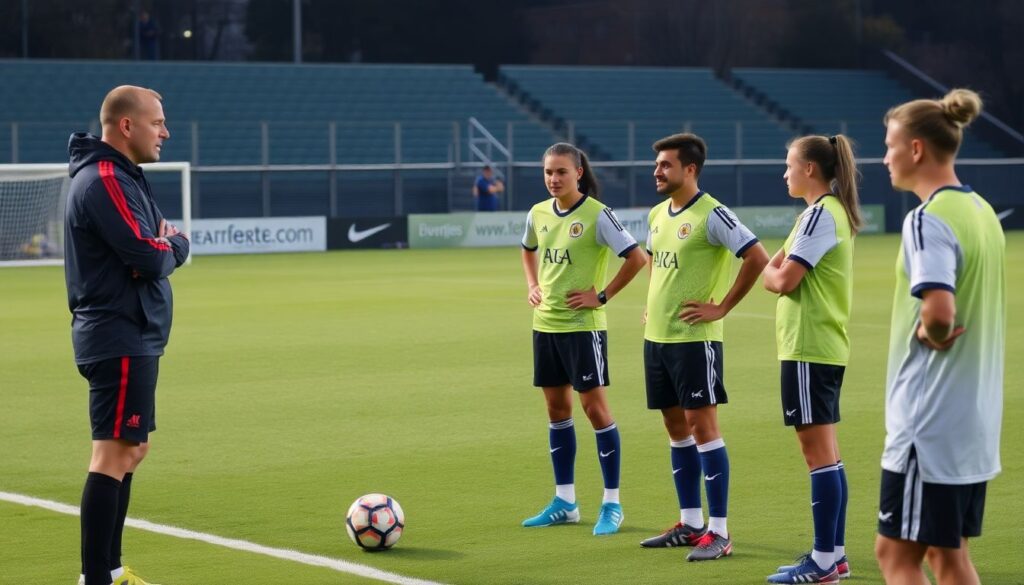
Ask your coach and teammates to evaluate observable behaviours: body language after mistakes, communication quality, persistence in drills. Create a simple 1-5 scale and review it every two to four weeks. This external view complements your self-perception and often reveals progress you do not yet feel internally.
Practical Clarifications and Quick Fixes
How soon after a defeat should I start analysing what happened?
Wait until basic emotions have calmed, usually after one good night of sleep. Use the first 24 hours mainly for physical recovery and emotional containment, then schedule a focused 30-60 minute review instead of thinking about it non-stop.
What if I feel no motivation to train after a painful loss?
Lower the bar: focus on simply showing up and completing a shorter, lighter session. Use tiny goals (e.g., «arrive and warm up properly») to rebuild momentum. If low motivation persists for weeks, consider consulting a sport psychologist.
Can a winning mindset make me ignore real problems in my technique or tactics?
It should not. A healthy winning mindset uses honest, sometimes uncomfortable analysis to detect weaknesses, then turns them into specific training targets. If you notice yourself denying problems or blaming only external factors, you need to rebalance your approach.
How do I know if I need professional psychological help instead of self-guided exercises?
If you suffer intense hopelessness, strong anxiety, changes in sleep or appetite, or thoughts of self-harm, self-help is not enough. Seek immediate support from a licensed psychologist or doctor and tell your coach so they can adjust expectations and load.
Are mental training sessions as important as physical ones?
For consistent performance under pressure, yes. Mental skills like attention, emotional regulation, and self-talk directly influence how you use your physical and technical abilities. Treat short mental sessions as non-negotiable parts of your weekly plan.
What if my coach does not value psychological work?

Start by working quietly on your own or with an external coach mental deportivo online. As your behaviour and results become more stable, share specific examples of how mental strategies helped you. Visible improvements often change sceptical minds over time.
Does a winning mindset mean I should never cry or show frustration?
No. Healthy expression of emotion is compatible with a winning mindset. The key is what you do afterwards: you feel the emotion, regulate your body, and then move into constructive analysis and action instead of staying stuck in the feeling.