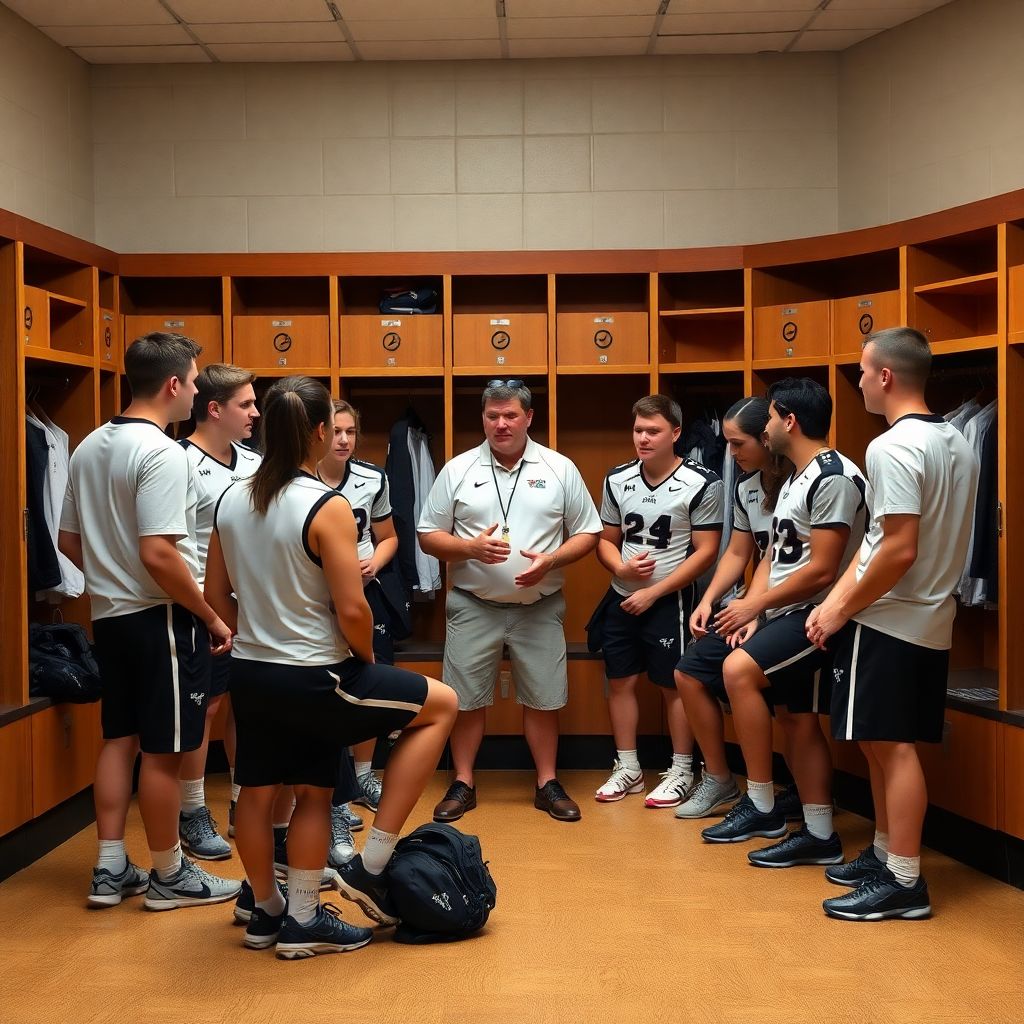
Mental preparation for a final means giving your team a clear, repeatable plan: simple routines, concrete communication rules and safe emotional «rails». As mentor you translate pressure into tasks: brief meetings, clear roles, one-on-ones and short checklists that stabilise focus, confidence and connection before and during the decisive match.
Rapid mental-prep summary for the final
- Define a shared objective and 2-3 behavioural rules for the final (effort, communication, body language).
- Run a short psychological scan: stress level, confidence, clarity of role for each player.
- Design a 60-90 minute pre-final block: arrival, activation, meeting, quiet time, warm-up.
- Use one-on-one mentoring mini-sessions to close specific worries and align expectations.
- Agree on in-game communication codes for pressure moments and role of leaders.
- Monitor three quick markers: tension in body, quality of talk, decision speed; adjust on the fly.
Establishing the team’s psychological baseline
This approach suits coaches, captains or a mentor deportivo para equipos de alto rendimiento who already work regularly with the squad and can influence schedules and meetings. It is ideal in the 7-10 days before a final, when training volume is usually reduced and mental focus can be prioritised.
A full mental-prep protocol is not recommended if:
- There is an acute conflict (coach vs. players, internal groups) that you cannot at least contain before the match.
- The team is physically exhausted and any extra meetings would reduce recovery quality.
- You have less than 24 hours before the game and players are already overloaded with information.
- The club prohibits additional meetings or cambios in routines without prior approval.
Before applying intensive preparación mental para equipos antes de una final, create a quick «baseline snapshot» of the group so you know what you are working with.
- Ask three rapid questions (group or individual):
- «How tense are you from 1-10?»
- «How confident are you that we can execute our game?»
- «How clear is your role in this final?»
- Observe behaviour in training:
- If intensity is chaotic or too low, mental noise is high.
- If players joke excessively or are unusually quiet, tension is likely under the surface.
- Map key profiles:
- Anchors (stable, calm), emotional amplifiers (very up/very down), silent worriers.
- Note who influences whom; this will guide your mentoring priorities.
Crafting concise pre-final routines and rituals
To implement structured coaching deportivo para finales decisivas you do not need complex tools; you need clarity, consistency and a shared script. Keep all routines short, realistic and compatible with club logistics and medical needs.
What you need in practice
- Calendar control
- Confirmed kick-off time, travel plan, meal times.
- Ability to block 60-90 minutes pre-final for mental and tactical prep.
- Basic spaces
- Quiet room for short meetings (team + sub-groups + one-on-ones).
- Warm-up area where you can integrate mental cues into physical activation.
- Simple materials
- Whiteboard or flipchart for 3-5 key messages.
- Printed cards or notes with roles, mini-objectives and communication codes.
- Time slots
- 5-10 minutes individual quiet time for each player.
- 5-7 minutes for captains’ briefing.
- Short windows (3-5 minutes) for one-on-one mentoring before and after team talk.
- Agreement with staff
- Align with physios, performance staff and medical team so routines do not clash.
- Clarify who speaks when: mentor, head coach, captain, assistant.
With these basics, you can embed estrategias psicológicas para partidos importantes directly into the existing matchday schedule without adding stress or chaos.
One-on-one mentoring: templates and checkpoints
These steps describe how a mentor deportivo para equipos de alto rendimiento or head coach can run safe, direct one-on-ones in the final days before the match.
-
Define who needs mentoring first
Start with players who have decisive roles, unstable form or known emotional swings.
- If a player is central tactically and inconsistent emotionally, schedule two brief sessions.
- If a player is a stable leader, use mentoring to amplify their positive influence.
-
Use a fixed 4-question script
Keep each conversation 8-12 minutes, focused and safe. Example script:
- «What is your specific job in this final, in one sentence?»
- «What is the one thing that worries you most?»
- «What has helped you in past big matches?»
- «What will you do in the first 5 minutes on the pitch?»
-
Translate emotions into concrete behaviours
Do not argue with feelings; turn them into plans.
- If the player says «I am afraid to make a mistake», then define: «In doubt, play the simple pass» and rehearse that choice.
- If the player feels «too relaxed», assign early intensity tasks: press, talk, demand the ball.
-
Agree on a personal reset routine
Create a small in-game ritual the player can use after errors or stressful moments.
- Example: exhale, fix one visual point (line, goalpost), verbal cue («next action»), simple task (move, ask for ball).
- If the player tends to argue with referees, link the reset routine to walking away on purpose.
-
Set a micro-objective for the final
Each player leaves with one controllable target that fits the game plan.
- Defenders: «Win the first duel», «Communicate every line break».
- Attackers: «Two aggressive runs per attack», «Shoot when you have space at the edge of the box».
-
Close with commitment and recap
End each meeting with a short summary and a clear «yes» from the player.
- Mentor: «So your job: stay compact, simple pass under pressure, reset after errors. Correct?»
- Player: confirms; if not, adjust until both are aligned.
Fast-track mode: minimal one-on-one protocol
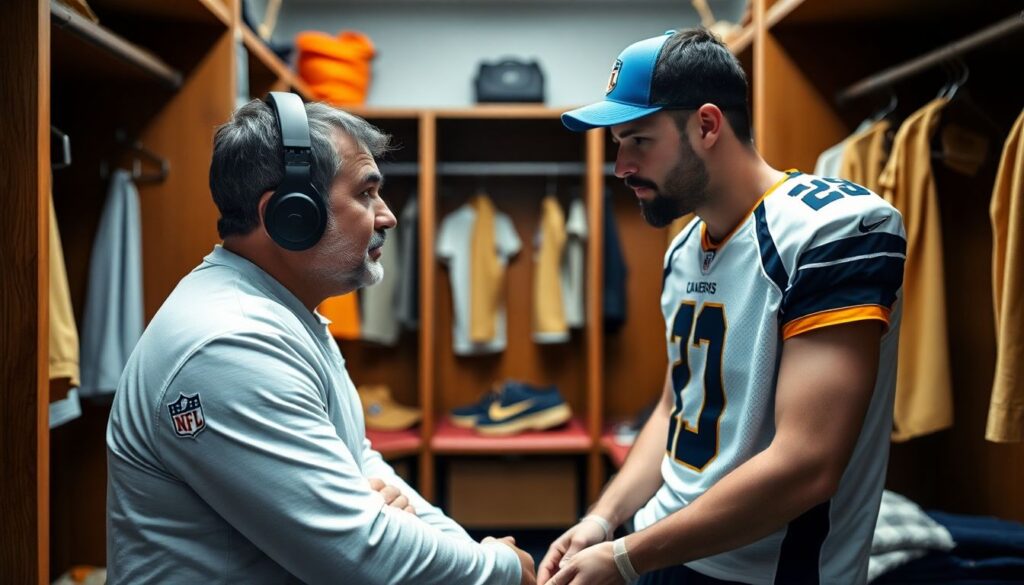
If time is very limited but you still want structured servicios de coaching y mentoría deportiva profesional, reduce the process to these steps:
- Ask each key player: «What is your main job tomorrow?» and correct until it is clear and short.
- Identify one current worry and give one concrete alternative action (simple pass, safe option, early communication).
- Define a 10-second reset routine after mistakes (breath, cue word, next task).
- Finish with: «Repeat your first action in the match» so the player rehearses the start mentally.
Strengthening collective resilience under pressure
Use this checklist on the last training day and again pre-match to verify if your estrategias psicológicas para partidos importantes are working at team level.
- The team can explain the game plan in 3-4 sentences without the coach’s help.
- Leaders know exactly when they will speak (locker room, tunnel, during pauses).
- There is a plan for the first 10 minutes: intensity, risk level, communication focus.
- Players know what to do after conceding a goal (behaviour, formation, talk).
- Players know what to do after scoring a goal (avoid relaxation, next tasks).
- In practice, players recover focus quickly after mistakes; arguments end in seconds.
- No one is left alone with visible frustration; a teammate approaches with a simple phrase.
- Bench players have a defined role (support, information, emotional stability).
- The staff has agreed how to respond if the referee’s decisions go against the team.
- There is at least one short team ritual that reinforces unity (huddle, phrase, gesture).
Communication scripts and role assignments for crunch time
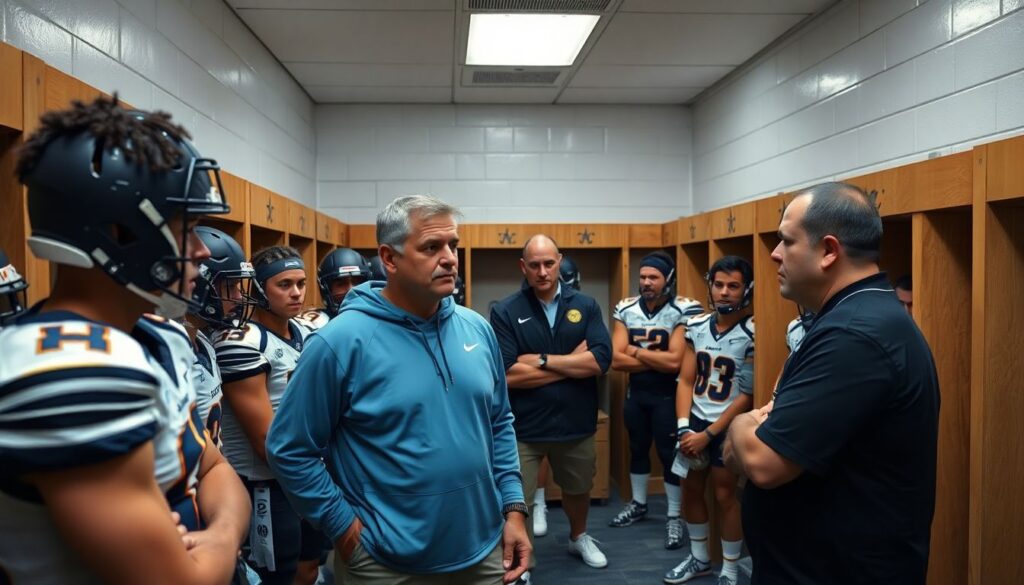
Even strong preparación mental para equipos antes de una final can be undermined by a few communication mistakes under pressure. Anticipate these and allocate roles clearly.
- Everyone talks at once in the locker room – If too many voices appear, decide in advance: only head coach, one assistant and captain have the floor.
- Leaders speak only when things go wrong – If leaders wait for a crisis, assign them specific positive messages for good phases too.
- Messages are vague and emotional – Replace «We must give everything» with specific cues: «Compact in defence, two touches in build-up, shoot from zone X».
- Staff contradict each other in front of players – If conflict arises, move discussion outside; keep one coherent message for the team.
- No plan for referee or rival provocation – Script one short team rule: who speaks to the referee, who pulls teammates away, what words are avoided.
- Silence after a big mistake – Design a stock phrase: «Next one is yours», «We keep you in the game»; assign who will say it (usually closest teammate or captain).
- Changes in tactics are not understood – When you change system, pair the player with a «guide» on the pitch who checks their positioning for 3-4 minutes.
- Bench is emotionally disconnected – Give one sub the role of «energy connector»: clapping, small feedbacks, eye contact with players on the field.
Monitoring readiness: quick metrics and agile adjustments
When you cannot implement full coaching deportivo para finales decisivas, use alternative, lighter options that still respect safety and clarity.
Alternative 1: Micro-checks during normal training
If you have no extra meeting slots, integrate three quick checks into existing drills:
- Before each main exercise, ask one player to summarise the objective aloud.
- After a mistake, observe if teammates support or blame; intervene briefly if needed.
- End each session with one question in a circle: «What did we do well under pressure today?»
Alternative 2: Captain-led mentoring circles
If external servicios de coaching y mentoría deportiva profesional are not available or budget is limited, train your captains to run short circles without deep psychology.
- Groups of 4-6 players, 10-15 minutes, in the locker room after practice.
- Fixed questions: «What must we keep?», «What must we avoid?», «What is our reaction if we are losing at half-time?»
- Mentor or coach only supervises and corrects tactical misunderstandings.
Alternative 3: Simple self-check cards
If players resist talking or time is extremely short, use anonymous cards or digital messages:
- Each player rates stress, confidence and role clarity; collects or sends to staff.
- Staff identifies red flags (very low confidence, very high stress) and speaks only with those players.
- Use this when the schedule is tight (e.g., tournaments) and access is reduced.
Practical clarifications and common stumbling blocks
How many days before the final should I start structured mental preparation?
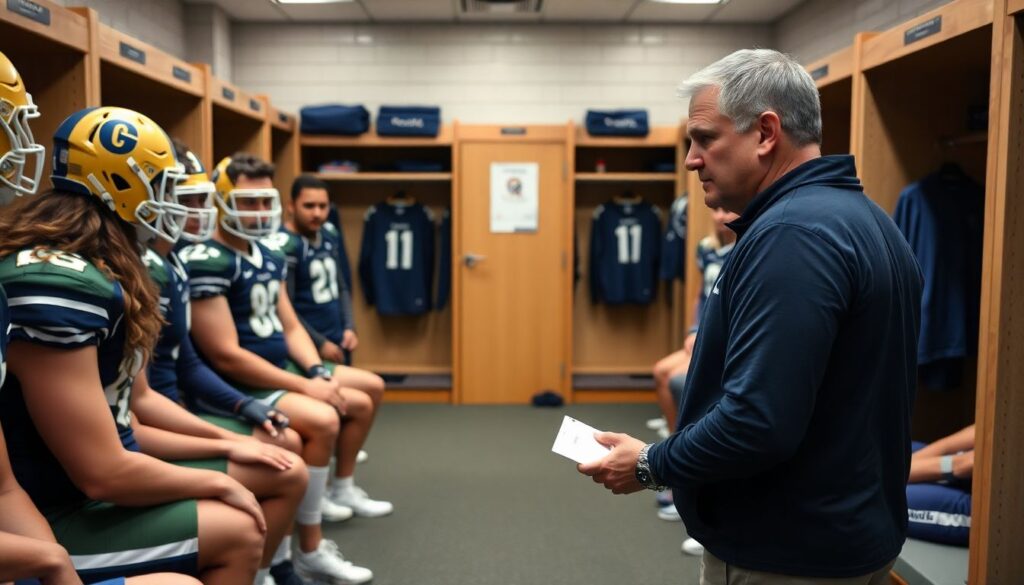
Ideally start gentle work 7-10 days before the final and intensify in the last 3-4 days. If you have less time, focus on clarifying roles, first minutes of the game and reset routines instead of adding new concepts.
Can I apply these steps without an external sports mentor?
Yes. A coach or captain can guide most of these processes safely. An external mentor deportivo para equipos de alto rendimiento is helpful when there are deep conflicts, repeated collapses in big matches or when the staff lacks time or experience.
What if some players reject mental preparation as unnecessary?
Do not force long talks. Offer short, tactical-framed conversations: «We clarify your job and first actions». Often players accept practical guidance more easily than explicit «mental coaching». Respect individual preferences while protecting team coherence.
How do I avoid increasing anxiety when talking about the final?
Keep meetings short, focus on controllable actions and avoid catastrophic or «must win» language. If a player shows rising anxiety, narrow the conversation to their first 5 minutes and one reset routine instead of discussing the whole match.
Is it safe to revisit past failures before a decisive match?
It can be useful if handled briefly and with a corrective angle: «What did we learn and what will we do differently now?». Avoid detailed replays of painful losses close to the match; do that work in the off-season, not in the final week.
Should I treat a final differently from other important matches?
The basic structure is similar, but finals amplify emotions and external noise. Simplify game plans, protect routines from media and visitors, and reinforce identity messages so players feel they are still playing «their» football despite the occasion.
How do I adapt these strategies for youth teams in Spain?
Shorten meetings, use more concrete examples and coordinate closely with parents and school schedules. In es_ES contexts be clear with families about recovery times and avoid adding late-night sessions; protect sleep and normal routines around the final.