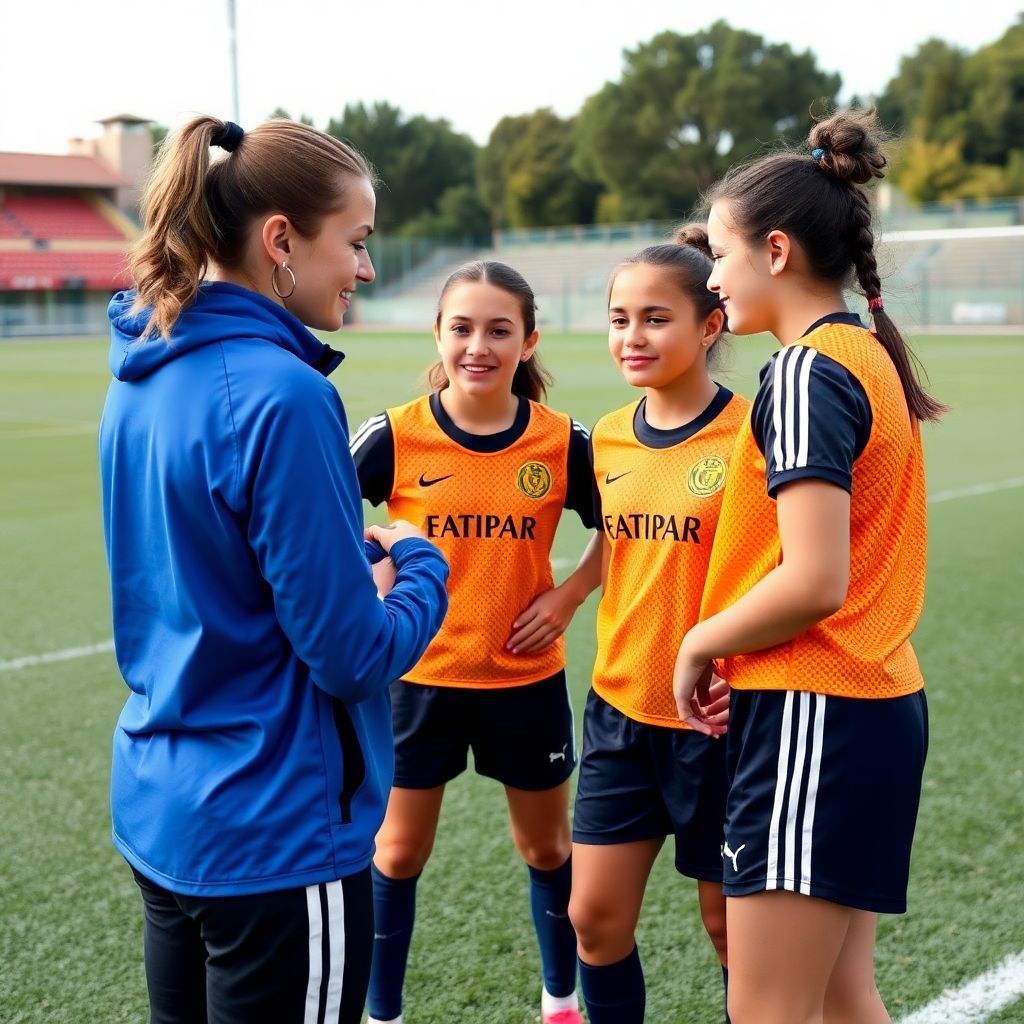
Mentoring in women’s football means offering structured, long-term guidance on technical, tactical, physical, psychological and career issues, adapted to girls and women. A good mentor links daily training with realistic pathways, uses safe, evidence-informed practices and understands local context in Spain, including clubs, studies, family expectations and available support systems.
Core Mentoring Objectives for Women’s Football

- Identify individual gaps in technique, game understanding and decision-making, then convert them into simple weekly micro-goals.
- Adapt load, conditioning and recovery to female physiology and age, reducing injury risk while supporting performance peaks.
- Build stable confidence, resilience and identity so players manage pressure, stereotypes and internal doubts.
- Guide players through realistic career options: amateur, semi-pro, pro and dual-career paths, including education.
- Develop inclusive, respectful team cultures that empower future female captains, coaches and staff.
- Design mentorship structures that survive staff changes and can be scaled in clubs, academies and schools.
Assessing Individual Technical and Tactical Needs
Outcome: create a clear, personalised development map for each player over a 3-6 month period. Target audience: mentors working with U13-senior women’s teams in Spain who already train at least twice per week. Do not use this framework if the environment is unsafe or clearly abusive; address safeguarding first.
Start with a simple three-angle assessment: match video, training observation and player self-evaluation. In matches, focus on repeated patterns: losing duels, slow decisions, poor body orientation, weak scanning. In training, note who hides in drills, who dominates the ball and who avoids risk. Combine this with the player’s own perception to avoid blind spots.
To structure the findings, classify needs into four buckets: technique (ball control, passing, finishing), tactics (positioning, pressing, rest defence), game habits (communication, leadership, work rate) and decision-making (when to dribble, pass, or switch play). For intermediate players, select at most two priority items per bucket to avoid overload.
Mention and use external learning options strategically. For example, recommend mentoría en fútbol femenino cursos online or specific programas de formación para entrenadoras de fútbol femenino when a player or assistant coach needs extra tactical literacy. Align any online content with the team’s game model and terminology so messages stay consistent.
Diagnostic checklist: technical and tactical profile
- Can I describe this player’s strongest and weakest action with the ball in one sentence each?
- Do I have at least three recent match clips showing her typical decisions in possession and pressing?
- Has the player completed a short self-assessment and discussed it in a 1:1 meeting?
- Are there two clear, written focus points for the next four weeks (one technical, one tactical)?
- Have I communicated these focus points to the staff so they can reinforce them in drills?
Addressing Gender-Specific Physical Development and Conditioning
Outcome: safer, smarter conditioning that respects female physiology and reduces avoidable injuries. Target audience: mentors, coaches and physical trainers in women’s football, especially in growth and transition phases (puberty, return-to-play, post-pregnancy). Do not prescribe medical plans; always refer players to qualified health professionals.
Prepare a basic information set on menstrual cycle awareness and training adaptation. Encourage players to track cycle phases and symptoms privately and voluntarily, then adjust high-intensity loads or strength emphasis when needed. This approach stays respectful while acknowledging real performance and comfort fluctuations.
You will need access to: simple fitness tests (speed, repeated sprints, change of direction), monitoring tools (training logs, RPE scale, wellness questionnaire) and a clear referral route to sports doctors or physiotherapists. If budget allows, a coach deportivo especializado en fútbol femenino precios can be evaluated to design or audit the conditioning structure.
Complement on-field work with education. Short workshops on sleep, nutrition and menstrual health are often more impactful than adding another fitness session. Where possible, link these with external learning pathways, such as a local master en dirección técnica y liderazgo en fútbol femenino that covers physical preparation modules for staff.
Diagnostic checklist: physical readiness and safety
- Has each player completed a basic movement screen (squat, lunge, landing, change of direction) with feedback?
- Do we monitor weekly load and wellness with a simple, consistent method?
- Is there an agreed return-to-play protocol after injuries, with medical sign-off?
- Do players have a channel to discuss menstrual-cycle related issues confidentially if they wish?
- Are strength and landing mechanics trained at least once per week in-season?
Building Psychological Resilience, Confidence and Identity
Outcome: players who stay composed under pressure, recover faster from setbacks and feel comfortable owning their identity as female footballers. Target audience: mentors, head coaches and psychologists working with adolescent and adult women. Use safe, non-invasive conversations; never force disclosure of personal trauma or sensitive topics.
-
Map current stressors and support
Begin with a confidential 1:1 conversation focused on challenges inside and outside football: studies, work, family, social media, injuries. Ask what helps them recover after tough days. Note patterns but avoid diagnosing; your role is to listen and normalise their experience.
- Use open questions: «What has been hardest for you in the last month on and off the pitch?»
- Clarify boundaries: you are a mentor, not a therapist; know when to suggest professional help.
-
Define a personal performance identity
Help the player write a short identity statement: who she is as a person and as a player. This may include strengths, values and preferred role in the team. The goal is to shift from «I must be perfect» to «I know who I am and how I contribute» as a stable base.
- Ask for three football strengths and three personal qualities unrelated to sport.
- Link these to concrete match behaviours: communication, work rate, creativity, leadership.
-
Teach simple regulation tools
Introduce two or three safe tools: controlled breathing, pre-match routines, and brief reset actions (e.g., keyword, gesture, scanning routine) after mistakes. Practice them in training first, especially in small-sided games with constraints and pressure.
- Keep tools short (under one minute) so they can be used during games.
- Model them yourself: show how you use breathing or self-talk in stressful moments.
-
Reframe mistakes and feedback
Set a team rule that every error generates one learning point and then is released. In 1:1s, review two clips: one of a mistake, one of a positive reaction. Ask the player what she sees, then add your perspective with specific, neutral language.
- Ban personal labels («you are lazy»); describe behaviours («you stopped tracking the runner»).
- End each review with one practical adjustment to try in the next game.
-
Plan confidence-building exposures
Gradually expose players to slightly uncomfortable but safe challenges: taking penalties in friendlies, leading warm-ups, speaking in team meetings. Celebrate attempts, not only outcomes, to reinforce growth. Adjust difficulty to personality and current confidence levels.
- Start with low-stakes tasks; increase complexity as confidence grows.
- Always debrief: «What did you learn about yourself doing this?»
-
Connect with role models and education
Introduce players to visible female role models: senior teammates, ex-players, women coaches. Suggest structured learning for mentors themselves, such as cómo ser mentora en fútbol femenino certificación or targeted modules within mentoría en fútbol femenino cursos online focused on mental skills and leadership.
- Schedule occasional Q&A sessions with role models, live or online.
- Share short stories of resilience from women’s football, contextualised to Spain.
Быстрый режим
- Run a 10-15 minute 1:1 to list current stressors, main support sources and one key fear.
- Create a two-line identity statement with three strengths and one core value.
- Teach one breathing exercise and one match reset cue; practice in a pressured drill.
- Pick one «stretch» challenge for the next two weeks (e.g., take a set piece, speak in a meeting).
- Schedule a short follow-up to review what helped and what to adjust.
Diagnostic checklist: mental resilience focus
- Can the player describe her strengths and role in the team without hesitation?
- Does she have at least one in-game reset tool she trusts and uses?
- Have we discussed non-football stressors that may impact performance?
- Has she recently accepted and completed a challenge slightly outside her comfort zone?
- Do we have an agreed signal if she feels overwhelmed and needs support?
Navigating Career Pathways: Contracts, Academies and Dual Careers
Outcome: players with realistic, informed expectations about football, studies and work, and mentors who can direct them to appropriate resources. Target audience: mentors in clubs, academies, universities and regional selections. Avoid promising contracts or scholarships; focus on information, options and decision-making frameworks.
Explain the main pathways available in Spain: regional leagues, semi-professional and professional divisions, university and school programmes. Use real examples from former players without exposing confidential data. Emphasise how dual careers (studies + football, or work + football) are common and often necessary in women’s football.
Teach players to evaluate offers critically: contract length, training conditions, medical coverage, study flexibility, travel demands, and support for career transition. If families are heavily involved, run joint meetings so everyone hears the same information. Where appropriate, refer them to legal or players’ union resources instead of improvising legal advice.
For mentors and coaches, investing in education such as a master en dirección técnica y liderazgo en fútbol femenino or specialised programas de formación para entrenadoras de fútbol femenino builds credibility when discussing pathways. Knowing how clubs structure squads, budgets and staff helps you explain why some opportunities are realistic and others are risky.
Outcome checklist: career clarity and planning
- The player can explain at least two realistic pathways for the next three seasons.
- She has written down her education or work priorities alongside football ambitions.
- Any current offer (trial, contract, scholarship) has been discussed with an informed adult.
- She understands the basic implications of amateur vs semi-pro vs professional status.
- There is an identified plan B if football at higher level does not materialise.
- The family or support network knows the time and travel demands of her current path.
- She knows who to contact for legal or academic advice if needed.
Creating Inclusive Team Cultures and Developing Female Leaders
Outcome: a team environment where girls and women feel safe, respected and able to lead, regardless of age or background. Target audience: mentors, head coaches, coordinators and captains working in mixed-staff but women’s squads. Do not tolerate discrimination; have clear reporting channels for serious issues.
Define culture in behaviours, not slogans: how we speak to each other, how we handle mistakes, how we welcome new players. Explicitly reject sexist jokes, body shaming and homophobic comments; silence often feels like acceptance. Rotate small leadership tasks so many players experience responsibility, not only the most confident ones.
To grow female leaders, offer specific leadership «micro-roles»: warm-up leader, social coordinator, media spokesperson, liaison with staff. Debrief after big events: ask what went well and what they would change next time. Connect promising leaders with further training, including programas de formación para entrenadoras de fútbol femenino that cover communication and group management.
Common mistakes that damage culture and leadership
- Relying on one or two «natural leaders» and neglecting leadership development in others.
- Allowing subtle sexist or disrespectful comments from staff, players or parents to go unchallenged.
- Using public humiliation or sarcasm as a motivational tool.
- Ignoring quieter players whose leadership style is calm, relational or analytical.
- Giving captains a title without training or ongoing mentoring.
- Separating «leaders» from the rest socially, instead of integrating the group.
- Failing to include women in visible staff roles, which weakens role modelling.
- Skipping culture discussions because of time pressure and focusing only on tactics.
Designing Sustainable Mentorship Programs, Evaluation and Scaling
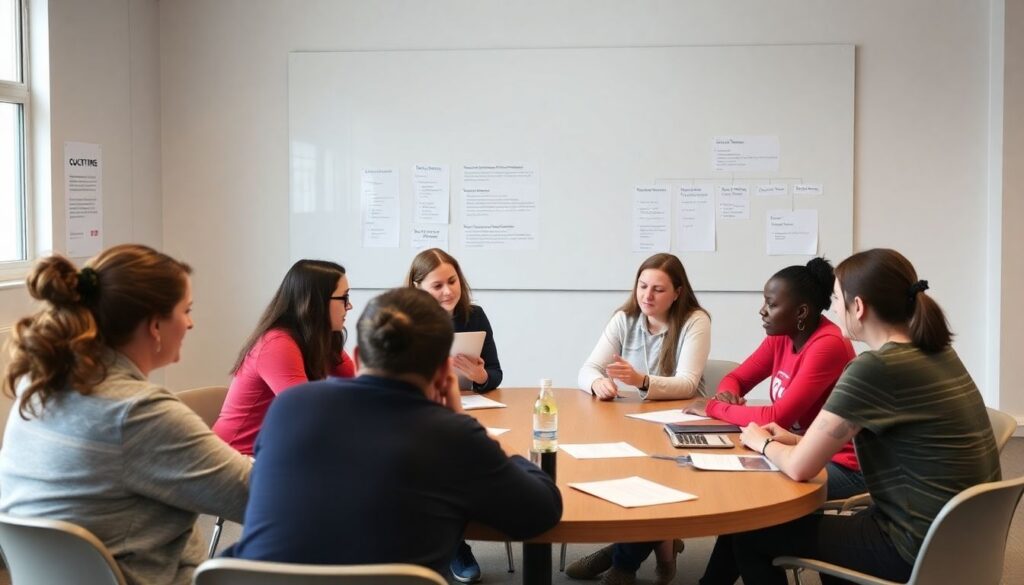
Outcome: a mentorship structure that can be repeated every season, even if staff changes, and can grow from one team to a full club. Target audience: coordinators, heads of methodology and experienced mentors in women’s football programmes. Keep documentation simple so volunteers and part-time staff can apply it.
Start small: pilot your mentorship plan with one age group or squad for a full season. Document key elements: meeting frequency, goals format, simple evaluation forms, and communication guidelines. At season’s end, collect feedback from players and mentors, then adjust before expanding to other teams.
As you scale, consider alternative formats that fit different budgets, contexts and time constraints. Combine internal mentoring with external support, such as structured mentoría en fútbol femenino cursos online or guest sessions from certified mentors who completed a cómo ser mentora en fútbol femenino certificación. Clarify roles so external experts complement, not replace, daily mentors.
Alternative models for mentorship in women’s football
- Peer-to-peer circles: small groups of players guided by a simple template, useful when staff time is limited but you want regular reflection and support.
- Central mentor pool: a few experienced mentors support several teams, ideal for clubs with many squads but limited specialised staff.
- Hybrid online-offline model: in-person 1:1s plus periodic online workshops or modules (e.g., mentoría en fútbol femenino cursos online) to standardise core knowledge.
- Coach-focused track: instead of mentoring players directly, invest in staff development through a master en dirección técnica y liderazgo en fútbol femenino so every coach becomes a more capable mentor.
Diagnostic checklist: program sustainability and growth
- Are core processes (goal setting, 1:1 frequency, evaluation) written and shared with staff?
- Can the program continue if one key person leaves the club?
- Is there at least one training session per year for mentors on women-specific topics?
- Do players understand what mentorship is and how to ask for help?
- Is there a simple way to collect feedback and adjust the program each season?
Practical Questions on Implementing a Mentorship Plan
How often should mentors meet individually with players?
For intermediate and older players, aim for one structured 1:1 every 4-6 weeks, plus short informal check-ins. Increase frequency during transitions such as injuries, club changes or exams. Quality and consistency matter more than long, sporadic conversations.
What profile should a mentor in women’s football have?
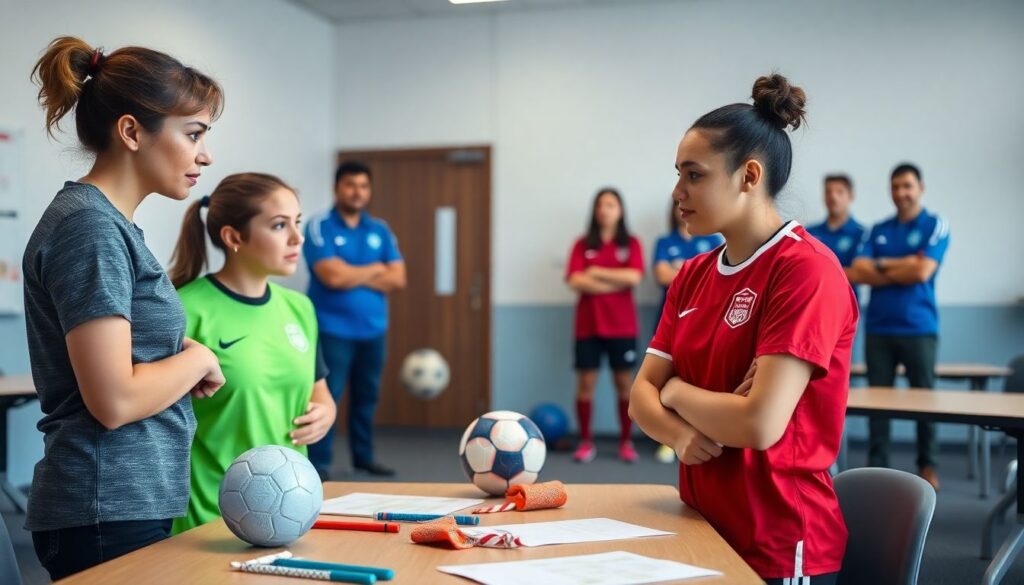
A good mentor understands women’s football context, listens well, respects boundaries and collaborates with the coaching staff. Formal training helps, for example a cómo ser mentora en fútbol femenino certificación or modules within programas de formación para entrenadoras de fútbol femenino. Lived experience in the game is valuable but not mandatory.
How can small clubs start mentoring without big budgets?
Begin with a basic structure: assign each player a staff mentor, schedule periodic 1:1s and use simple written goals. Add low-cost learning, such as selected mentoría en fútbol femenino cursos online. Invite volunteer role models from the local community instead of paying external speakers.
How do I handle topics that are too complex or personal?
Clarify from the start that you are a mentor, not a therapist or doctor. Listen, validate and then gently signpost to professionals (psychologists, doctors, legal advisors) when issues go beyond your competence. Keep confidentiality, except where safety or legal obligations require escalation.
Is it worth investing in my own education as a mentor or coach?
Yes. Courses such as a master en dirección técnica y liderazgo en fútbol femenino or specialised certifications deepen your tactical, physical and leadership skills. Evaluate options carefully, comparing content to your role and checking how they complement existing federation licences and club structures.
How can I justify the cost of an external specialist coach?
When considering a coach deportivo especializado en fútbol femenino precios should be weighed against concrete goals: injury reduction, performance gains, staff development. Pilot a short collaboration with clear metrics and feedback, then decide whether to extend based on impact and financial reality.
What if players show low interest in mentoring activities?
Start with their needs: ask what they want help with and adapt the format. Keep sessions short, practical and linked to visible performance or life benefits. Involve senior players as co-creators so the program feels owned by the group, not imposed from above.