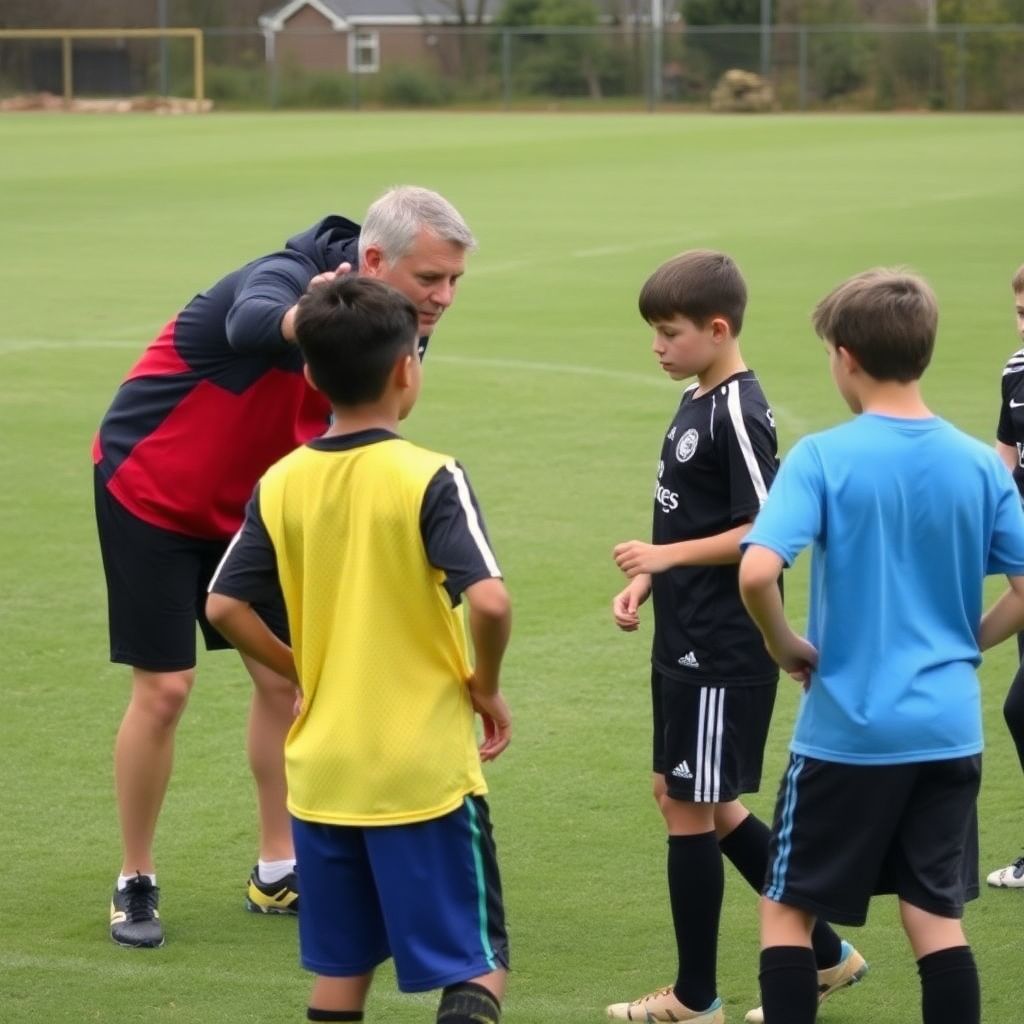
The most common tactical errors in grassroots football are poor positioning, slow or wrong decisions under pressure, isolated technical actions, weak on‑field communication and chaotic transitions. Correcting them from mentoring means using clear observation cues, simple constraints‑based drills, age‑adapted feedback, and progressive, measurable goals for each player and line of the team.
Core tactical faults to target in grassroots teams
- Repeated positioning gaps between lines or between full‑back and centre‑back that rivals exploit easily.
- Players freezing, rushing or always choosing the same option when pressed or time‑limited.
- Good technique in isolation that disappears when adding opponents, space and time constraints.
- Silence, mixed messages or constant shouting that confuses roles and pressing cues.
- Losing the ball and not reacting together, leaving counters or second balls unprotected.
- Mentoring focused only on matches, without video, reflection, or clear micro‑goals per position.
Recognition and diagnosis of positioning errors
This approach suits coaches of U10-U19 grassroots teams who already know basic principles (width, depth, support) and want to systematise their formación en táctica para entrenadores de fútbol base. It is not ideal if you cannot ensure safe, calm sessions, or if players still lack basic motor skills and ball control.
Checklist: observable signs of positioning problems
- Full‑backs too high or too narrow, leaving 1v1 or 1v0 situations behind them.
- Midfielders all on the same vertical line, no staggering between lines.
- Wingers hiding behind defenders instead of on the defender’s blind side.
- Striker dropping into midfield and nobody occupying depth behind the defence.
- Huge distances between defence and attack when you lose the ball.
Likely root causes in grassroots environments
- Players understand positions as fixed spots, not as reference zones.
- Too much focus on the ball; players do not scan space before receiving.
- Systems copied from professional teams without adapting to players’ level.
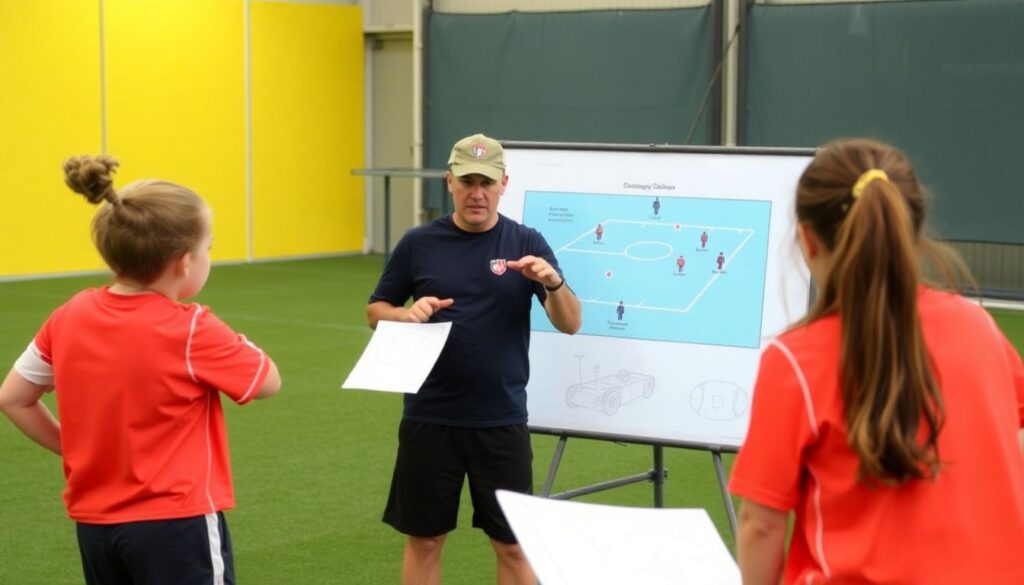
- Little use of video, drawings, or guided questions in mentoring sessions.
Corrective mentoring drills and constraints
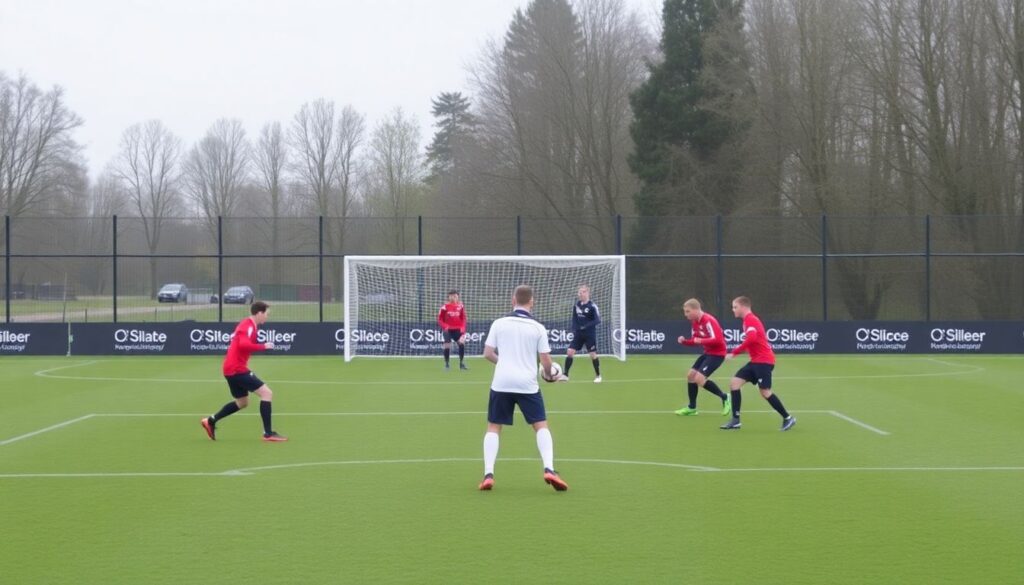
- Line compactness 5v3 – In a half‑pitch channel, three defenders vs five attackers try to prevent central passes.
- Constraint: defenders must stay within a set maximum distance between each other.
- Mentor focus: body orientation, distance to nearest teammate, and adjusting line height based on ball position.
- Age adaptation: U10-U12 make the area smaller and attackers have limited touches; U15+ add neutral players.
- Positional rondos with «home zone» – Each player has a small «home» rectangle linked to their role (full‑back corridor, half‑space, etc.).
- Constraint: players must start in or return to their home zone after each action.
- Mentor focus: recognising when to leave the zone and how to balance risk and cover.
- Freeze‑frame video mentoring – Use match clips or simple drawings if video is not available.
- Mentor action: stop at key moments, ask players where they would move and why.
- Progression: move from static screenshots to short sequences of 3-5 seconds.
Simple metrics to track positioning progress
- Number of goals or big chances conceded from through balls into gaps between defenders per match.
- Average distance between your defensive and midfield lines at the moment you lose possession.
- Percentage of times wide players receive facing forward rather than with back to the line.
Fixing decision-making under pressure
To mentor better decisions under pressure, you do not need complex technology. You need a clear practice plan, some basic tools, and consistent observation routines that any coach can apply safely in grassroots football.
Minimal tools and setup for effective decision mentoring
- Flat cones to create variable spaces and «pressure zones».
- Coloured bibs for roles (support, depth, switch) and to create overloads safely.
- Whistle or clear verbal cues to start/stop short, intense game phases.
- Simple camera or smartphone if available, to record 3-5 key situations per session.
- Notebook or digital notes for each player’s recurring patterns.
Diagnostic tests for decision-making
- 1v1 + passing option – Player receives under light pressure with a support player available.
- Sign: always dribbles or always passes back, regardless of space ahead.
- Root cause: decision based on habit, not on visual information.
- 3v2 counterattack – Three attackers vs two defenders, with a time limit to finish.
- Sign: finishing too early from poor angles or over‑passing until they lose the ball.
- Root cause: lack of simple rules for «who runs where» and «when to fix the defender».
Corrective drills to shape faster, safer decisions
- Colour‑call rondos – While playing, mentor calls a colour; only that colour can receive forward.
- Goal: force scanning before receiving.
- Metric: count how many times players scan (head turn) before the ball arrives.
- Clock‑limited finishing – Small‑sided games where the team must shoot within a short, safe time window after recovery.
- Goal: promote quick, realistic decisions in counters.
- Metric: ratio of shots taken in the allowed time that are on target.
Correcting technical execution within tactical contexts
Before applying the step‑by‑step process below, set up a safe, age‑appropriate environment. Use mentoring tools rather than over‑coaching, so players learn to link technique with game situations, not with isolated drills.
Preparation checklist before the technical-tactical session
- Define one priority per line (e.g., first touch to play forward for midfielders).
- Choose simple game‑like drills with opposition and clear direction to goal.
- Mark safe limits to avoid collisions and manage intensity by age group.
- Prepare 2-3 key questions you will repeat during the whole session.
- Decide one measurable indicator (e.g., successful first touches facing forward).
- Link each technique to a concrete game situation – Do not coach «passing» in general. Choose a scenario like «breaking a line pass from centre‑back to midfielder».
- Explain when and why it matters (e.g., to escape high pressing).
- Keep the explanation under one minute; then show it at walking speed.
- Start with opposed but controlled drills – Use small rondos or 3v1/4v2 setups in a safe space.
- Focus on first touch, body orientation, and angle of support.
- For U10-U12, reduce pressure and give more time; for U15+, compress space.
- Add tactical constraints instead of more instructions – Change rules, not speeches.
- Examples: goal counts double after a one‑touch pass; you can only score after switching play.
- This forces technical adaptation in realistic conditions.
- Use guided questions to self‑correct execution – After each short series, ask players:
- «Where should your first touch go here?»
- «Which foot helps you play faster in this direction?»
- Let them answer, then demonstrate if needed.
- Progress to small‑sided games with the same focus – Play 4v4/5v5 on reduced pitches.
- Keep the same technical focus (e.g., first touch, oriented control, pass after scanning).
- Reward decisions that apply the technique under pressure, not only in easy moments.
- Finish with individual mentoring reflections – Spend a few minutes with each line (defence, midfield, attack).
- Ask what they improved, what still feels difficult, and set a micro‑goal for next session.
- Record one clear phrase per player in your notebook.
Progress markers for technical execution in context
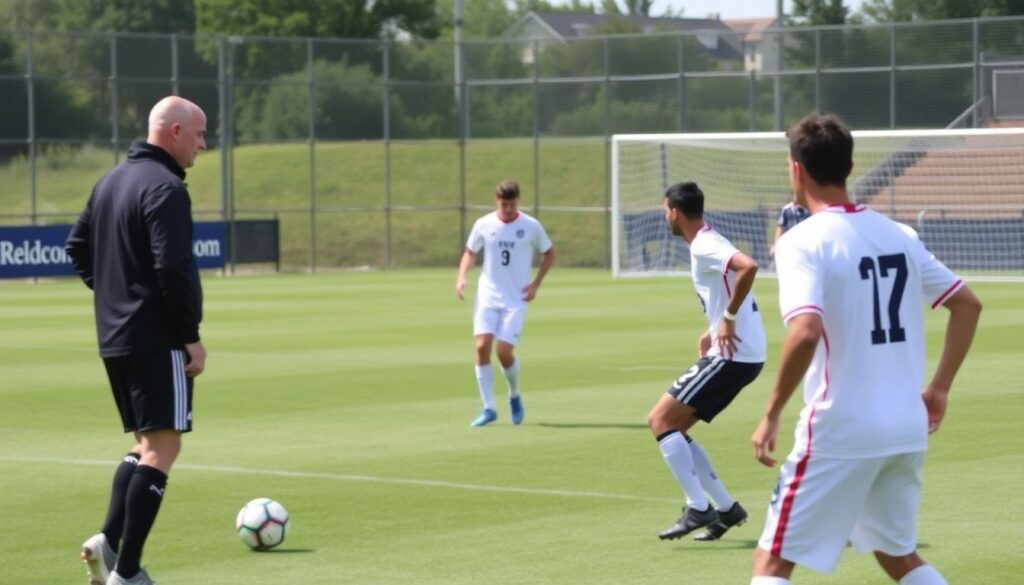
- Increase in successful first touches that face the pitch instead of the sideline.
- Reduction in unforced errors when opponent pressure is moderate.
- More passes that break lines in small‑sided games without increasing risky turnovers.
Improving on-field communication and role clarity
Use this checklist after several weeks of mentoring to verify whether communication and role understanding are actually improving in your grassroots team.
- Players use short, consistent words for pressing («go», «hold», «jockey») instead of random shouting.
- Before kick‑off, lines can explain their three main tasks in simple language.
- During build‑up, the ball‑near centre‑back clearly commands («turn», «man on», «back»).
- Goalkeeper regularly directs the defensive line (step, drop, shift) without over‑talking.
- Midfielders point and talk to organise who presses and who covers passing lanes.
- Wingers and full‑backs coordinate overlaps and underlaps verbally before they happen.
- In transitions, at least one player loudly names the phase («press», «drop», «keep») within one second.
- Substitutes can correctly describe their role and main reference spaces before entering.
- Conflicts about positions or responsibilities decrease as the season advances.
Addressing transition-phase mistakes with practical drills
Transitions (loss and gain of possession) are where many grassroots games are decided. The errors below appear frequently and can be corrected with simple, safe drills and clear mentoring cues.
- Ball‑watching after losing possession – Players stop moving and stare at the ball, leaving runners unmarked.
- Drill: «3 seconds press» rule in small‑sided games; all nearby players must react instantly.
- Metric: number of times the first defender pressures the ball within three steps.
- Over‑committing to the press – Everyone sprints to the ball, leaving switches and diagonal passes open.
- Drill: 6v6 game where goals only count after switching play; coach rewards balanced pressing lines.
- Metric: fewer goals conceded from long diagonals or simple switches.
- Slow reaction after winning the ball – Team takes too many touches and lets the rival recover shape.
- Drill: 4v3 counters starting from mid‑zone; must shoot within a time limit.
- Metric: percentage of counters that end with a shot.
- Midfield line not offering support – After recovery, nearby midfielders hide or move away from the ball.
- Drill: possession games with bonus points if the ball goes through a central «support» player before scoring.
- Metric: number of successful «bounce» passes through midfielders.
- No cover behind the ball when attacking – Both full‑backs and defensive mid go forward at the same time.
- Drill: 7v7 with rule that at least one midfielder and one defender must stay behind the ball.
- Metric: reduction of clear counterattacks conceded after losing possession.
Structuring progressive mentoring plans for tactical growth
Not every grassroots environment can run a full programa de mentoría para entrenadores de categorías inferiores. Below are alternative structures that still support tactical development and safe, consistent mentoring.
- Peer‑mentor circles between coaches – Two or three coaches from the same club or area meet weekly to exchange video clips, session plans and feedback.
- Useful when budgets are low but time for collaboration exists.
- Complement this with a libro tácticas fútbol base y corrección de errores to share a common language.
- Remote guidance through online programs – Enrol in a curso online mentoría deportiva para entrenadores de base that offers video breakdowns, templates and Q&A.
- Best when you have limited local support but good internet access.
- Look for content focused on practical drills, not only theory.
- Formal advanced study for club leaders – One or two technical directors follow a máster en coaching y mentoría para deporte base.
- They later adapt the concepts into simple guidelines and workshops for the rest of the staff.
- This works when a club wants a long‑term, unified tactical mentoring model.
- Player‑led learning groups – Older age categories (U16-U19) analyse short clips together with the mentor.
- They identify tactical errors and propose solutions, guided by the coach.
- Ideal when players are mature and motivated to take responsibility for their learning.
Concise answers to recurring mentoring challenges
How many tactical themes should I mentor at once in grassroots teams?
Focus on one main tactical theme per mesocycle and one sub‑theme per session. Overloading young players with multiple complex ideas reduces retention and application under pressure.
Is it better to correct tactical errors during or after the game?
Use very short, calm cues during the game and deeper mentoring after. In‑game, correct only safety issues and major positioning problems; use video or drawings later to analyse patterns.
How can I involve parents in tactical mentoring without confusion?
Share simple principles and vocabulary (e.g., width, depth, pressing) in a short meeting. Ask parents to support effort and behaviour, not to give tactical instructions from the touchline.
What if players resist changing their usual positions?
Explain the tactical reason, show examples from higher‑level football, and test the new role in training games first. Use small, time‑limited experiments rather than permanent changes from day one.
How often should I use video analysis in grassroots categories?
Even occasional use is valuable. One short video review every few weeks, focused on a single theme like transitions or pressing triggers, is enough to improve awareness without overwhelming players.
Can I run effective mentoring without any formal coaching licence?
Yes, if you respect safety rules, keep learning, and work within your club’s regulations. Use quality books, online courses, and experienced mentors to guide you, and always adapt ideas to your team’s age and level.
How do I know if my mentoring is working beyond match results?
Track specific indicators such as distances between lines, number of counters conceded, or frequency of successful build‑ups. Compare these over weeks to see real tactical progress regardless of final scores.