
A full-season plan links match calendar, performance goals and safe workload progressions into one clear structure. You define objectives, build macro-meso-micro cycles, schedule training and recovery, then monitor with simple metrics. Use tools and expert advice when needed to keep players healthy while maximising performance at key competitions.
Essential outcomes for a full-season plan
- Translate competitive calendar into clear performance and availability targets for each phase.
- Use structured periodization so load increases are gradual and reversible when risk appears.
- Integrate recovery, medical and travel constraints into weekly and daily design.
- Apply practical metrics and herramientas de análisis de rendimiento para planificación de temporada.
- Decide in advance how to react to injuries, overload or underperformance.
- Document lessons learned to improve planificación de temporada deportiva para equipos profesionales next year.
Defining performance objectives and competitive priorities
This guide suits coaches and performance staff working with intermediate to advanced athletes or teams who already complete several structured training sessions per week and compete regularly across a full season. It is especially useful for planificación de temporada deportiva para equipos profesionales or semi-professional squads.
Avoid implementing a full, aggressive periodization model when:
- Athletes are beginners or returning from long injury and basic technical work is the priority.
- You have no access to medical or physiotherapy support for managing injuries and overload.
- Competition calendar is highly unstable and changes week to week with little notice.
- You cannot monitor even simple data such as attendance, minutes played, RPE (effort rating) or wellness.
Clarify competitive priorities
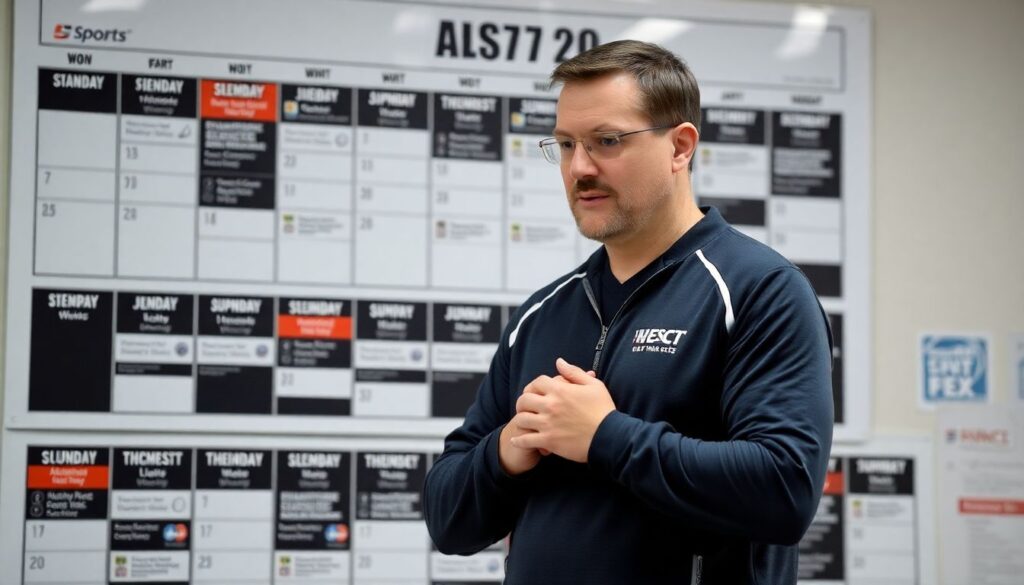
- List all official competitions, cups and friendlies, including travel and exam periods for younger athletes.
- Mark the main peak(s) where performance matters most (playoffs, key derbies, national championships).
- Classify each phase as development, consolidation, competition or transition.
Set outcome and process objectives
- Outcome examples: league position, qualification, specific medal, number of wins vs main rivals.
- Process examples: weekly high-intensity running minutes per player, strength milestones, tactical complexity level.
- Health objectives: maximum acceptable soft-tissue injury rate, maximum back-to-back high-load days.
Designing periodization: macro, meso and micro cycles
To design safe and effective macro, meso and micro cycles you need some minimal tools and structures; they do not have to be expensive or complicated, but they must be used consistently.
Core tools and access requirements
- Season calendar: competition dates, travel, holidays, potential congested weeks.
- Simple workload tracking: at least RPE x duration, session content, minutes played in matches.
- Player database: age, position, injury history, training restrictions.
- Medical and recovery access: physio or doctor, massage, basic recovery equipment (ice, compression, foam rollers).
- At least basic software para planificar carga de trabajo y rendimiento deportivo (spreadsheet, or specialised app) to visualise load per week and phase.
Suggested tools and services
- GPS or indoor tracking for running loads and accelerations when budget allows.
- Wellness questionnaires and jump tests as herramientas de análisis de rendimiento para planificación de temporada.
- A servicio de asesoría en planificación de temporada para entrenadores for complex calendars or after a season with many injuries.
- A structured curso online sobre planificación de temporada deportiva y control de cargas for coaches who want to deepen knowledge.
One-page phase checklist table
Use this table as a one-page overview when starting your plan. Each row is a phase; columns summarise goals, typical weekly load and what you will monitor.
| Phase | Main goals | Typical weekly load focus | Key monitoring items |
|---|---|---|---|
| Pre-season | Build base fitness, install game model, screen injuries | Gradually rising total volume, controlled high-intensity blocks, progressive strength | RPE-load trend, wellness, screening results, soft-tissue complaints |
| Early season | Stabilise match performance, confirm starting roles | Stable volume, moderate high-intensity, maintain strength | Minutes played, match load vs training load, recovery quality |
| Mid-season | Maintain fitness, avoid overload during congested periods | Variable volume based on fixtures, strategic deload weeks | Injury list, fatigue markers, perceived soreness, performance indicators |
| End-season / Playoffs | Peak performance, maximise freshness | Lower volume, maintained intensity, extra recovery | Sharpness tests, wellness, psychological readiness |
| Off-season | Recover, correct deficits, maintain minimal fitness | Low-organised load, individual programmes | Body composition, adherence to plans, injury rehab progress |
Allocating training load and embedding recovery protocols
Before you start allocating weekly and daily load, complete this short safety-oriented preparation checklist.
- Confirm each athlete has medical clearance for planned training intensity.
- Identify high-risk players (previous injuries, age, high minutes) and mark them clearly in your planning tool.
- Choose one primary and one backup method to measure internal load (for example, RPE and heart rate).
- Define who can stop or modify a session when excessive fatigue, pain or heat stress appears.
- Share clear communication rules with players about reporting pain and wellness issues early.
Step-by-step load allocation
- Map macrocycle phases – Divide the season into clear phases: pre-season, early season, mid-season, end-season, off-season.
- Assign approximate start and end dates to each phase.
- Decide the main training emphasis (fitness, tactics, freshness) in each phase.
- Build mesocycles with clear themes – Inside each phase, group 3-6 weeks into mesocycles.
- Give each mesocycle a theme such as aerobic development, high-intensity tolerance, or tactical cohesion.
- Plan one lighter week per mesocycle to reduce accumulated fatigue.
- Design microcycles around match schedule – For each week, start from match day(s) and work backwards.
- Use one main high-intensity day and one strength-emphasis day when fixture density is normal.
- Avoid placing maximal load within 48 hours before competition when possible.
- Apply safe weekly load progressions – Increase total weekly load progressively.
- For healthy squads, avoid sudden large jumps in total work; if you must increase load quickly, monitor players more closely.
- Use your software para planificar carga de trabajo y rendimiento deportivo to visualise load spikes.
- Integrate individualisation and positional demands – Adjust group plan for positions and player profiles.
- Add high-speed work for positions that sprint more; add extra strength for players requiring physical duels.
- Reduce load for players returning from injury or with heavy match minutes.
- Embed daily recovery routines – Plan recovery like any other session.
- After high-intensity or match days, include cooldown, mobility and hydration protocols.
- Add sleep hygiene education and basic stress-management for players with heavy life or work loads.
- Schedule enhanced recovery blocks – Use dedicated days or half-days when risk is higher.
- Before and after long trips, schedule lighter sessions and extra soft-tissue treatment.
- During congested fixture weeks, choose either performance maintenance or extra freshness; avoid chasing both fully.
- Coordinate with medical and technical staff – Align coaching ideas with medical safety.
- Hold a short weekly meeting to review injuries, high-risk players and planned loads.
- Allow medical staff to veto or modify sessions when health risk is unacceptable.
Sample season timelines: team vs individual athlete
These examples show how you can adapt the same logic to different contexts.
- Professional team (10-month season)
- Pre-season: 6 weeks, strong fitness focus, two deload weeks.
- Early season: 8-10 weeks, stabilise load and consolidate tactics.
- Mid-season: 16-20 weeks, maintain fitness with targeted deloads, manage congested periods.
- End-season/playoffs: 4-6 weeks, reduce volume and focus on intensity and freshness.
- Individual athlete (8-month competitive period)
- General preparation: 8-10 weeks, build base, correct weaknesses.
- Specific preparation: 6-8 weeks, shift to sport-specific intensity.
- Competition block: 12-16 weeks, short tapers around key events.
- Transition: 3-4 weeks, active rest and reflection.
Quick readiness checklist per phase
- Pre-season readiness: medical screening done, base tests completed, load progressions defined.
- Early season readiness: starting roles clear, weekly microcycle template agreed by staff.
- Mid-season readiness: congested weeks identified, deload and rotation rules defined.
- End-season readiness: taper model agreed, recovery resources secured, travel confirmed.
- Off-season readiness: individual plans created, communication channels open, return dates fixed.
Setting monitoring systems: metrics, tools and frequency
Use this checklist to confirm that your monitoring system is practical and safe to implement.
- You have selected a small set of key metrics (for example, RPE-load, wellness score, minutes played, simple performance tests).
- Each metric has a defined collection frequency (daily, weekly, per match) and a responsible person.
- Data collection tools are realistic: paper sheets, spreadsheets or dedicated software, but all staff know how to use them.
- You can produce a weekly visual summary of load and wellness for staff meetings in less than 15 minutes.
- There is a clear process to flag risk: for example, sudden load increase combined with poor wellness triggers a discussion.
- Players have been educated on why monitoring matters and how their honesty improves injury prevention.
- Medical staff can access relevant data before decisions about return to play or modified sessions.
- You periodically review whether tools and metrics still help decisions; if they do not, you simplify.
- Your monitoring approach respects privacy laws and only collects information essential for performance and safety.
Decision rules for mid-season adjustments and tapering
Common mistakes during mid-season management and tapering often reduce performance or increase risk. Use this list to avoid them.
- Changing training load reactively every week without referring to your original mesocycle plan.
- Ignoring congestion: adding hard training on weeks with multiple matches because results were poor.
- Removing too much intensity during tapering, which leads to athletes feeling flat and slow.
- Failing to reduce non-essential work (video length, unnecessary travel) when players show clear fatigue.
- Applying the same taper to all athletes regardless of age, role or minutes played.
- Not coordinating tactical, physical and medical staff so messages about priorities become contradictory.
- Using new exercises or equipment during the final weeks, increasing soreness or technical confusion.
- Skipping wellness and load monitoring when pressure rises, exactly when information would help most.
- Rushing injured players back during playoffs without progressive reintegration and clear objective tests.
- Confusing emotional confidence with physical readiness, and ignoring signs of chronic fatigue or pain.
Conducting end-of-season review and planning next cycle
There are several valid ways to review the season and prepare the next cycle; choose the one that fits your context and resources.
- Data-led review – Focus on quantitative indicators (injuries, load trends, match performance).
- Best when you have reliable data and stable staff across seasons.
- Helps refine thresholds and test whether your load model supported results.
- Staff workshop review – Use structured meetings with coaches, medical and physical staff.
- Best when data is limited but staff experience is strong.
- Encourage each area to present what worked, what failed and specific changes for next year.
- Player feedback review – Gather anonymous feedback from athletes about training, communication and recovery.
- Best when you need to rebuild trust or adapt to new generations of players.
- Focus on patterns, not isolated complaints.
- External expert audit – Invite a neutral specialist or servicio de asesoría en planificación de temporada para entrenadores.
- Best after seasons with many injuries or underperformance where internal views are emotional.
- Use the audit to validate your long-term plan, tools and decision rules.
Practical clarifications for implementing the plan
How far in advance should I start full-season planning?
Begin outlining your macrocycle as soon as a provisional competition calendar is available, ideally several weeks before pre-season. Finalise mesocycles and the first microcycles one to two weeks before training starts, and keep later blocks flexible.
Can I apply this structure to youth or amateur teams?
Yes, but reduce complexity and prioritise fun, learning and health. Use fewer metrics, shorter meetings and simpler tools, and adapt load rules to school and family constraints. Safety and enjoyment are more important than performance peaks.
What if I have no specialised monitoring technology?
You can still build an effective plan using simple tools such as RPE, attendance, minutes played and basic wellness questions. A spreadsheet can replace advanced software as long as you update it consistently and review it weekly.
How often should I change the plan during the season?
Review the plan every week and every mesocycle, but only make structured changes when data and observation show clear trends. Avoid large, sudden changes based on a single bad result or one emotional training session.
How can I keep players engaged with monitoring and recovery?
Explain clearly how planning and monitoring protect careers and improve performance. Share simple examples where early reporting of fatigue prevented injury, keep questionnaires short, and respect players’ time and privacy to build trust.
Is an online course necessary to use these methods?
An online curso online sobre planificación de temporada deportiva y control de cargas is not mandatory, but it can accelerate learning and help you avoid common mistakes. Combine any course with practical experimentation and discussion inside your own staff.
When should I seek external expert help?
Look for professional advice when injury rates remain high despite your efforts, when results and physical data do not match expectations, or when you move into a significantly more competitive league or professional context.
Комментарии