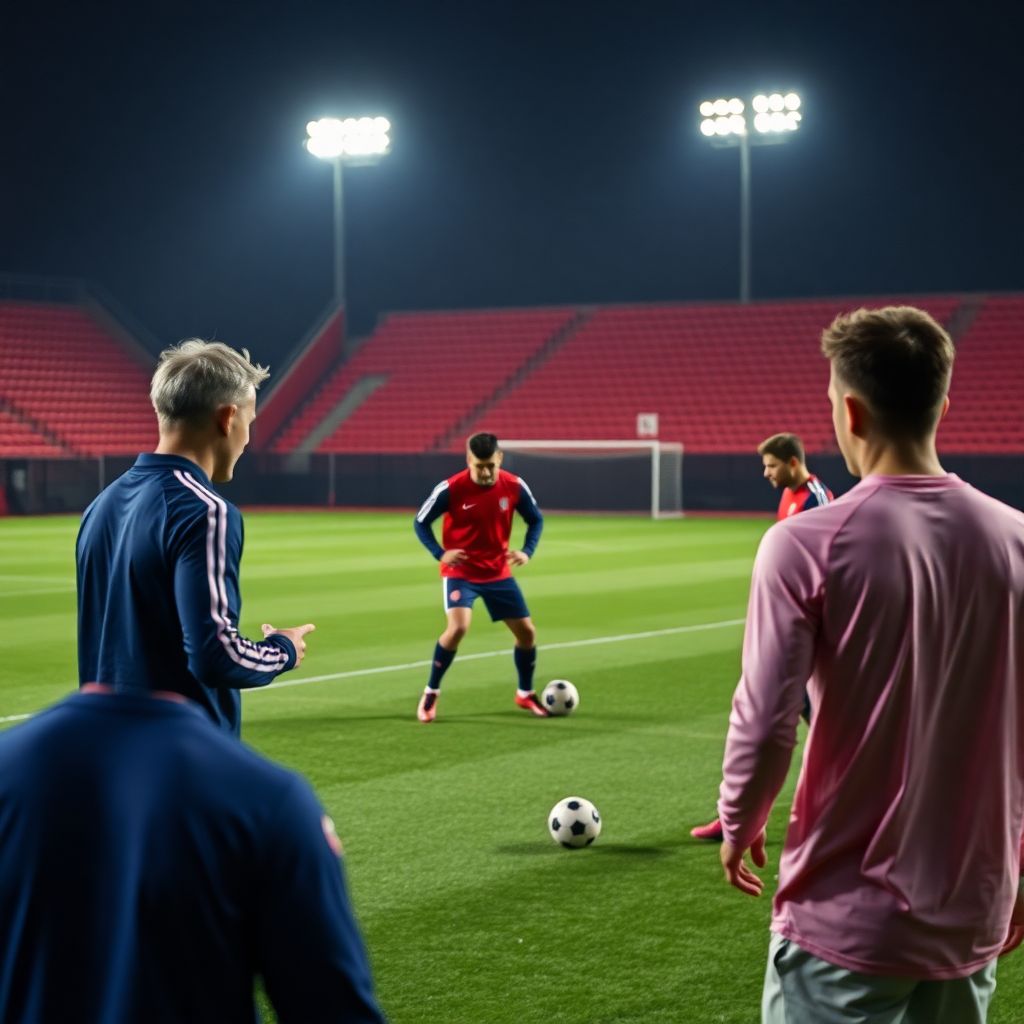
Use World Cup tactical lessons to design short, focused sessions built around high pressing, compactness, fast transitions, innovative set pieces, and smart rotation. Each drill should have a clear objective, simple equipment, measurable success marker, and safe progressions from basic to match intensity, fitting into your existing weekly microcycle.
Immediate Tactical Imperatives from the Tournament
- Anchor your treinamento de futebol baseado na Copa do Mundo on high-intensity pressing, compact blocks, and rapid transition behaviours.
- Turn game insights into repeatable 10-20 minute drills with clear tactical cues and player load limits.
- Use small-sided games to rehearse compactness and line shifting, not just fitness.
- Schedule weekly set-piece blocks to copy the variety and deception seen in the World Cup.
- Integrate positional rotations gradually so players understand roles, not just run more.
- Track simple metrics (recoveries, entries, runs) to adjust intensity instead of guessing.
High-Press Patterns and Daily Drills
This block suits intermediate and advanced youth or senior teams that already have basic physical conditioning and positional understanding. Do not overload very young players, or squads returning from injury periods; also avoid high-press days right after intense matches, or with limited squad depth.
Objectives for the pressing block
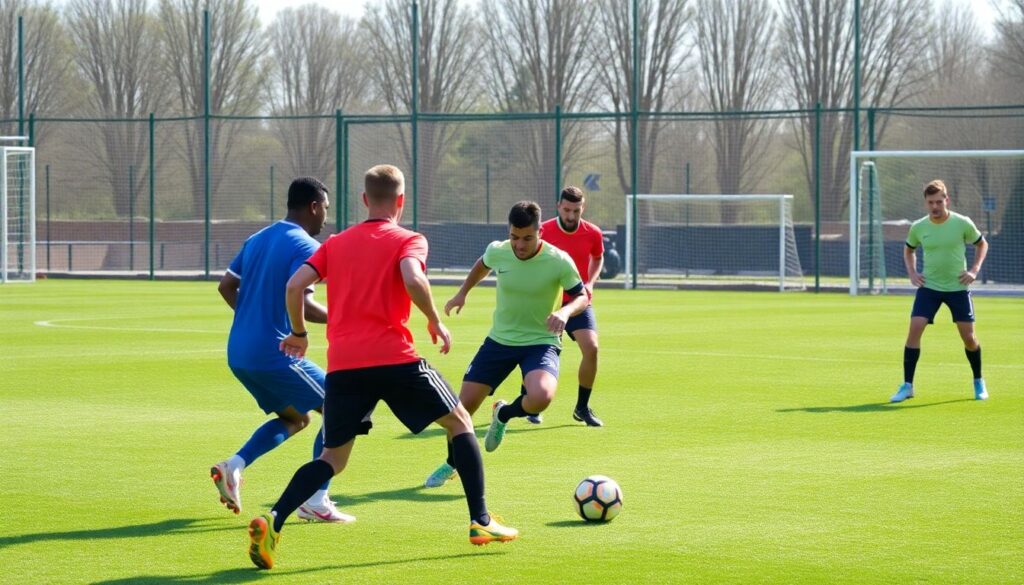
- Create clear triggers for the first press line (back-pass, bad touch, closed body shape).
- Train coordinated movement of first and second lines (9-10-8/6) in 3-6 second bursts.
- Improve ball recovery speed in the final third and immediate finishing decisions.
- Protect players with strict work:rest ratios and total sprint limits per session.
Drill 1: 3v3+3 High-Press Channel (12-15 minutes)
- Equipment: Half pitch width, 3 lanes marked by cones, 2 mini-goals, 1 ball supply.
- Organisation: 3 attackers build from one end, 3 pressers try to recover in the first two lanes; 3 neutrals support possession team.
- Reps & load: 6-8 rounds of 45 seconds, 75-90 seconds rest; rotate roles every round.
- Coaching cues: Angle the run to curve pressing, body shape side-on, nearest player goes, others cover passing lanes, communicate who jumps.
- Measurable metric: Count successful recoveries in pressing zone per round; aim for progressive increase over weeks.
Variations by level
- Beginner: Reduce area size and allow an extra neutral for the team under pressure; lower intensity, focus on shape.
- Intermediate: Standard rules, touches limited to 2-3 for possession team to create pressing triggers.
- Match intensity: On recovery, immediate 5-second window to score; if fail, automatic restart for opponents to mimic counter-press risk.
Drill 2: 7v7 High-Press into Goal (18-20 minutes)
- Equipment: 60x40m zone, full-size goals, bibs, supply of balls, GK if possible.
- Organisation: One team builds from GK, the other sets high block just outside box; play always restarts from GK.
- Reps & load: 4 blocks of 3 minutes, 2-3 minutes rest; swap pressing/building roles after each block.
- Coaching cues: Line of confrontation fixed, 9 and 10 screen pivots, wingers show outside, back line squeezes after every press.
- Measurable metric: Track how many high recoveries become shots within 8 seconds; compare pressing efficiency between both teams.
Variations by level
- Beginner: Allow pressing team to start from mid-block, making pressing distances shorter.
- Intermediate: Normal setup, emphasise recognition of triggers and synchronised jumps.
- Match intensity: Add scoreboard incentive: double goals after high recovery, to create competitive urgency.
Compactness: Small‑Sided Game Progressions
This section focuses on what you need to reproduce the compact team shapes seen in the latest tournament, using realistic constraints. Align your planos de treino tático para equipes de futebol with pitch markings, timing tools, and basic tracking of distances between lines.
Required equipment and field setup
- Cones to mark horizontal lines (back line, midfield line, forward line) and vertical corridors.
- Bibs in at least three colours to mark lines or roles within the block.
- Stopwatch or session timer app to manage short work:rest intervals (e.g., 3 minutes on, 2 minutes off).
- Measuring tape or existing pitch lines to set maximum vertical distance between lines (e.g., limit back-to-front gap by age category, without quoting exact numbers).
- Mini-goals or full-size goals plus enough balls to ensure quick restarts.
Drill 3: 6v4 Compact Block (12-15 minutes)
- Equipment: 35x25m zone, 2 mini-goals, cones for back line and midfield line.
- Organisation: 6 attackers try to penetrate or score; 4 defenders must stay inside a marked compact block, moving together.
- Coaching cues: Distances between defenders, shifting as a unit, delay and guide rather than dive in, constant communication.
- Measurable metric: Count how many passes the attackers need before entering the block or creating a shot; aim to increase that number.
Drill 4: 8v8 Compactness Game (18-20 minutes)
- Equipment: Half pitch, full-size goals, midfield and "compactness line" marked across.
- Organisation: Both teams must keep all outfield players inside a limited depth when out of possession; referee free-kicks if lines stretch.
- Coaching cues: Back line leads the step up, midfielders lock central zones, wingers tuck in when ball is far.
- Measurable metric: Video or note how often the team breaks its compactness rule per block; aim to reduce violations weekly.
Transition Moments: Reaction and Counter‑Press Routines
Before implementing step-by-step transition drills based on the análise tática Copa do Mundo para treinadores, prepare the environment to prioritise safety, clarity, and controlled intensity.
Pre-session checklist for transition work
- Confirm players are not fatigued from heavy sprint work the previous day.
- Mark clear transition zones with cones so players know where to react.
- Brief players on the rule: immediate 3-5 second reaction after ball loss or gain.
- Set maximum total duration for high-intensity bouts in the session.
- Explain that technique and orientation (head up, scanning) are more important than reckless tackles.
Step-by-step routine: 4v4+4 Transition Box (20-25 minutes)
- Step 1 – Set up the grid. Mark a 30x30m square. Divide players into two teams of 4 plus 4 neutral floaters on the sides. Neutrals always play with the team in possession.
- Step 2 – Define scoring and transition rules. Teams score by completing a set number of passes or splitting the opposition. On loss of possession, the nearest three players must counter-press immediately for a few seconds.
- After the counter-press window, if possession is not recovered, the team drops into a compact shape.
- On regain, the team must play forward within a limited time to simulate fast break.
- Step 3 – Manage work and rest. Run 6-8 rounds of 90 seconds with at least equal rest. Rotate neutrals into team roles each round to balance load and learning.
- Step 4 – Coach specific behaviours. Pause only between rounds to give clear, single-focus cues: body orientation before potential loss, immediate sprint towards ball carrier, and covering passing lanes rather than reckless tackles.
- Step 5 – Track measurable outputs. Use a simple tally: number of possessions where the team recovers the ball inside the counter-press window, and how many of those lead to a shot or deep entry.
- Step 6 – Progress difficulty safely. Over weeks, increase pressure by shrinking the area or reducing neutrals, not by limitless sprints. Stop the drill if players show technical breakdown or excessive collisions.
Progressions by level for the transition box
- Beginner: Increase grid size and allow more neutrals; focus on recognising the "reaction moment" instead of speed.
- Intermediate: Standard rules with fixed reaction time; encourage scanning and pre-orientation before risky passes.
- Match intensity: Add directional goals and scoring only after a regain, to replicate World Cup-style counter-attacks.
Set‑Piece Innovations to Train Weekly
Translate tournament set-piece creativity into safe, repeatable weekly tasks. Use your curso de tática de futebol online notes or any livro de tática de futebol moderna em português for extra ideas, but keep the following checklist to audit your results.
Weekly evaluation checklist for set-piece work
- At least two rehearsed corner routines trained that week (inswing, short, or decoy) appear in the weekend match.
- Players execute their assigned runs and blocks without collisions or dangerous contacts.
- Delivery accuracy improves over weeks (more balls landing in the intended "target zone").
- Timing of screens and near/far post runs becomes more synchronised, with fewer players arriving too early or too late.
- Defensive set-piece organisation is consistent: same markers, zonal zones, and communication words are used under pressure.
- Fewer second-ball chances are conceded after clearing the first delivery.
- Video or simple observation shows players adapting in-game (switching routine when opponents overcommit to one option).
- Workload remains safe: no excessive heading volumes in a single session, especially for younger players.
- Specialists (best server, best screeners, best aerial threats) are clearly identified and regularly used.
Positional Rotation: Role‑Specific Exercise Templates
World Cup teams used intelligent role rotations, not chaos. When applying this to daily training, these common mistakes often undermine the intended tactical benefits.
Typical errors to avoid with positional rotations
- Introducing complex rotations before players understand their base roles and zones.
- Forcing every player to cover every role in the same week, instead of targeted experimentation.
- Triggering rotations too far from the ball, creating confusion rather than superiority.
- Allowing rotations that expose the centre or leave defensive transitions unprotected.
- Ignoring communication: players swap zones silently, so teammates cannot adjust.
- Designing drills where rotation is constant and unrealistic, instead of linked to clear cues.
- Overloading players physically by combining long sprints with frequent position changes in the same exercise.
- Not measuring success (e.g., more line-breaking passes or overloads created) and only judging by "movement" volume.
- Failing to reverse rotations in training to practice "resetting" the structure quickly and safely.
Data‑Driven Session Tweaks and Player Load Checks
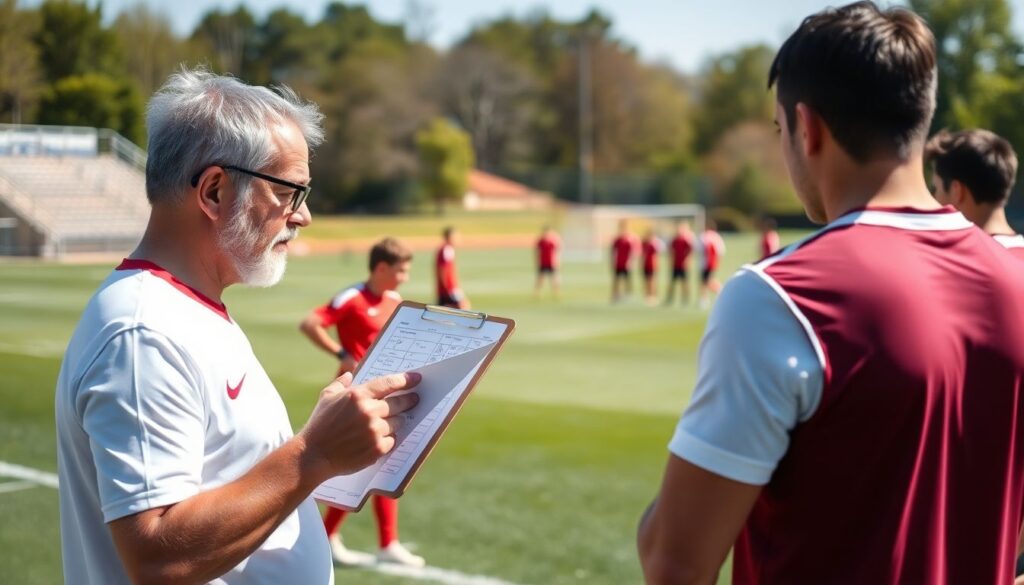
Even without advanced tracking tools, coaches can use simple, data-informed alternatives to refine sessions and protect players.
Alternative approaches and when to use them
- Video sampling instead of GPS: Record short segments of key drills and count sprints, transitions, and pressing actions per player; use when technology is limited but you still want objective feedback.
- Session RPE (perceived exertion) logs: After training, ask players to rate intensity on a standard scale and track it over the week; ideal when you need to balance load across congested fixtures.
- Ball-in-play timing: Time how long the ball is active in each drill; use this to adjust duration or player numbers for safer workloads.
- Action-based targets: Set clear caps (e.g., maximum number of high-intensity pressing actions per player per session) and stop a drill once thresholds are reached, especially late in the week.
Implementation Questions Coaches Face
How many transition-focused sessions should I run per week?
One or two focused transition sessions are usually enough, depending on match congestion. Keep them short and intense, and avoid placing both on consecutive days to reduce fatigue and injury risk.
Can I apply World Cup-style high pressing with youth teams?
Yes, but scale distances, work times, and contact rules to the age group. Emphasise shape, angles, and decision-making over repeated maximal sprints or aggressive duels.
How do I fit set-piece work into an already busy microcycle?
Use 10-15 minute blocks at the end of tactical sessions, with lower physical load. Alternate attacking and defensive focus across the week to avoid mental overload.
What if my squad has mixed tactical levels?
Design the same drill with role-based constraints: more experienced players take complex tasks, others have simpler, more fixed roles. Rotate responsibilities gradually as understanding improves.
How do I know if our compactness drills are working?
Track how often opponents play through the centre or in behind during matches. If those events decrease while your team still presses, your compactness work is paying off.
Is data tracking necessary to adjust training load safely?
Advanced data helps, but is not essential. Simple counts of sprints, subjective intensity ratings, and careful observation of technique breakdown already give strong safety signals.
How quickly can I introduce positional rotations after teaching a new system?
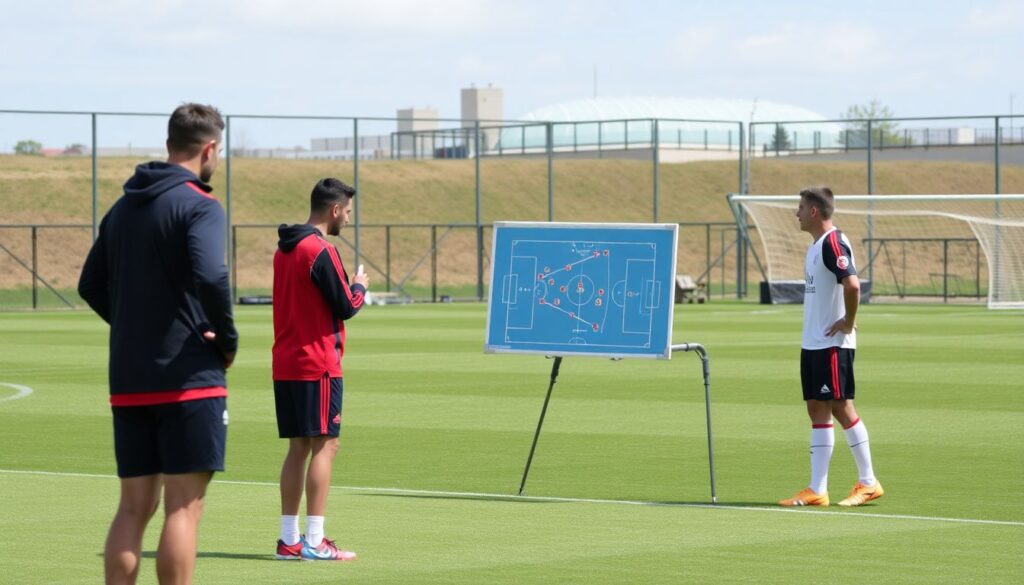
Wait until players show consistent spacing and basic role understanding in matches. Start with one or two clear rotation patterns per line and review them on video or board after sessions.