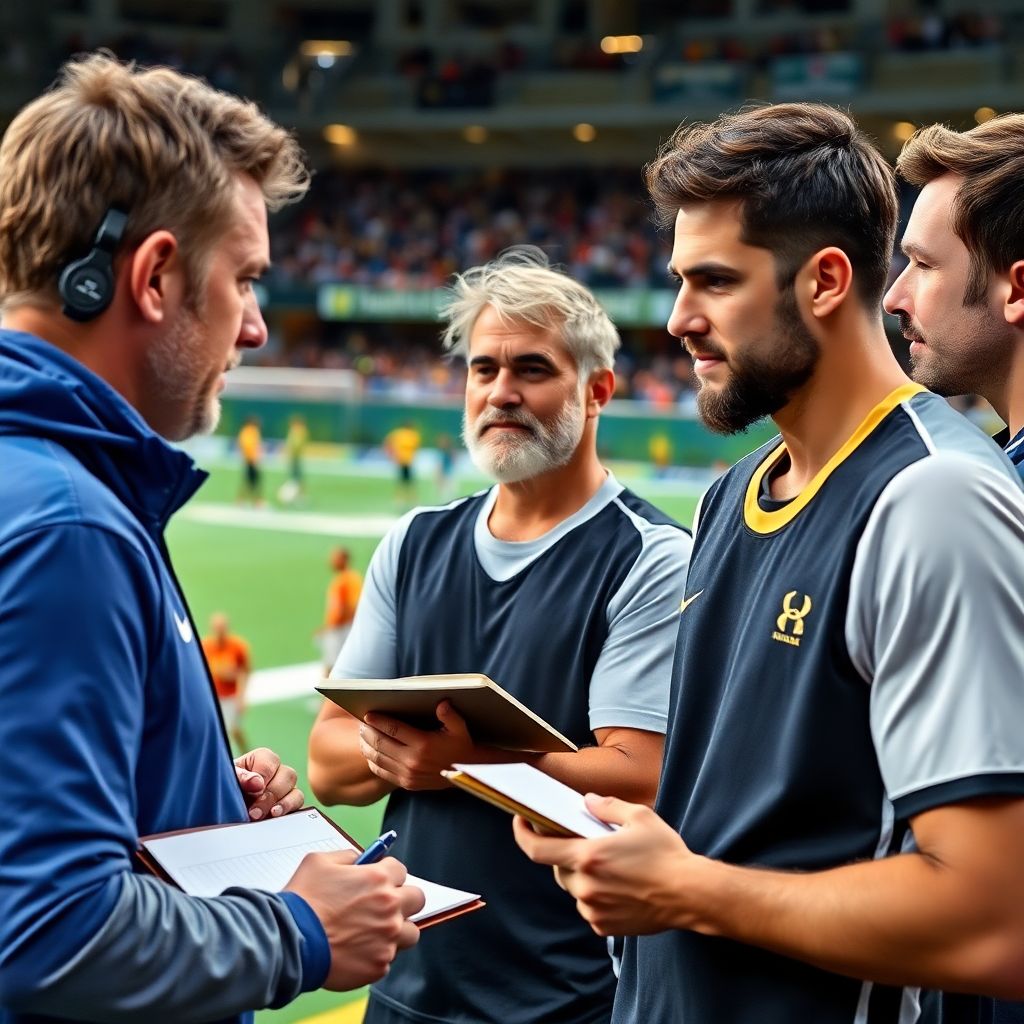
To analyse a match as a sports mentor, define one learning objective, watch with that focus, and combine simple quantitative data (events, timings) with qualitative notes (decisions, communication, emotions). Use safe, non-invasive observation, avoid live coaching overload, and close with a short, concrete action plan for the next training.
Core Assessment Checklist for Mentors
- Clarify one main objective for the match (team or individual) before kick-off.
- Agree with the coach what belongs to coaching and what belongs to mentoring.
- Prepare simple note templates and time markers you can use under pressure.
- Use both numbers (counts, minutes) and short phrases to capture context.
- Observe body language, communication and emotional responses, not only tactics.
- Translate all observations into 2-3 specific, realistic actions for the player.
Pre-match Preparation: Objectives and Context
Analysing a match from a mentor perspective suits coaches, staff or external mentors who support player development beyond the scoreboard. It is ideal in academies, semi‑professional teams or when players are enrolled in a curso análisis táctico de partidos de fútbol or similar education.
Avoid doing a full mentor analysis when:
- You are the main coach and overloaded with in-game decisions; you will not observe calmly.
- The match is extremely high-stakes and emotions block objective observation.
- The player is in a fragile psychological state and detailed critique could harm confidence.
- There is no agreed goal with the player; analysis will feel random or unfair.
Before the game, run this short pre-match protocol:
- Confirm role and boundaries – Decide whether you are silent observer, assistant or active coach. Align with head coach in advance.
- Set one primary focus – Example: defensive positioning, pressing triggers, transition reactions, leadership behaviours.
- Define 1-2 metrics and 1-2 behaviours – For instance: number of progressive passes attempted + body language after mistakes.
- Brief the player – In 1-2 minutes, explain the focus and how feedback will be delivered post-match.
- Prepare tools – Notebook or tablet, a simple timeline (minutes 0-90), and any agreed symbols or labels.
Tactical Framework and Game Model Analysis
To connect your mentoring with the team idea, you need a clear view of the tactical framework and game model used by the coach. Without it, you may judge good decisions as bad simply because you lack context.
Gather these elements before the match:
- Team game model summary – Preferred formation, key principles in each phase (build-up, creation, finishing, defensive block, transitions).
- Player role descriptions – Expected zones, reference opponents, and main tasks for each line (defence, midfield, attack).
- Match plan for this opponent – Specific pressing height, targeted spaces, and set-piece strategies.
- Access to video or live stream – If you use software para análisis de partidos deportivos, make sure it is ready and tested.
- Basic event sheet – A simple table to log key events with minute, zone, player and short comment.
Optional but useful resources:
- Recent match reports and clips of the team to identify recurring patterns or issues.
- Notes from formación online para mentores deportivos or a máster en coaching y mentoría deportiva that provide structured frameworks.
- Club-approved herramientas profesionales para análisis de rendimiento deportivo to tag events and link them to video.
Individual Player Development and Decision-Making
Before using the step-by-step method, complete this short preparation checklist:
- Choose 1 player (or at most 2) as your primary focus.
- Write their development goal in one sentence (e.g. «improve scanning under pressure»).
- Decide your observation window: full match, or specific phases (e.g. build-up, defensive transitions).
- Prepare a note template with columns: Minute – Situation – Decision – Outcome – Mentor comment.
Then follow this structured process:
-
Frame the development objective with the player
Before the match, agree on one clear objective in the player’s own words. Ensure it links to the team game model and recent training themes.
- Ask: «In what moments do you most want help today?»
- Confirm how detailed feedback they want and in what format (video, discussion, written).
-
Define simple, observable indicators
Select 2-4 behaviours you can reliably see from the sideline. Avoid complex, hidden aspects that require tracking data you do not have.
- Examples: scanning before receiving, body orientation, reaction after losing the ball, support runs, communication with line-mates.
- Link each indicator to a «good example» described in concrete terms, not theory.
-
Use a time-based observation grid
During the match, log only the most relevant situations using minute markers. Keep the system light enough to avoid missing live play.
- Note structure: Minute – Phase (attack/defence/transition) – Situation – Decision – Outcome – Short comment.
- Write comments as 3-6 words: «good scan, early pass», «late press, opened lane».
-
Capture both decisions and alternatives
For each key action, record what the player did and one possible alternative, without judging in the moment. This keeps analysis safe and constructive.
- Example note: «32′ – 3v2 break – chose wide pass – lost. Alt: drive inside to fix CB.»
- Avoid emotional labels («lazy», «careless»); describe behaviour only.
-
Observe emotional and communication patterns
Track how the player responds to success, mistakes, referee decisions and coach instructions. These patterns strongly influence decision quality.
- Look for body language after errors, intensity in pressing after setbacks, and tone of voice with teammates.
- Mark spikes: «45′-48′: visible frustration; stopped asking for ball.»
-
Summarise with 3 moments and 3 habits
After the game, select three representative actions and three recurring habits, not every small mistake. This keeps feedback focused and safe.
- Moments: one good, one average, one poor decision, each with context.
- Habits: «rarely scans left», «excellent recovery runs», «drops too deep in build-up».
-
Co-create a micro action plan
Translate observations into 2-3 specific training actions. The player should propose at least one of them to build ownership.
- Example plan: «Next week: 10′ scanning rondo before each session; 5 clips review of transition moments; 1 match focusing on first touch forward.»
- Agree check-in date to review progress, ideally before the next match analysis.
Example in-game note template for mentors
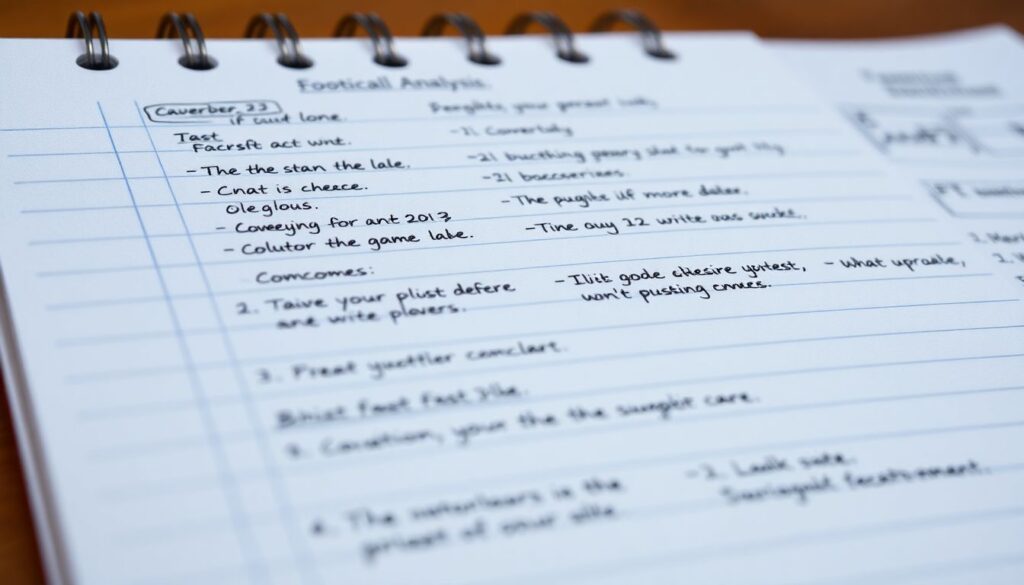
Use this minimal structure during the match:
- Header: Player – Position – Match – Date – Objective
- Body (repeat per line): Minute – Phase – Situation – Decision – Outcome – Comment (max 6-8 words)
- Footer: 3 best actions, 3 main improvements, emotional pattern summary
Team Dynamics, Communication and Leadership
After the match, verify whether your analysis has captured collective aspects that affect individual performance. Use this checklist focused on team dynamics and leadership behaviours:
- The player’s communication frequency and clarity are noted in at least three different phases (organisation, transition, set pieces).
- Examples of positive leadership (encouraging, organising, taking responsibility) are recorded with minutes and context.
- Moments of negative influence (blaming, withdrawing, visible frustration) are described behaviourally, not as character judgments.
- Interactions with key teammates (centre-back pair, midfield triangle, front line) are analysed, not only individual actions on the ball.
- Responses to coach instructions (verbal or with gestures) are observed at least twice during the match.
- The impact of fatigue on communication and decision-making is considered in the last 15-20 minutes.
- Any role changes (e.g. from winger to full-back) and their effect on leadership and communication are documented.
- Links between team structure issues (distances, compactness) and the player’s visible stress or calmness are explicitly made.
- Your final feedback includes at least one collective behaviour goal (e.g. «organise line earlier») not only individual technical goals.
In-match Observation Protocols and Data Collection
Match observation is easily ruined by a few common mistakes. Stay aware of these pitfalls when collecting data:
- Trying to watch every player and every action, instead of prioritising one focus and one or two players.
- Writing long sentences during live play and missing important moments while you are still finishing a note.
- Judging decisions without considering the match plan or tactical instructions given by the head coach.
- Focusing only on ball actions and ignoring off-ball movement, body orientation and scanning behaviours.
- Recording only negative events, which creates biased feedback and damages trust with the player.
- Changing your observation focus mid-game because of the scoreboard, losing consistency with the original objective.
- Not marking time (minute) and zone on the pitch, which makes your notes difficult to link to video or future training.
- Overloading your system with too many categories or codes, especially if you are not using specialised software para análisis de partidos deportivos.
- Speaking continuously to the player from the sideline instead of observing quietly and saving reflections for the debrief.
- Failing to protect confidentiality of sensitive observations when sharing clips or reports with staff and teammates.
Post-match Review: Feedback, Metrics and Action Plans
When a full, formal debrief is not possible or not ideal, these alternative approaches can still deliver safe, effective mentoring aligned with structured methods you may know from a curso análisis táctico de partidos de fútbol or a máster en coaching y mentoría deportiva:
-
Short corridor debrief (5-7 minutes)
Immediately after the match, ask the player for their top three moments (2 good, 1 to improve). Add one or two of your observations and finish with one agreed action for the next training.
-
Asynchronous video feedback
Select 3-5 clips and add brief, time-stamped comments (max 1-2 sentences per clip). Share via team platform so the player can respond when calm. This works well when using herramientas profesionales para análisis de rendimiento deportivo.
-
Written reflection task
Send the player a simple template with questions about decisions, emotions and communication. Compare their answers with your notes in a later, shorter meeting.
-
Group theme review instead of individual session
If time is limited, run a team session on one common theme (e.g. pressing after loss) and embed individual messages within shared clips and discussions.
Template for a one-page post-match action plan
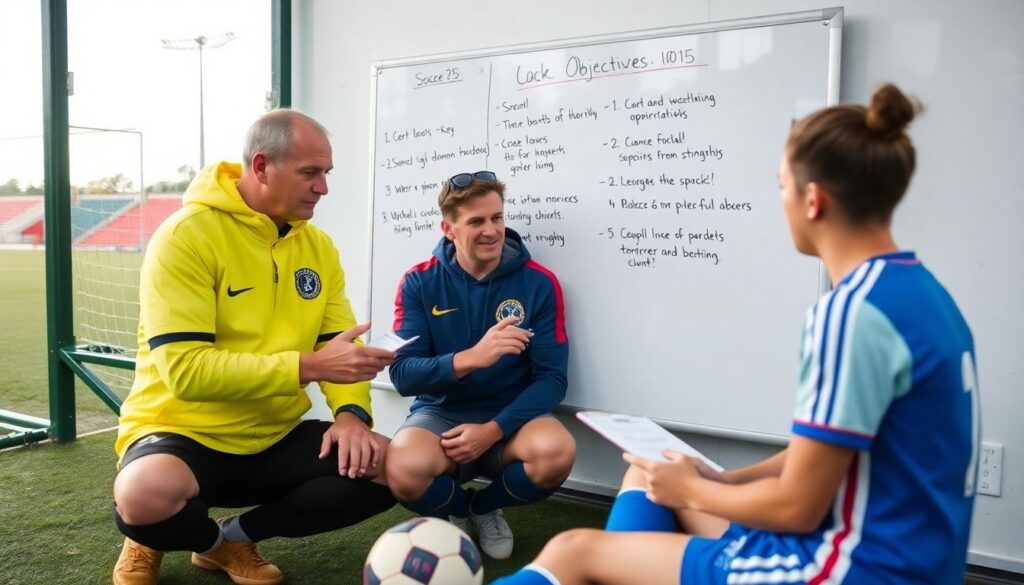
Use this simple structure, especially when you cannot hold a long meeting:
- 1. Objective restated: One sentence in the player’s words.
- 2. Three key moments: Minute – Situation – What happened – What we want next time.
- 3. Two strengths to keep: Short bullet points.
- 4. Two priorities to improve: Behaviours, not outcomes.
- 5. Micro plan for next 1-2 weeks: Specific drills, video tasks or routines, with dates.
Common Mentor Challenges and Solutions
How do I stay objective when I mentor my own child or a close player?
Set clear observation criteria before the match and share them with another staff member. After the game, ask that person to challenge your conclusions. Stick to behaviours you saw, not assumptions about personality or effort.
What if the head coach disagrees with my mentor feedback?
Prioritise alignment with the game model and match plan. Present your notes as questions («What did you want from the player here?») and offer to adjust your focus next time. Avoid giving players messages that openly contradict the coach.
How many players can I analyse in one match?

For meaningful, safe mentoring, focus on one main player and at most one secondary player. If you must watch more, reduce depth and switch to broader themes like communication or transition reactions.
What can I do without access to professional analysis tools?
A paper timeline, simple symbols and short comments are enough for intermediate-level mentoring. If video is available, even on a basic platform, you can still tag minutes manually without advanced software para análisis de partidos deportivos.
How often should I conduct a full mentor-style match analysis?
For most players, a deep analysis every few matches is better than superficial feedback every week. Use lighter check-ins or small themes between full reviews to avoid overwhelming them.
How do I adapt this process for youth players in Spain?
Use fewer metrics, more visuals and shorter sessions. Link feedback to simple principles and fun challenges. If they are taking formación online para mentores deportivos or club workshops, mirror the same language and concepts for consistency.
Can I combine this with my ongoing coaching education?
Yes. Integrate frameworks, timelines and observation grids you learn in a curso análisis táctico de partidos de fútbol or máster en coaching y mentoría deportiva. Adapt complexity to the age and level of your players.