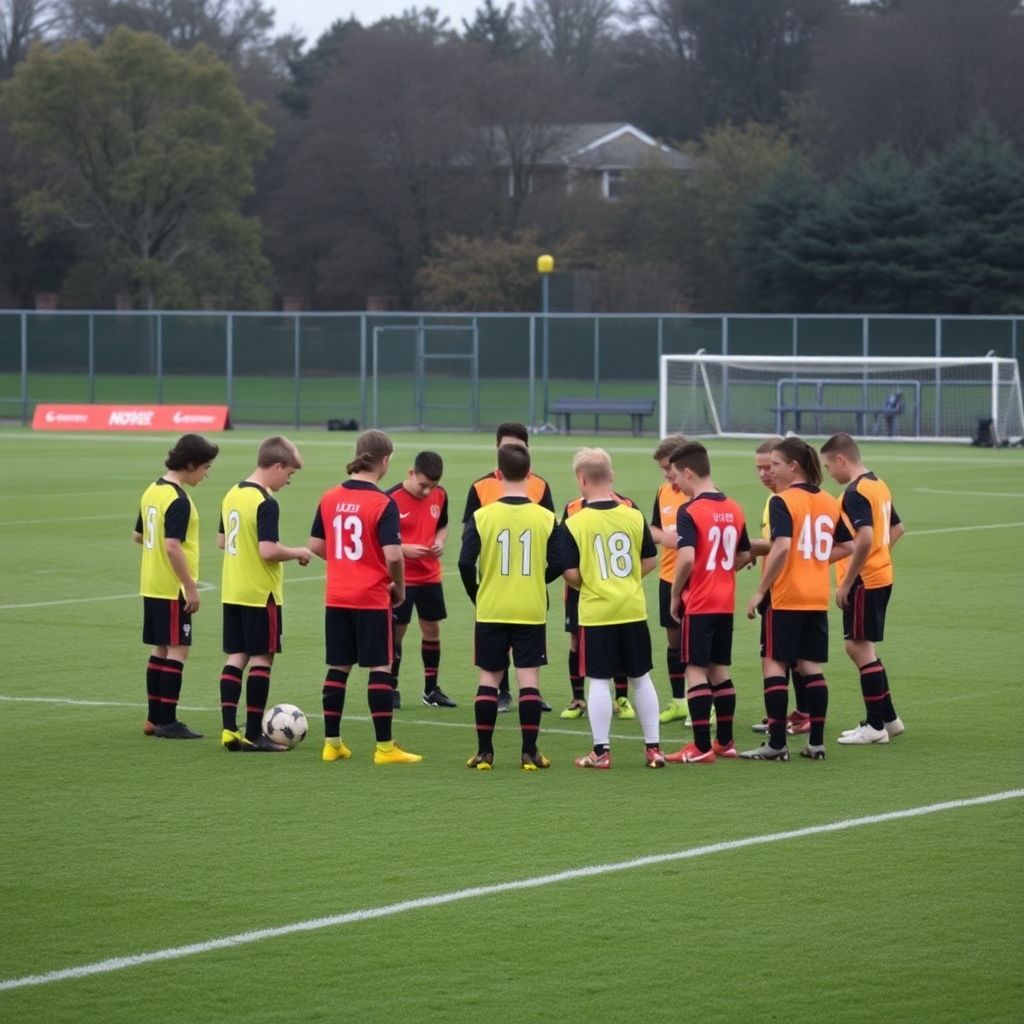
To avoid the most common pre‑match mistakes, structure a simple, repeatable routine: a progressive warm‑up, a short tactical reminder, clear roles, equipment checks and a calm mental focus. Standardise timing, responsibilities and communication so every player knows cómo preparar un partido de fútbol paso a paso without last‑minute chaos.
Pre-match Pitfalls That Sabotage Performance
- Skipping or rushing the warm‑up leads to slower reactions and higher injury risk in the first minutes.
- Unclear tactical plans create confusion, gaps between lines and wasted transitions.
- Poor communication before kickoff causes role overlaps, unmarked opponents and panic under pressure.
- Neglected kit and field checks trigger avoidable distractions, discomfort and preventable delays.
- Weak mental preparation turns small setbacks into emotional collapses and needless cards.
- Disorganised timing cuts video/tactical briefings short and turns the dressing room into a stressful rush.
Inadequate Physical Warm-up and Its Fixes
This section fits grassroots to semi‑pro teams who want simple, safe and effective routines. Do not follow it blindly if players are injured, returning from long layoffs or have medical conditions; in those cases, individualise and consult qualified staff.
Diagnostic checklist (cause → consequence → fix):
- Cause: Straight from bus or car to pitch. → Consequence: Stiffness, slow starts, higher strain risk. → Fix: Add a short activation block immediately after arrival.
- Cause: Static stretching before moving. → Consequence: Players feel «heavy», low intensity in first sprints. → Fix: Prioritise dynamic movements and mobility first.
- Cause: Warm‑up too general, no ball. → Consequence: Poor first touch, bad timing in duels. → Fix: Include ball work and game‑like patterns.
- Cause: Warm‑up too intense or too long. → Consequence: Players start the match already fatigued. → Fix: Reduce duration and keep last minutes low‑medium intensity.
Safe, progressive warm‑up template (15-20 minutes):
- General activation (4-5 minutes): Easy jog, side shuffles, backwards runs, gentle joint circles (ankles, knees, hips, shoulders).
- Dynamic mobility (3-4 minutes): Leg swings, walking lunges, hip openers, high‑knees and heel‑kicks, building intensity gradually.
- Technical touches with ball (4-5 minutes): Short passing in pairs, first‑touch variations, simple rondos with two‑touch limit.
- Speed and reactions (2-3 minutes): 10-20 m accelerations, light direction changes, coach or teammate visual/audio reaction cues.
- Game‑specific patterns (3-4 minutes): Position‑specific runs (overlaps, checking to feet, pressing triggers) at match‑like intensity, but brief.
Micro‑drills to copy into your prep sheet:
- 3‑zone build‑up run: Players jog from box to halfway (easy), halfway to opposite box (medium), then return with 3-4 accelerations.
- «First touch out» rondo: In a 5v2, every outside player must take first touch away from pressure and play forward when possible.
When looking for mejores estrategias de preparación de un partido de fútbol, standardising this safe warm‑up across age groups keeps players physically ready and reduces avoidable early injuries.
Tactical Misalignment: Causes, Detection, and Corrections
To prevent tactical confusion you need a simple toolkit, not complex software. Minimum requirements:
- Whiteboard or magnetic tactics board with markers.
- Printed or digital team sheet with positions and set‑piece roles.
- Shared messaging group (for example, team chat) to send line‑ups and key points before matchday.
- 2-5 short video clips or still images per game, if available, focusing on pressing, build‑up and transitions.
Diagnostic checklist (cause → consequence → fix):
- Cause: Changing formation on matchday with no rehearsal. → Consequence: Big gaps between lines, late pressing, open channels. → Fix: Only use rehearsed shapes; otherwise adjust roles, not the whole system.
- Cause: Vague instructions like «press more» or «keep it tight». → Consequence: Each line interprets differently, pressing alone or sitting too deep. → Fix: Attach every cue to a trigger, location and reference player.
- Cause: No reminder of set‑piece marking. → Consequence: Free headers, mismatches, confusion after substitutions. → Fix: Assign clear marks on the board and repeat them right before going out.
Quick tactical briefing template (5-7 minutes):
- Shape and key roles (2 minutes): Confirm system (for example, 4‑3‑3), explain one clear job per line (back line, midfield, forwards).
- Two attacking ideas (2 minutes): For example, «switch play quickly to weak side» and «attack second balls from crosses».
- Two defensive ideas (2 minutes): For example, «press their 6 when centre‑back lifts head» and «full‑backs tuck in when ball is far side».
- Set‑piece snapshot (1 minute): Corners for/against, free‑kicks zones, who stays up and who stays back.
Micro‑tool: «Three pictures» method:
- Picture 1: Our build‑up starting from goalkeeper.
- Picture 2: Our mid‑block when they have the ball on halfway.
- Picture 3: Our counterattack structure after winning possession.
Show or describe these three situations clearly and repeat them briefly in the tunnel to turn your tactical ideas into simple images players can recall under pressure.
Breakdowns in Pre-game Communication and How to Restore Clarity
Before diving into the step‑by‑step process, run this quick preparation mini‑checklist:
- Line‑up and roles confirmed at least one day before, then re‑stated on matchday.
- Single main voice in the dressing room; staff agree key messages in advance.
- Schedule shared with players (arrival, warm‑up, talk, last checks).
- Captain knows the 2-3 main tactical and emotional messages to reinforce on the pitch.
Now follow this safe, practical sequence to restore and keep clear communication.
- Define one communication leader:
The head coach or designated assistant leads all crucial pre‑match talks. Other staff share input before players arrive, not over them in the dressing room. - Send key info before matchday:
Share provisional line‑up, system and set‑piece roles in your team group 24-48 hours in advance. This reduces anxiety and lets players ask questions earlier. - Use one consistent structure for every talk:
Keep the same order each week so players know what is coming.- 1-2 sentences about opponent and context.
- 3 main tactical points (attack, defence, transitions).
- 1 emotional message linked to team identity.
- Clarify roles out loud:
Call positions one by one and state each player’s specific responsibility in one short sentence. Ask them to repeat it or give a quick thumbs‑up to check understanding. - Limit last‑minute changes:
Only adjust for injuries or obvious mismatches. When you must change, re‑state the new roles clearly to the whole group, not in private only. - Agree code words and simple cues:
Create 3-5 short calls for common situations (for example, trigger press, slow tempo, switch flank). Practise them in training so everyone reacts the same way. - Close with a calm recap:
Just before leaving the dressing room, the coach or captain repeats the three key tactical points and one emotional cue. Keep this under one minute to avoid overload.
Micro‑template for your match communication card:
- 3 tactical words: For example, «compact – aggressive – simple».
- 3 reminders: Build‑up rule, pressing trigger, set‑piece focus.
- 1 identity phrase: Short sentence that fits your team culture and age group.
Consistent use of this routine is one of the most effective consejos profesionales para preparar un partido de fútbol competitivo without complicating the players’ minds.
Equipment, Kit and Field Checks That Teams Often Miss
Many performance problems in Spain’s regional leagues come from fixable kit and pitch issues. Use this quick check to prevent them.
Result checklist (tick mentally before kickoff):
- Match balls: Correct pressure, same model, at least one spare ready by the bench.
- Player kit: Shirts, shorts and socks match rules; captain’s armband and any required IDs prepared.
- Footwear: Stud length appropriate to surface; players have checked grip in turns, accelerations and decelerations.
- Goalkeepers: Gloves tested, spare gloves or tape available; shirts contrast clearly with both teams and referee.
- Safety: Shin pads worn; jewellery removed; laces double‑knotted; any medical tape allowed by referee.
- Goals and nets: Nets fixed with no holes; posts stable; no dangerous objects near corners or technical area.
- Pitch zones: Penalty spots, lines and corner flags visible; surface inspected for holes, puddles or slippery patches.
- Bench area: Water, spare bibs, towels and basic first‑aid kit available; substitutes know warming‑up area and route.
Diagnostic checklist (cause → consequence → fix):
- Cause: No shared responsibility for kit. → Consequence: Missing bibs, different socks, late changes. → Fix: Assign one staff member and a player helper for kit control.
- Cause: Players choose studs last minute. → Consequence: Slips, poor turning, lower confidence in duels. → Fix: Mandatory early pitch walk with boots 45-60 minutes pre‑kickoff.
A clear kit and field routine is part of any serious plan de preparación física y mental antes de un partido, because comfort and safety strongly influence how players move and decide.
Mental Preparation Mistakes and Practical Resilience Drills
Mental errors are subtle but very common. Many are created by coaches and parents with good intentions but poor timing.
Typical mistakes (cause → consequence → fix):
- Cause: Overloading players with information in the last 10 minutes. → Consequence: Confusion, paralysis, slow decisions. → Fix: Keep the last talk short, emotional and clear; tactical work belongs to training and earlier briefings.
- Cause: Focusing only on the result («we must win»). → Consequence: Fear of mistakes, hiding from the ball, arguing with referees. → Fix: Emphasise controllable behaviours such as intensity, support runs and communication.
- Cause: Allowing negative talk and excuses in the dressing room. → Consequence: Early resignation if opponent scores first. → Fix: Ban excuse‑language and redirect talk to solutions and identity.
- Cause: No strategy for early setbacks. → Consequence: Emotional collapse after first goal against. → Fix: Prepare a short response routine (breathing, regroup message, simple tactical adjustment).
- Cause: Inconsistent messages between staff. → Consequence: Players take sides, mistrust coach decisions. → Fix: Staff agree on 2-3 shared phrases and priorities before addressing the team.
Practical resilience drills (safe and simple):
- One‑minute reset:
In training games, when a team concedes, all players:- Walk together towards the box line.
- Take 3-4 deep breaths while looking up.
- Repeat one team phrase (for example, «we react together»).
- Pressure simulation blocks:
Start small‑sided games with one team already «losing» by a goal. Their task is not to win, but to:- Keep body language positive.
- Keep communication specific (names + simple instructions).
- Stick to the game plan for a set period (for example, 5 minutes).
- 3 controllables routine:
Before leaving the dressing room, each player chooses three controllable behaviours (for example, press after loss, demand the ball, encourage teammates) and writes or says them out loud.
Integrated into your weekly plan de preparación física y mental antes de un partido, these simple drills help players respond instead of react when stress rises.
Time Management Errors in Pre-game Routines and Simple Timelines
Poor timing is one of the most invisible errores comunes de los entrenadores antes de un partido y cómo evitarlos usually starts with a clear, realistic schedule for your level and travel context.
Common timing problems (cause → consequence → fix):
- Cause: Arrival too close to kickoff. → Consequence: Rushed warm‑up, no time for calm talk, higher injury risk. → Fix: Plan arrival earlier and share it clearly with parents and players.
- Cause: No buffer for delays (traffic, previous match). → Consequence: Anxiety, angry coach, chaotic start. → Fix: Add a 10-15 minute buffer to your plan.
- Cause: Talks eat into warm‑up time. → Consequence: Either poor warm‑up or late entry. → Fix: Put a hard time limit on each talk; use a watch.
Three safe pre‑match timeline options (choose one fitting your context):
Compact 45‑minute schedule (for local games)
- -45 min: Team arrival, quick headcount, kit change.
- -35 min: Short tactical reminder (3-5 minutes) and roles check.
- -30 to -10 min: Full warm‑up on the pitch.
- -10 to -5 min: Calm mental message and set‑piece reminder.
- -5 min: Final checks (boots, shin pads, water) and team huddle.
Standard 60‑minute schedule (recommended default)
- -60 min: Arrival window opens, medical and kit checks.
- -50 min: Tactical and emotional talk (10 minutes maximum).
- -40 to -15 min: Warm‑up, starting at low intensity and finishing with match‑like actions.
- -15 to -8 min: Return to dressing room, change if needed, quick recap.
- -8 to -3 min: Walk out procedures, captain and staff last reminders.
Extended 75‑minute schedule (important competitive matches)
- -75 to -65 min: Arrival, hydration, light activation, toilet breaks.
- -65 to -50 min: Video or board review (10-15 minutes) with no phones, focused group.
- -50 to -20 min: Warm‑up progressing from general to specific work.
- -20 to -10 min: Individual routines (taping, breathing, music) and staff one‑to‑one reminders.
- -10 to -3 min: Short, intense emotional message, set‑piece and first‑minute focus.
Choose one version and keep it consistent across the season; this stability is one of the mejores estrategias de preparación de un partido de fútbol for reducing stress and improving focus.
Common coach and player queries before kickoff
How early should an amateur team arrive before a home match?
For most amateur levels, plan to arrive between 45 and 60 minutes before kickoff. This allows time for kit checks, a short talk and a progressive warm‑up without rushing. Add a buffer if traffic or previous matches often cause delays.
How long should the warm-up last without causing fatigue?
A practical range is around 15-20 minutes of continuous but controlled activity. Start low intensity and finish with a few short, sharp actions. If weather is very hot or players are tired from the week, stay closer to the lower end and reduce intensity.
What is the minimum tactical information I should give before a game?
Give players three main points: your shape, one attacking idea and one defensive idea. Add a clear set‑piece reminder. Anything beyond that should be trained during the week, not crammed into the last few minutes in the dressing room.
How can I calm very nervous players before important matches?
Keep messages simple, focus on controllable behaviours and use short breathing exercises. Avoid repeating the importance of winning; instead, reinforce effort, support and communication. Individual, quiet conversations often work better than long emotional speeches.
Is it useful to show video just before going to the pitch?
Only if clips are very short and already known from training. Use 2-3 key images as reminders, not new information. If video makes players anxious or distracted, move it to earlier in the week and keep matchday visual work minimal.
How do I handle late arrivals without punishing the whole team?
Set a clear rule and communicate it before the season. For occasional, justified delays, adapt calmly and avoid emotional reactions. For repeated issues, address the player individually after the match and reinforce team standards consistently.
Should parents be in the dressing room for youth matches?
Generally no. The dressing room should be a controlled environment with clear voices and routines. If parents must enter for logistical reasons, limit this to before or after official team talks to protect focus and player confidence.