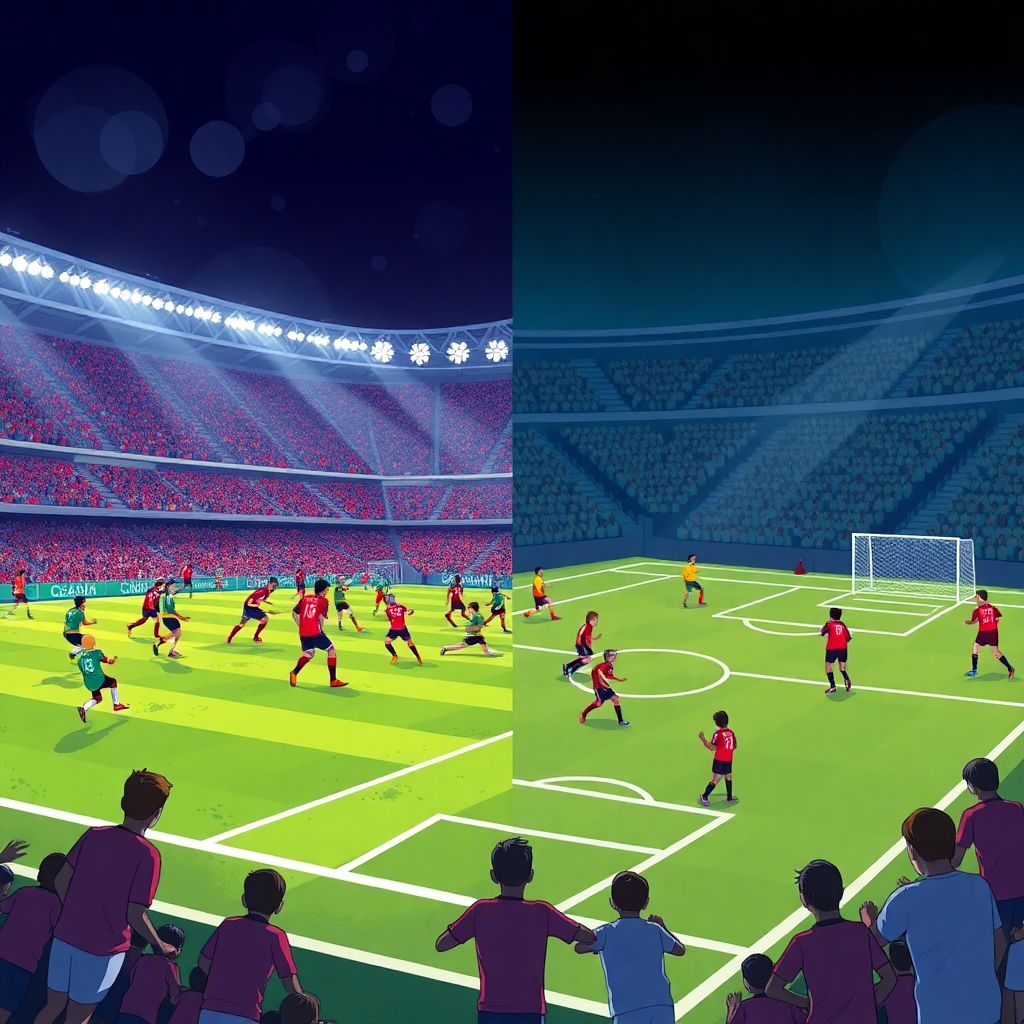
An in-depth look at a recent clássico – and what youth coaches can steal from it
Forget the TV pundit clichés for a second.
When we watch a big clássico, we’re actually looking at a live laboratory of ideas: pressing triggers, spacing, body orientation, decision making under pressure.
In this article, we’ll break down um clássico recente (we’ll use a generic Flamengo x Palmeiras style example) and turn that into clear, practical lessons you can apply tomorrow with your youth team – without needing a PhD in tactics.
No chalkboard art for social media, just things that work on the pitch.
—
1. Reading the clássico like a coach, not like a fan
Most people watch a clássico following the ball. Youth coaches should do the opposite.
Look at:
– Distances between lines
– Reactions after losing the ball
– Who creates superiority (number or positional) and where
– How the full-backs behave in different phases
Once you start watching like this, any game turns into a free curso de análise tática futebol, broadcast live in HD.
Key question during the match
Instead of asking “Who is better?”, ask:
– Where does each team want to recover the ball?
– Which channel (central or wide) are they trying to attack most?
– What are the patterns in the first 3 passes after regaining possession?
If you train yourself to answer these questions while you watch a clássico, your brain is doing exactly what a good livro de análise tática futebol moderno tenta ensinar – only in real time.
—
2. Compactness: how the best teams stay short and narrow
In our clássico-example, notice how both teams behave without the ball.
At the top level, there’s almost no space between the lines when the opponent is building up.
What usually happens in a clássico
One team presses high with a compact front three.
The other team tries to lure the press and play through midfield.
The key isn’t just running. It’s:
– Horizontal compactness: defenders close to each other
– Vertical compactness: small distance between attack, midfield and defense
– Synchronized stepping out: one player presses, the rest adjust
Practical drill for your youth team
You want kids to feel compactness, not just hear the word.
1. Set up a 7v7 in a 40x30m rectangle.
2. Team out of possession must defend in a mid-block.
3. You freeze play and measure:
– Distance between striker and last defender (aim: 25–30m).
4. Award an extra point every time they win the ball back while staying inside those limits.
Do this regularly for 10–12 minutes, and in a few weeks your team will start staying “short” automatically.
You’ve just brought a top-level clássico concept into grassroots football.
—
3. Pressing triggers from the clássico and how to copy them
In modern clássicos, pressing is not random. Teams jump together on triggers. For example:
– A bad first touch by the center-back
– A pass to the full-back facing his own goal
– A looping, high ball into midfield
– A back pass to the goalkeeper on his weaker foot
Watch a clássico with a notebook and mark down:
“When did both forwards start sprinting?”
You’ll probably find the same situations repeating.
How to teach pressing triggers to kids
Take only one trigger at a time. Let’s use: pass to the full-back facing his own goal.
– Define the rules:
– When the pass goes to that full-back, the winger presses fast and outside-in.
– Striker closes the passing lane to the center-back.
– Near-side midfielder steps forward to cover inside pass.
– Constraints game:
– 6v6 + 2 goalkeepers.
– The team pressing gets 2 points if they win the ball within 5 seconds after this trigger.
– Otherwise, it’s just normal play.
This is exactly the kind of specific, applied content you’ll often find in a good curso online tática futebol para treinadores – but you can start using it today on the pitch.
—
4. Building from the back under pressure – lessons from goal kicks
Goal kicks in clássicos are a tactical masterclass.
One team insists on short build-up, the other presses high and aggressive.
What you should look for when watching
– Positions of the 6 (defensive midfielder):
– Drops between center-backs?
– Stays in front to receive under pressure?
– Full-backs:
– Very wide and high, or low and narrow?
– Goalkeeper:
– Only plays short, or also uses chipped passes into midfield?
You’ll notice a pattern: successful build-ups have clear exit routes pre-defined, not improvisation.
Practical progression for youth
1. Phase 1 – No opponent
– GK + 2 CBs + 1 DM vs mannequins or cones.
– Work on angles and body orientation (receive half-turned, open to the field).
2. Phase 2 – Passive press
– Add 2 pressing forwards who can move but not tackle.
– Objective: play through them or around them within 6 passes.
3. Phase 3 – Active press with scoring
– 6v4 in build-up zone.
– If the pressing team wins the ball, they attack right away to mini-goals.
– Build-up team scores by crossing the halfway line with control.
Run this every week and you’ll see kids start recognizing, instinctively, the same solutions you see in big games on TV.
—
5. Creating width and depth: the invisible work of wingers and full-backs
Top clássicos rarely have static wingers glued to the touchline.
Instead, you see constant role swapping:
– Full-back overlaps
– Winger moves inside into half-spaces
– 9 pins the center-backs, or drops to create overloads
How this looks in a clássico
Imagine the right-back pushes high and wide.
The winger comes inside, between lines.
The no. 8 makes a run beyond the 9 into the channel.
Result:
– Width from full-back
– Central overload from winger
– Depth from midfield runner
The defense has to choose: defend the width or the depth?
Simple exercise to train width and depth
– Set up a 6v6 + 2 neutral wingers (always on the attacking team).
– Field divided into 3 vertical channels.
– Rules:
– Each attack must have at least one player in each channel before shooting.
– Extra point if the team attacks using a third man run (pass–lay-off–through ball).
Now your players are learning to occupy spaces intelligently, not just chase the ball – the same principle you see in high-level clássicos.
—
6. Transition moments: where clássicos are often decided
Look back at highlight reels of any big clássico.
Many goals come right after:
– Losing the ball near the opponent’s box
– Winning it in midfield and attacking quickly
– Regaining possession in wide areas
The reason is simple:
Transitions happen when structures are broken. Whoever reacts faster, wins.
What to copy from the pros
In our clássico example, notice how:
– As soon as they lose the ball, 3–4 nearby players press immediately (counter-press).
– The rest of the team squeezes in behind them, closing central areas.
– When they win the ball, first pass is usually forward, not sideways.
Two transition games for youth coaches
1. 3v3+3 neutrals in a small square (25x25m)
– Team that loses the ball must try to recover within 5 seconds.
– If they succeed, they get 2 points; if not, opponent gets 1.
2. 7v7 with “transition bonus”
– Any goal scored within 8 seconds of regaining possession counts double.
– Encourage forward-thinking and fast support runs.
Run these exercises often and your players will start reacting to transitions like you see in the clássico – automatically, not because you shout.
—
7. Decision making: the difference between seeing and understanding
Tactical analysis isn’t just about shapes (4-3-3, 4-2-3-1…).
It’s about decisions in context.
In a clássico, watch:
– When the winger decides to take on the full-back 1v1
– When midfielders switch play instead of forcing the ball centrally
– How the 9 chooses to drop or stretch the line
This is pure “game intelligence”. You don’t teach it with theory only; you create conditions where players must choose.
Creating decision-rich environments in training
– Avoid long, robotic drills without opposition.
– Use games with constraints that force specific choices.
For example:
– 5v5 in a rectangular area, with large goals.
– Rule 1: goals only count if the ball is switched from one side zone to the other before the shot.
– Rule 2: no more than 3 touches in the central corridor.
Players are now constantly deciding:
– Dribble or pass?
– Switch early or wait?
– Drop to receive or run in behind?
This is exactly the kind of approach that modern formação de treinadores de base futebol tries to encourage: design the game so that good decisions are rewarded, and bad ones are punished by the game itself, not just the coach’s voice.
—
8. Using clássicos as “case studies” in your weekly cycle
You don’t need a full analyst staff. You just need a simple system to turn a clássico into learning material.
Step-by-step routine for youth coaches
1. Choose one theme per clássico
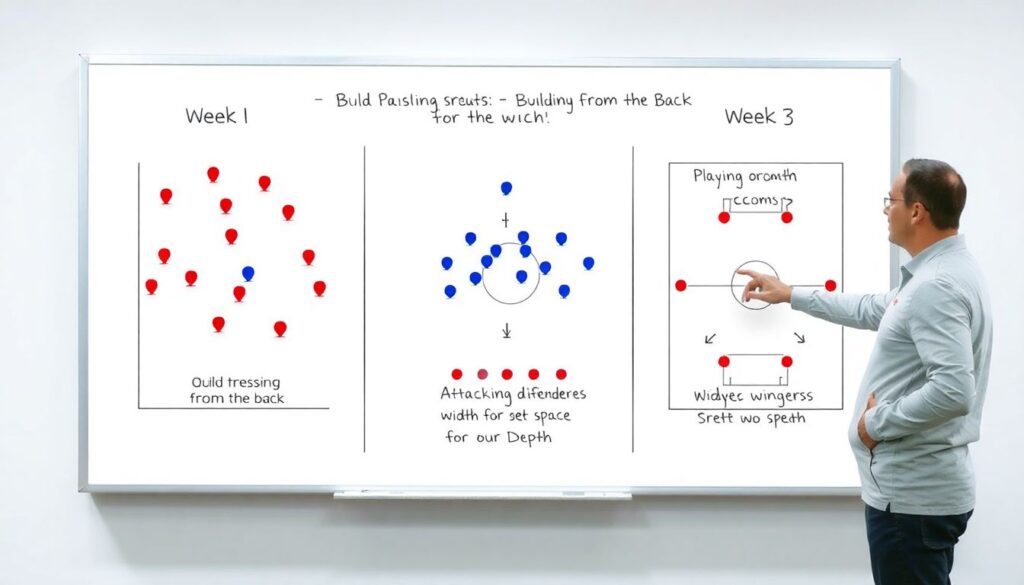
Don’t try to cover everything.
– One week: high pressing
– Next week: building from the back
– Then: attacking width and depth, etc.
2. Watch 20–25 minutes focused on that theme
– Ideally first 15 minutes + a 10-minute period in the second half.
– Take quick notes:
– “Trigger – pass to FB, team presses”
– “CB always opens body to the outside”
– “DM drops to build 3+1”
3. Bring one clip or drawing to training
If you don’t have video:
– Draw the situation on a board.
– Place markers on the field and recreate the shape.
Explain in 1–2 minutes, then train it. The explanation must never be longer than the game that follows.
4. Use a simple 3-point checklist in the game
In the weekend match, tell players:
1. Press together after *this* trigger.
2. Keep lines within 30m.
3. First pass forward after recovery whenever possible.
After the game, evaluate: 0–3 on each point.
This kind of micro-cycle is exactly what you’ll study in a pós graduação em futebol e análise de desempenho, but you can start applying the logic right now, at any level.
—
9. Three concrete takeaways from any clássico
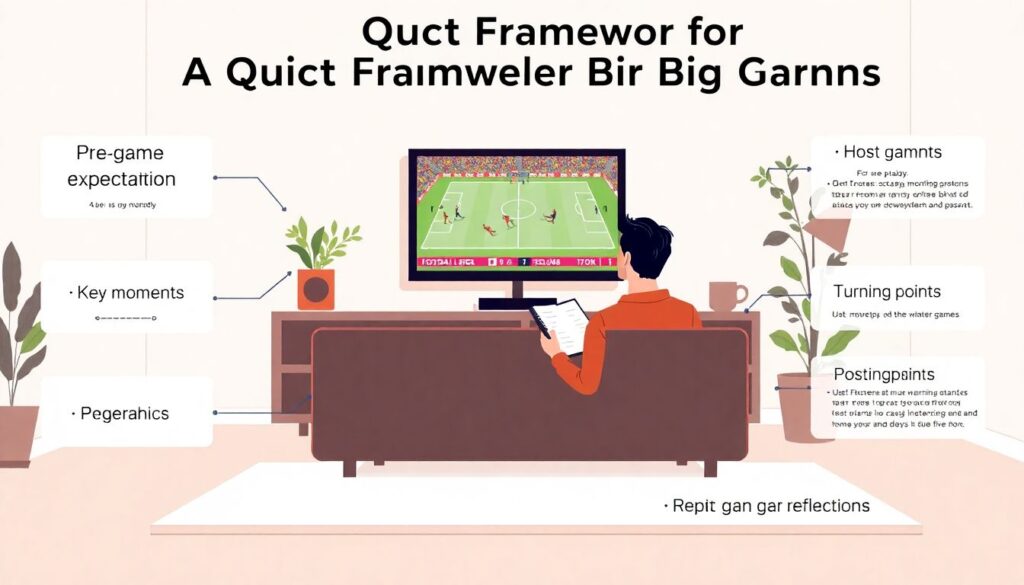
To close, here’s a quick framework you can reuse every time you watch a big game.
Use this 3-step filter
- One idea with the ball
– Example: how the full-backs help create width or overloads.
– Ask: “How can I simplify this idea so my U13s understand?” - One idea without the ball
– Example: compactness when defending the box or pressing triggers.
– Ask: “What constraint game would recreate this behavior?” - One idea in transition
– Example: first 5 seconds after losing or winning possession.
– Ask: “What scoring rule can I add so players value this moment?”
If, after every clássico, you note just these three points and convert each into a small-sided game, your training content will evolve constantly – and your players will absorb principles straight from the highest level, but in a language and format they can actually execute.
—
Conclusion: turning big games into small, daily improvements
Clássicos are more than 90 minutes of drama. They’re compressed lessons in space, time and decision making.
You don’t need expensive software to benefit from them.
You need:
– A curious eye
– A specific theme each week
– 1–2 exercises that bring that theme to life for your players
Watch like a coach, not like a fan.
Translate big ideas into simple constraints.
Let the game teach, and your job becomes aligning what your kids do on Sunday with what the best teams are doing on TV – one clássico at a time.
Комментарии